
Two dozen organizations have filed briefs urging the United States Supreme Court to dismiss a landmark climate lawsuit — and a new report reveals that those organizations carry documented financial or organizational ties to the very oil and gas companies named in the case. That finding, published by Consumer Watchdog in a report exposing the fossil fuel-backed amicus brief network, offers the clearest picture yet of how the industry’s decades-long campaign against climate accountability has migrated from advertising and think-tank white papers into the nation’s highest courtroom.
Twenty-Five Groups, One Goal
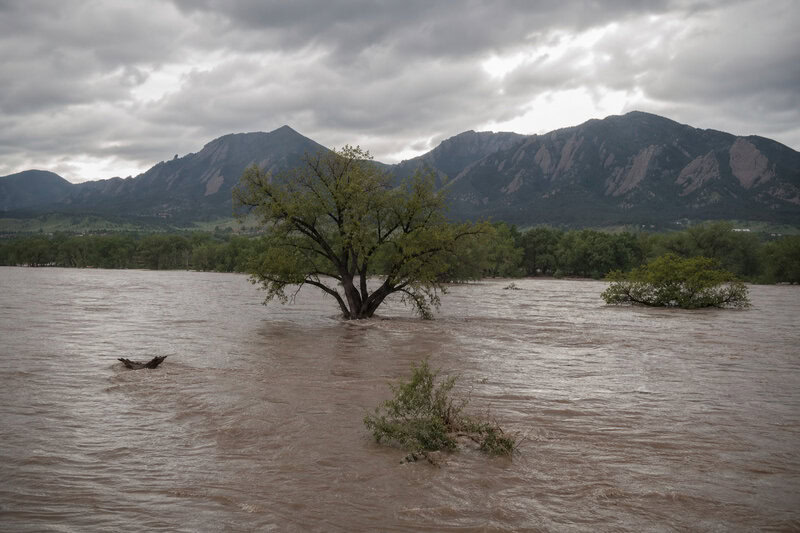
The case drawing this coordinated legal pressure is Suncor v. Boulder, in which Colorado municipalities are suing Suncor Energy and ExxonMobil for climate-related damages. The cities argue that the companies knowingly misled the public about the consequences of burning fossil fuels, causing harms for which local taxpayers are now bearing the cost. The Supreme Court’s decision to hear the case is itself significant: as Carbon Brief has reported, the Court agreed to hear arguments on whether the oil industry can be sued in state courts for climate-related harms — a jurisdictional question that sounds procedural but carries enormous practical stakes for dozens of similar lawsuits pending across the country.
At the center of the legal maneuvering is the amicus curiae brief — Latin for “friend of the court” — a filing submitted by outside parties who are not formal litigants but who claim relevant expertise or interest. Courts have long treated these briefs as a source of independent perspective. When those ostensibly independent voices share funding streams and organizational leadership with the defendants, legal ethics scholars argue the practice distorts rather than informs judicial deliberation. E&E News independently confirmed that at least 25 groups urging the Court to dismiss the Boulder climate case carry direct ties to oil and gas companies, lending the Consumer Watchdog report’s central finding significant external credibility.
The Supreme Court has already handed the industry one procedural win: the Court granted oil companies’ request to intervene in the Boulder climate case, according to Climate in the Courts. Combined with the flood of industry-linked amicus briefs, that ruling gives fossil fuel interests multiple simultaneous levers inside a single proceeding — a level of coordinated legal infrastructure that consumer advocates and legal reformers say demands scrutiny.
What the Consumer Watchdog Report Actually Found
Consumer Watchdog’s report identifies two dozen entities that filed briefs asking the Supreme Court to bar climate lawsuits from state courts as having deep financial and organizational links to Suncor Energy and ExxonMobil — the defendants in the underlying case. The report frames this network not as a spontaneous coalition of concerned third parties but as an orchestrated infrastructure built to amplify industry arguments under the appearance of independent expert consensus.
That distinction matters legally and institutionally. Courts traditionally extend deference to amicus briefs on the assumption that filers have no direct stake in the outcome. When that assumption is undermined by undisclosed financial relationships, the informational value courts expect from outside briefs is compromised. The Supreme Court’s own rules require amicus filers to disclose whether a party’s counsel authored the brief or whether a party directly funded its preparation — but the Consumer Watchdog report argues those disclosure requirements fail to capture the full network of indirect financial relationships at play.
Some legal reformers have called for stricter disclosure requirements modeled on conflict-of-interest rules in scientific publishing, where journals require authors to disclose funding sources even when those sources did not directly pay for the specific study being submitted. Short of formal rule changes, journalists, researchers, and opposing counsel play a critical watchdog role — as the Consumer Watchdog report itself demonstrates — by tracing organizational and funding links that existing rules do not require filers to volunteer.
The Science on the Other Side: Experts Document Decades of Climate Deception
In a direct counter-move to the industry brief network, scientific experts filed their own amicus brief in Suncor v. Boulder documenting what they describe as decades of deliberate climate deception by both Suncor Energy and ExxonMobil. The Union of Concerned Scientists confirmed the filing of this expert brief, placing the weight of established climate science before the justices as they weigh a question that is, on its surface, purely procedural: which court — state or federal — gets to hear these claims at all.
A crucial distinction deserves emphasis. The scientific consensus that human-caused greenhouse gas emissions are warming the planet is not in dispute in this litigation — that question is settled. What is contested, and what the expert brief addresses, is whether the companies knew this consensus was well-founded and deliberately misled the public anyway. That is a factual and historical question, not a purely scientific one, and it is the kind of question that juries and judges — not peer reviewers — are ultimately tasked with resolving.
Readers, policymakers, and journalists should be careful not to conflate two separate claims: that climate science is real is established consensus; that corporate liability is proven remains genuinely unresolved in American law. The expert brief is designed to make the historical record of corporate knowledge available to the Court, but the legal outcome of that record is not predetermined.
From Advertorials to Amicus Briefs: A Half-Century of Influence Tactics
To understand why the amicus brief network matters, it helps to trace the arc of fossil fuel influence tactics across the past half century. Internal documents from ExxonMobil, surfaced by journalists and academics over the past decade, show that the company’s own scientists accurately projected global warming as far back as the 1970s and 1980s, while its public communications consistently emphasized doubt and scientific uncertainty. Historians of science describe this pattern as “manufacturing uncertainty” — a strategy with direct parallels to the tobacco industry’s documented approach to delaying regulatory action.
The industry’s earlier tactics relied on funded think tanks, newspaper advertorials, and commissioned research designed to contest climate science in the public arena, where the rules of evidence do not apply and the standard for persuasion is far lower than in a courtroom. Coordinated amicus-brief networks represent a newer generation of the same strategy — applying uncertainty-manufacturing logic to judicial proceedings, where outcomes are binding, durable, and far harder to reverse through subsequent public debate.
The strategic logic follows a coherent arc: suppress internal science in the 1970s, contest public science in the 1990s and 2000s, and shape judicial framing in the 2020s. The target of influence has shifted from voters and consumers to judges — the one audience whose conclusions carry the force of law.
Legal scholars studying climate litigation have noted that amicus briefs can meaningfully shape the framing of Supreme Court opinions, influencing not only outcomes but the language and reasoning that lower courts will cite for decades. That is precisely why the identity and funding sources of brief-filers constitute a matter of legitimate judicial and journalistic scrutiny — not merely a political talking point.
Why the Jurisdictional Question Is Anything But Routine
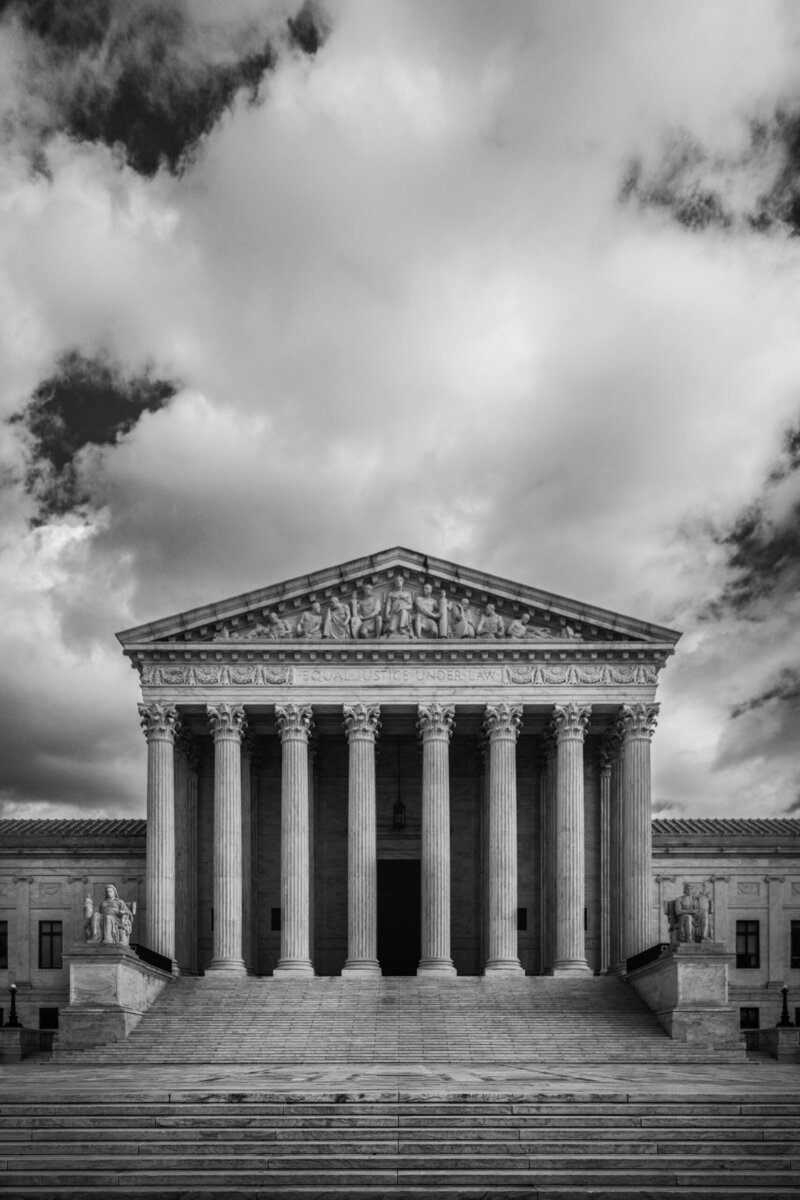
The immediate legal question before the Supreme Court in Suncor v. Boulder — whether climate liability cases belong in state or federal court — may sound like procedural housekeeping, but its practical consequences reach far. Federal courts have historically been less hospitable venues for climate liability claims, in part because federal common law on the subject has been largely foreclosed by prior Supreme Court rulings holding that federal environmental statutes displace such claims.
If the Court rules that cases like Boulder’s must be heard in federal court, it would not necessarily extinguish the lawsuits outright — but it would reset years of procedural progress and force cities, counties, and states to relitigate jurisdictional questions from scratch. For municipalities already stretched thin by the costs of flood barriers, wildfire suppression, and drought management, that delay could be functionally equivalent to a loss. A ruling favorable to the industry could stall — and potentially block — the broader ecosystem of state-level climate accountability lawsuits filed by jurisdictions across the United States.
Conversely, a ruling allowing state courts to hear these cases would open a significant new legal frontier — one in which internal corporate documents, including those showing early awareness of climate risks, could be subject to discovery and presented to juries. The prospect of discovery is, by many accounts, what makes this litigation existentially threatening to the industry in a way that regulatory proceedings and public-relations battles are not: internal records, once subpoenaed, cannot be reframed by a communications team.
What Comes Next — and Why It Matters Beyond This Case
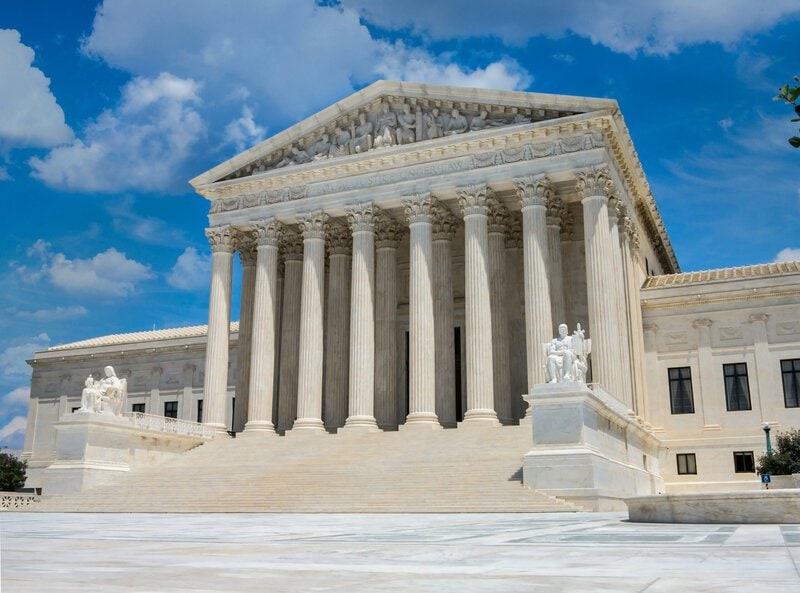
The Supreme Court’s willingness to hear Suncor v. Boulder places fossil fuel climate deception lawsuits at the center of American constitutional law for the first time, with the outcome likely to reverberate through dozens of pending cases in which states and municipalities are seeking damages for climate-driven costs. The Consumer Watchdog report — and the expert amicus brief filed by scientists — together represent a growing counter-infrastructure of transparency and evidence, one designed to ensure that the judicial record reflects not only industry arguments but also the documented history of climate science suppression.
Three near-term developments are worth watching closely: the Court’s eventual ruling on jurisdiction; whether the Court imposes new or tighter disclosure requirements on amicus filers in response to the credibility questions the Consumer Watchdog report raises; and whether lower courts allow discovery into internal company documents concerning what executives knew and when they knew it. Each of those outcomes will carry consequences well beyond this single docket.
Whatever the Court decides, the collision of fossil fuel litigation strategy and climate science evidence in Suncor v. Boulder has already clarified a durable new reality: the fight over who knew what, when, and whether they lied about it has moved from op-ed pages and Senate hearing rooms into the one institution whose rulings are, for now, final. The oil companies’ ability to populate that institution with friendly briefs — while scientists simultaneously file a documented counter-record — means the courtroom has become the decisive arena. The outcome there will shape the boundaries of corporate climate accountability for a generation.