
Within the span of a single week in early August 2026, a startup headquartered in Marysville, Washington secured a Department of War contract with Lockheed Martin described as being of national importance — then immediately followed it with a NASA research award targeting one of low Earth orbit’s most stubborn logistical problems. For a company that most Americans have never heard of, Gravitics is suddenly at the center of two of the most consequential debates in modern spaceflight: who builds the next space station, and what it actually takes for humans to live and work there.
Two Contracts, One Week, One Marysville Startup
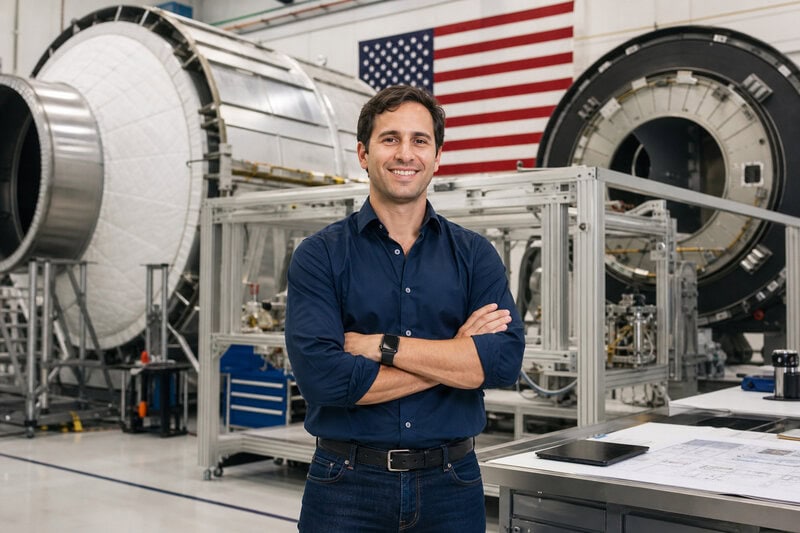
On August 4, 2026, Lockheed Martin selected Gravitics for a Department of War contract of national importance, linking the startup’s modular-habitat technology to military logistics applications in orbit. Days later, NASA selected Gravitics for a 2026 Small Business Innovation Research (SBIR) Phase I award — a seed-stage grant designed to prove technical feasibility — to develop what the agency calls the Multiple-Downmass Hangar, a system intended to enable affordable and frequent commercial sample return from low Earth orbit.
The back-to-back validation is notable not just for its timing but for what it reveals about how the U.S. government is spreading its bets. The same expandable habitat architecture that the Pentagon wants for orbital pre-positioning is now being tapped by NASA’s science directorate to solve a completely different problem: getting biological and materials-science samples back to Earth cheaply and often. That a single underlying platform can plausibly address both requirements is a meaningful statement about the technology’s versatility — though versatility at the concept stage and versatility in flight hardware are different things.
The institutional confidence behind Gravitics did not appear overnight. The company previously won a Strategic Funding Increase (STRATFI) award from SpaceWERX — the Space Force’s dedicated innovation arm — worth up to $60 million, directed at its Orbital Carrier vehicle. That level of Space Force funding places Gravitics among a small group of commercial space companies receiving serious institutional capital before they have flown a single crewed mission.
What Gravitics Actually Builds — and Why ‘Inflatable’ Doesn’t Mean Flimsy
Gravitics designs large, expandable space-habitat modules: structures that launch in a compact configuration inside a rocket fairing and then expand to full volume once in orbit. The term “inflatable space habitat” is common in media coverage, but engineers prefer “expandable” because the multi-layered shell materials — engineered to resist micrometeorite impacts, radiation, and pressure differentials — bear almost no resemblance to a balloon. The distinction matters: it reflects decades of materials research that followed NASA’s TransHab program in the 1990s, work that was later commercialized by Bigelow Aerospace before that company ceased operations in 2020.
Gravitics represents a newer generation of companies refining the expandable concept with updated materials, manufacturing techniques, and a clearer commercial roadmap. The physics case is straightforward: expandable structures can deliver significantly more internal habitable volume per unit of launch mass than traditional rigid aluminum cylinders. When every kilogram to low Earth orbit costs thousands of dollars, that volumetric efficiency matters enormously. The company has compared the target habitat size to a studio apartment in orbit — a useful mental image, even if it papers over the extraordinary engineering complexity involved.
Whether expandable habitats can meet long-duration human-rating standards — the formal certification threshold NASA requires before astronauts are permitted to live aboard a structure — remains an active engineering and regulatory question. No commercial expandable habitat has yet completed that certification process, and the gap between a promising design and a flight-proven, human-rated module is where many ambitious space programs have historically stalled.
The NASA Award: Solving the ‘Last-Mile’ Problem for Science in Orbit
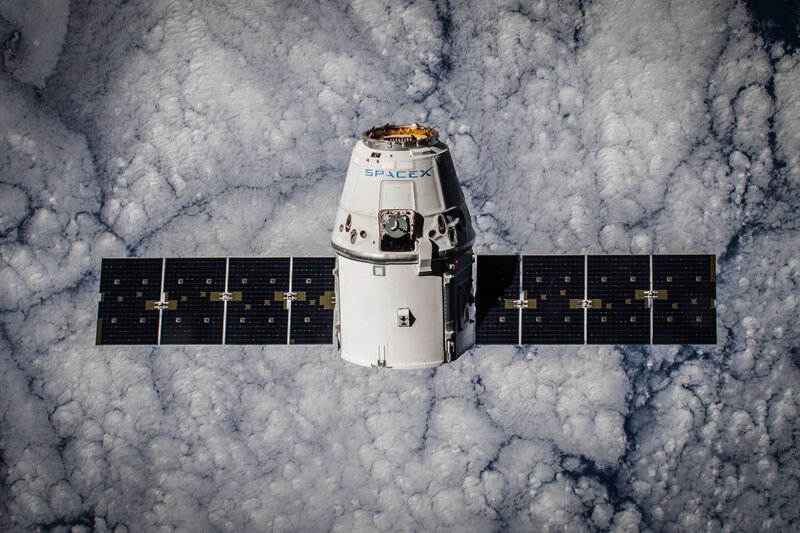
The specific problem the Multiple-Downmass Hangar is designed to solve is less glamorous than the phrase “commercial space station” suggests, but arguably more immediately consequential for working scientists. Researchers aboard the International Space Station routinely wait months or even years for a return vehicle with spare cargo capacity to bring experiment samples back to Earth. That wait degrades or destroys time-sensitive results in pharmaceutical development, materials science, and cell biology — fields where the microgravity environment of low Earth orbit produces phenomena that cannot be replicated on the ground.
According to Gravitics, the Multiple-Downmass Hangar would function as a docking bay attached to a future commercial space station, allowing multiple cargo vehicles to pick up experiment samples and return them to Earth without the prohibitive per-mission costs that currently constrain research output. Instead of waiting for a single expensive return flight, researchers could use a shared infrastructure hub compatible with whichever commercial cargo vehicle is making the next trip down.
It is important to be precise about what the NASA SBIR Phase I award represents and what it does not. Phase I is a feasibility-demonstration grant; it does not guarantee a flight mission, a Phase II award, or a NASA procurement contract. The outcome that will matter most is whether Gravitics advances to SBIR Phase II — which carries substantially larger funding and requires demonstrated hardware or simulation results — a gate likely to be assessed in 2027. Industry observers tracking the commercial space-station sector note that Phase I selection is a meaningful signal of technical credibility, but the development path from feasibility study to operational hardware in orbit involves many additional decision points and no guarantee of continued funding.
The Pentagon’s Logic: An Aircraft Carrier in Orbit
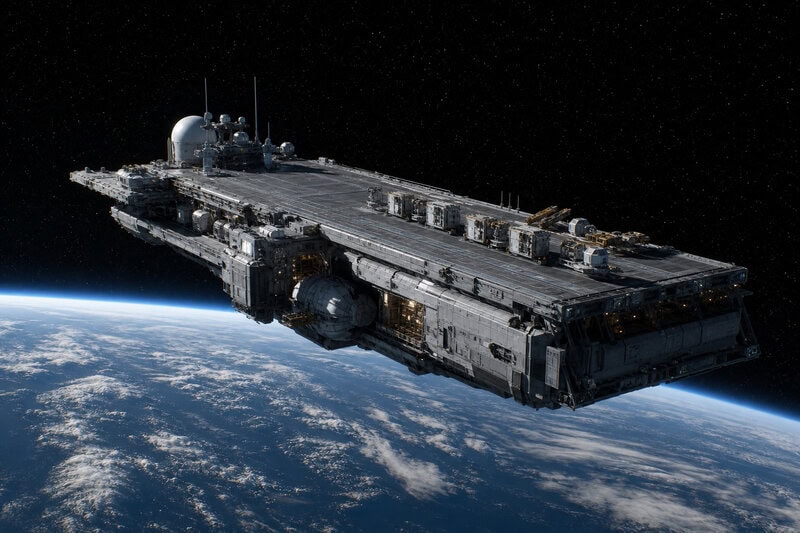
The Lockheed Martin contract fits into a broader defense rationale that Gravitics has articulated around its Orbital Carrier vehicle. The concept describes a platform that functions like an aircraft carrier in orbit: pre-positioning satellites, supplies, or other hardware so they can be deployed rapidly without requiring a dedicated rocket launch for each individual asset. The military analogy is deliberate and reflects how U.S. defense planners are beginning to think about orbital logistics as a strategic resource rather than a purely civilian concern. The SpaceWERX STRATFI award was specifically directed at advancing this vehicle.
The dual customer base — Pentagon and NASA — is itself a commercial strategy. Defense contracts provide near-term revenue and mission pull in a sector where civilian contracts alone rarely sustain early-stage companies through the long development timelines space hardware requires. NASA relationships, meanwhile, build the human-spaceflight credibility and safety-certification experience that would eventually be necessary to host crew commercially. Whether Gravitics can manage both tracks simultaneously without diluting either is a question its leadership will need to answer publicly as deliverable timelines emerge.
The aircraft-carrier analogy has a genuine technical complication worth noting: on Earth, a carrier’s strategic position is relatively stable over tactically relevant timescales. In low Earth orbit, any platform circles the globe approximately every 90 minutes, meaning its position relative to ground targets or other orbital assets changes continuously. How military space planners resolve that orbital-mechanics constraint — and whether pre-positioning assets in orbit delivers the response-time advantages the concept promises — is an active area of defense space doctrine rather than settled operational practice.
Why Living in Microgravity Is Harder Than the Renders Suggest
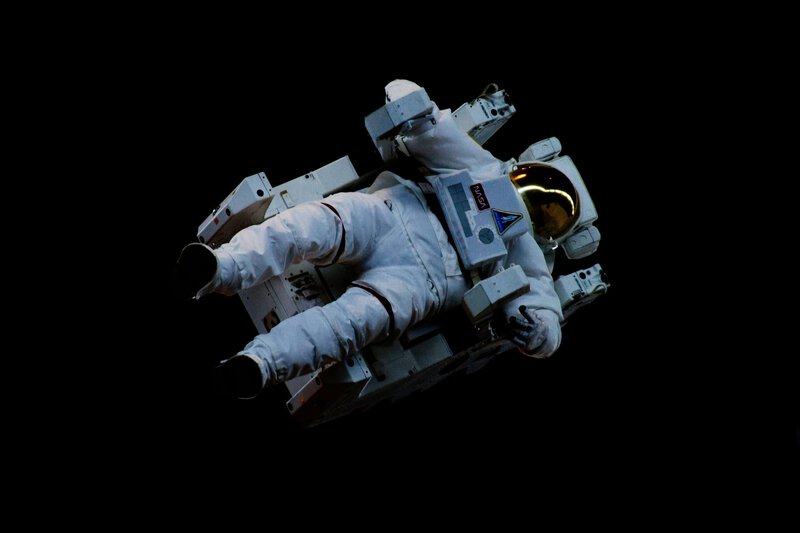
Architectural renderings of commercial space stations tend to show clean, well-lit modules with people floating gracefully between workstations. The lived reality of microgravity — the near-weightless condition in low Earth orbit produced not by an absence of gravity but by continuous free-fall around Earth — is considerably more demanding. NASA and partner-agency research programs have documented well-established physiological consequences of long-duration exposure: bone-density loss, skeletal muscle atrophy, fluid shifts toward the head that alter intracranial pressure, and a cluster of vision changes collectively known as spaceflight-associated neuro-ocular syndrome (SANS), the mechanisms of which researchers are still working to fully characterize.
A habitat’s volume matters for crew health and productivity, but volume alone addresses none of these stressors. Current operational mitigations rely on two or more hours of daily resistive and aerobic exercise — a significant portion of the working day — and even that regimen does not fully prevent bone and muscle losses on missions longer than six months, according to research published through NASA’s Human Research Program. Artificial gravity, achieved by rotating a habitat or a dedicated module, remains at the research and concept stage; no crewed rotating structure has yet operated in orbit.
Sealed habitats present additional acute engineering challenges. The ISS has experienced smoke events from electrical equipment and has required crew members to use hearing protection due to persistent high noise levels from ventilation and life-support systems. Contamination control — preventing biological or chemical hazards from spreading through a closed environment with no easy exit — is an engineering discipline unto itself. Psychological factors including privacy, autonomy, and the monotony of confined environments are increasingly recognized by space-medicine researchers as mission risks of comparable severity to physical health hazards, particularly on missions lasting beyond six months.
Any next-generation commercial space station built around expandable habitat technology will need to address all of these factors in its design — not merely demonstrate that it can hold pressure and deploy reliably in orbit. Volume is a necessary condition for habitability; it is not a sufficient one.
The Bigger Race: NASA’s Commercial Station Ambitions and What Comes Next
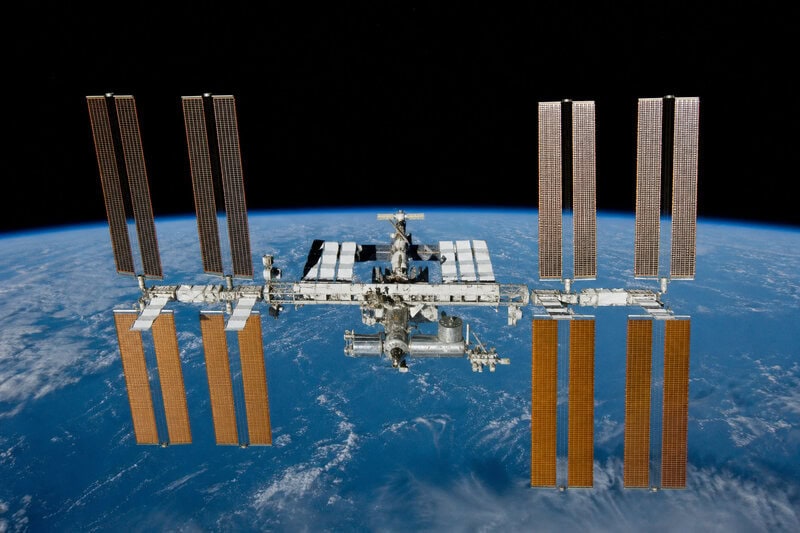
Gravitics is operating within a larger competitive and collaborative ecosystem that NASA has been deliberately cultivating. The agency’s commercial low-Earth-orbit destination (CLD) program aims to have at least one privately owned and operated space station ready to host NASA astronauts by the early 2030s, when the ISS is currently scheduled for a controlled deorbit — a timeline that NASA’s own Office of Inspector General has characterized as aggressive given the current pace of commercial development. Other companies working in this space include Axiom Space, Blue Origin’s Orbital Reef consortium, and Northrop Grumman, none of which has yet flown a human-rated commercial habitat module.
Gravitics’ positioning within this ecosystem appears to be partly as a prime contractor for its own habitats and partly as an infrastructure supplier. The Multiple-Downmass Hangar, for instance, could in principle be useful attached to whichever company’s habitat ultimately dominates the market. That supplier-layer strategy hedges against the real possibility that the commercial station market consolidates around one or two platforms as government budgets and Congressional appropriations constrain NASA’s procurement choices through the late 2020s.
For observers trying to gauge whether the current moment represents a genuine inflection point or another promising-but-premature chapter in commercial space history, the most telling forward-looking signal will not be another contract announcement. It will be a human-rating application filed with NASA — the formal, multi-year engineering and safety certification process that separates a habitat design that performs well in press releases from one that astronauts can legally occupy. That step, which Gravitics has not yet publicly announced plans to initiate, is the threshold that will ultimately determine whether a studio apartment in orbit becomes something people actually live in.
Gravitics announced the NASA SBIR selection on LinkedIn, where the company has been communicating program milestones to industry followers. Whether those milestones translate into flight hardware remains the defining question hanging over one of the Pacific Northwest’s most closely watched space startups.