
By January 2031, one of humanity’s most complex engineering achievements — a structure the size of an American football field, assembled piece by piece over 13 years at a cost of roughly $150 billion — will be deliberately guided out of orbit and scattered across a remote stretch of the South Pacific Ocean. What replaces the International Space Station, and whether anything is ready in time, is the defining question of NASA’s next decade in space.
A $150 Billion Laboratory Running Out of Time
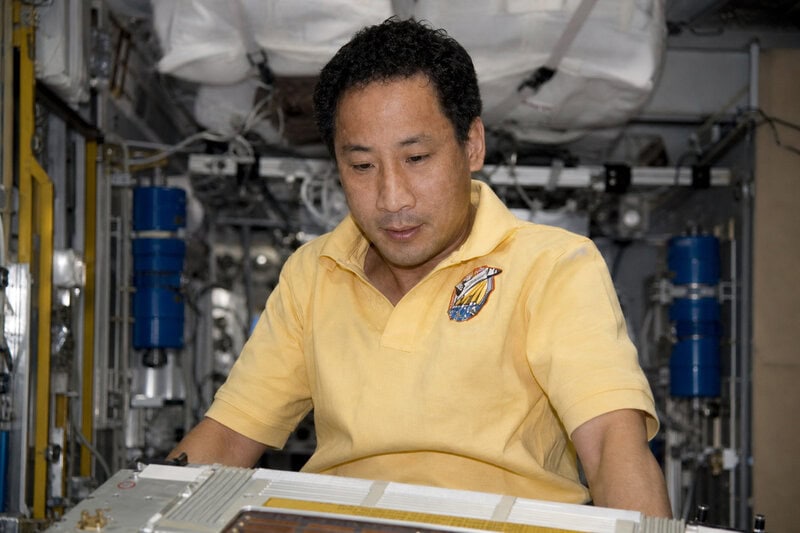
The International Space Station has supported continuous human presence in low Earth orbit — the band of space extending roughly 100 to 1,200 miles above Earth’s surface — since November 2000. For more than two decades, it has served as a platform for fundamental research in biology, physics, and materials science that cannot be replicated on the ground. But the station is aging in ways that cannot be indefinitely managed.
NASA and its international partners have flagged propagating cracks in the hull of the Russian-built Zarya module and persistent air leaks in docking adapters as evidence that the station is deteriorating faster than it can be economically repaired. Structural fatigue, aging life-support systems, and mounting maintenance costs have led the agency to conclude that operating the ISS significantly beyond 2030 poses crew safety risks that are no longer acceptable. The current plan calls for a controlled deorbit into the Pacific Ocean by January 2031, with a specialized deorbit vehicle under contract to guide the station’s descent.
Retiring the ISS is not abandonment. NASA frames it as a deliberate handoff — modeled explicitly on the agency’s earlier decision to cede cargo and crew transport to the private sector through the Commercial Crew Program, which eventually produced operational spacecraft from SpaceX and Boeing. According to NASA’s LEO economy strategy, maintaining a continuous human presence in low Earth orbit remains a national priority. The question is whether the private sector can build the infrastructure to make that continuity possible — and build it fast enough.
The Commercial LEO Destinations Program: Seeding a New Market
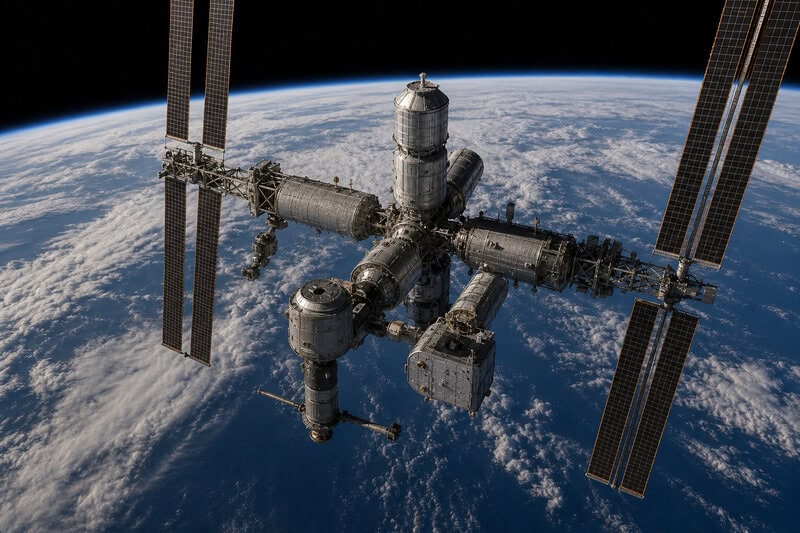
In 2021, NASA formally established the Commercial Low Earth Orbit Destinations (CLD) program, a structured initiative designed to encourage both established aerospace firms and newer entrants to design, build, and eventually operate private space stations. The program’s architecture is deliberately different from how the ISS was built: rather than owning and operating stations outright, NASA is positioning itself as an anchor tenant — an early, guaranteed customer whose financial commitment is intended to reduce investment risk enough to attract private capital alongside government funding.
NASA is currently working with six U.S. companies under a combination of Space Act Agreements and funded development contracts within the CLD program. The station concepts range from large modular platforms capable of hosting research crews for extended stays to more compact habitats designed for shorter commercial visits. The common thread is that each must ultimately be financially sustainable without permanent NASA subsidy — a requirement that distinguishes these projects from every government-built orbital outpost that came before them.
Among the companies in the program, Axiom Space stands furthest along in terms of demonstrated operations. Having already facilitated four private astronaut missions to the ISS, Axiom holds a NASA contract to attach a commercial module directly to the existing station before eventually detaching it to form a free-flying platform — effectively using the ISS itself as a construction scaffold during the transition period. Vast is developing Haven-1, a single-module station intended for short-duration crew visits, with a planned launch aboard a SpaceX Falcon 9 rocket. Blue Origin leads a consortium developing Orbital Reef, a mixed-use platform designed to accommodate up to 10 people. Northrop Grumman is pursuing a modular station concept that draws on the company’s Cygnus cargo vehicle heritage. And Starlab, a project of Nanoracks and Voyager Space developed in partnership with Airbus, proposes a single-launch station featuring a large inflatable habitat — bringing European industrial expertise into what is otherwise a predominantly American commercial competition.
The diversity of approaches is intentional. NASA has structured the CLD program to avoid betting on a single architecture, accepting that some concepts may falter while others advance. That portfolio logic mirrors how the Commercial Crew Program handled early development risk, though the technical and financial stakes for building entire habitable stations are considerably higher than for building transportation vehicles alone.
What These Stations Must Actually Deliver
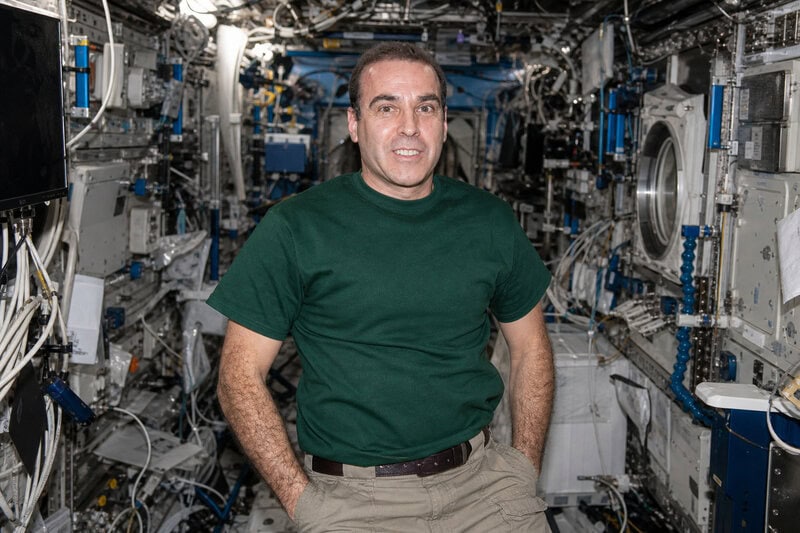
NASA’s requirements for commercial successors to the ISS center on three pillars, as outlined in the agency’s LEO strategy: the stations must be financially sustainable without permanent government subsidy, cost-effective compared to the ISS’s roughly $3 to $4 billion annual operating cost to the United States, and demonstrably safe for crewed operations. To receive NASA certification — the formal approval required before agency astronauts can board a commercial station — companies must meet rigorous standards covering life support, structural integrity, radiation shielding, and emergency evacuation capability. That certification process itself is still being defined in detail, which introduces schedule uncertainty for companies planning their development timelines around it.
Beyond NASA missions, the business models underpinning these stations depend on revenue from multiple sources: pharmaceutical and materials research in microgravity, in-space manufacturing, media partnerships, space tourism, and eventually serving as logistics nodes for missions headed to the Moon and beyond. That diversified revenue thesis is the commercial rationale that justifies private investment in the first place.
Whether the broader market will materialize quickly enough to sustain these stations is one of the most actively debated questions in the aerospace industry. Research published in the journal Acta Astronautica examining the value framework for a LEO economy reflects the difficulty of quantifying demand from non-NASA customers at this stage of market development. Some analysts argue that NASA’s anchor-tenant revenue alone — even at the levels the agency has proposed — cannot sustain multiple commercial stations long-term without a robust and independent commercial demand base emerging in parallel. That uncertainty is not lost on the companies building these stations, or on the investors backing them.
The Risks NASA Is Openly Acknowledging
NASA has been unusually candid about the vulnerabilities in its own strategy. The agency has publicly restructured CLD program timelines, and its own planning documents distinguish between an “overlap period” — in which at least one commercial station and the ISS coexist long enough for astronauts to transition smoothly — and a riskier “gap scenario” in which commercial development slips past the ISS deorbit date, leaving U.S. astronauts without a domestic orbital destination. That gap scenario is not a remote theoretical risk; it is a contingency that program planners are actively working to prevent.
Analysis from the Center for Strategic and International Studies has documented how NASA has changed course on its commercial station plans, reflecting both technical setbacks and budgetary pressure. A Government Accountability Office assessment of NASA’s low Earth orbit transition underscores that the agency faces consequential near-term decisions with limited margin for delay, and flags schedule and funding risks across the CLD portfolio.
Funding is a central vulnerability. Congress has historically appropriated less for the CLD program than NASA has requested, and private investors closely monitor NASA’s budget commitments as a signal of whether the commercial LEO market is real or aspirational. A pattern of underfunding risks becoming self-fulfilling: reduced NASA investment weakens commercial business cases, which in turn reduces private capital availability, which slows development, which increases the probability of exactly the gap scenario the agency is trying to avoid. Each budget cycle in which the CLD program receives less than requested compounds that risk.
Regulatory uncertainty adds another layer of complexity. Unlike the ISS, which operates under intergovernmental treaties ratified by 15 nations, commercial stations will function under a framework of U.S. commercial space regulations that the FAA and other agencies are still in the process of developing and finalizing. That unresolved legal architecture creates genuine financial uncertainty for companies making multi-billion-dollar development commitments today, since the rules governing liability, safety oversight, and on-orbit operations have not been fully established.
What a Successful Transition Would Actually Look Like
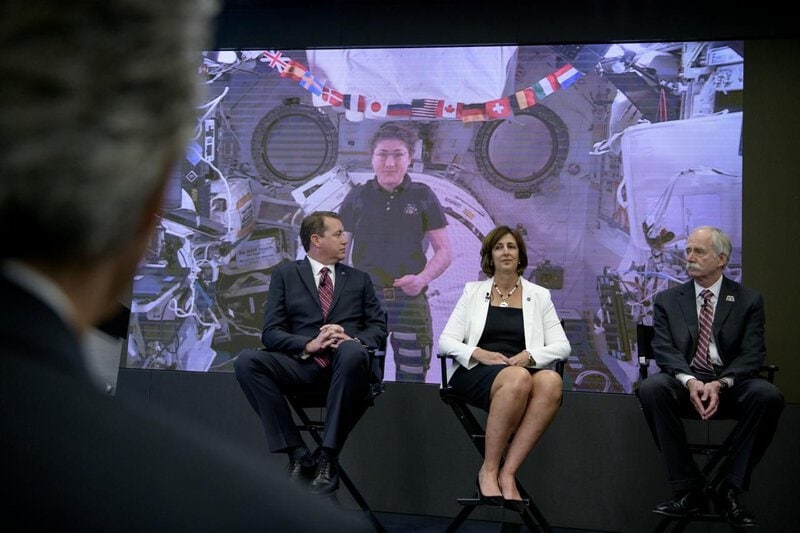
In NASA’s envisioned future, the agency purchases blocks of crew time and research capacity on commercial stations the way a large institution leases access to specialized equipment — as a service, not as an asset owner. That shift in posture is intended to free NASA capital for its Artemis lunar program and eventual deep-space exploration ambitions, while leaving the day-to-day economics of orbital operations to the private sector.
A genuinely successful transition, by NASA’s own metrics, would mean that by the early 2030s at least one certified commercial station is operational, multiple paying customers beyond NASA are using it on a recurring basis, and the cost to U.S. taxpayers of sustaining a human presence in low Earth orbit has measurably declined relative to ISS operating costs. The National Space Society has outlined what a commercially driven LEO future could offer in terms of expanded research access and lower barriers to orbit for a wider range of users and industries.
The broader scientific community stands to benefit significantly if the model succeeds. More available orbital research time, stations potentially optimized for specific research domains rather than the broad generalist agenda the ISS has always had to balance, and lower access costs could collectively accelerate fields ranging from pharmaceutical development to materials science. Some researchers also envision commercial stations serving niche markets — remote sensing operations, in-space servicing depots, or dedicated manufacturing environments — that the ISS was never designed to support.
But those benefits depend entirely on the stations getting built, certified, and operating on a timeline that leaves no gap in American human spaceflight capability. As Aviation Week’s coverage of NASA’s LEO strategy makes clear, the agency is navigating a transition with no direct historical precedent: handing not just transportation, but the orbital habitats themselves, to the commercial sector. The Commercial Crew Program demonstrated that this approach can work for spacecraft. Whether it can scale to the far more complex and costly challenge of building and sustaining entire human outposts in orbit — and doing so before the most sophisticated structure humanity has ever assembled in space sinks silently into the Pacific — remains the central unresolved question of NASA’s next decade.