
A satellite launched with perfectly calibrated instruments can drift enough over a single decade that a genuine climate warming signal becomes indistinguishable from sensor noise — and for years, the scientific community has had no independent way to catch it. On July 10, 2026, NASA’s CLARREO Pathfinder instrument recorded its first measurements in space, marking a concrete turning point in the decades-long effort to build a verifiable, high-accuracy foundation for Earth observation.
The Invisible Problem: What Calibration Drift Actually Costs
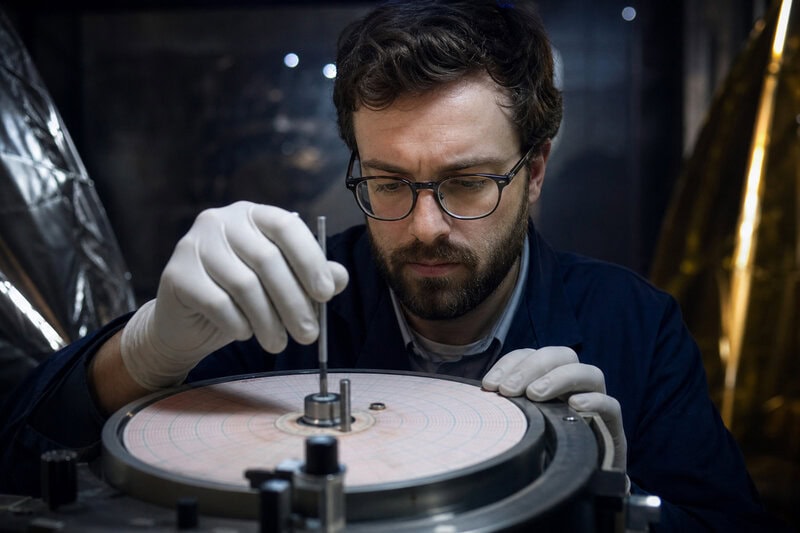
Calibration is the process of confirming that an instrument’s readings correspond to a known, agreed-upon physical standard. Think of it as regularly checking a scale against a certified weight — if the scale drifts, every measurement it has ever recorded becomes suspect. For satellites, this check cannot happen on a repair bench. It must happen in orbit, with no access to independent ground truth and no way to swap out a degrading component.
The forces working against accuracy in space are relentless. Radiation exposure gradually alters detector sensitivity. Thermal cycling — the extreme temperature swings between sunlit and shadowed portions of each orbit — stresses optical components and structural materials. Mechanical aging affects moving parts. The cumulative result is drift: the same physical signal striking a sensor produces a subtly different digital reading over time, and that difference can be entirely invisible to the instrument itself.
The scientific community broadly agrees that drift occurs and matters. The exact magnitude of its effect on specific long-term climate records — sea surface temperatures, vegetation greenness indices, outgoing radiation budgets — remains an active area of research and, in several datasets, a source of legitimate scientific debate. What is not debated is the stakes: decisions worth trillions of dollars in climate policy, disaster preparedness, and resource management depend directly on these measurements being trustworthy.
How Satellites Calibrate Themselves — and Why That Is Not Enough
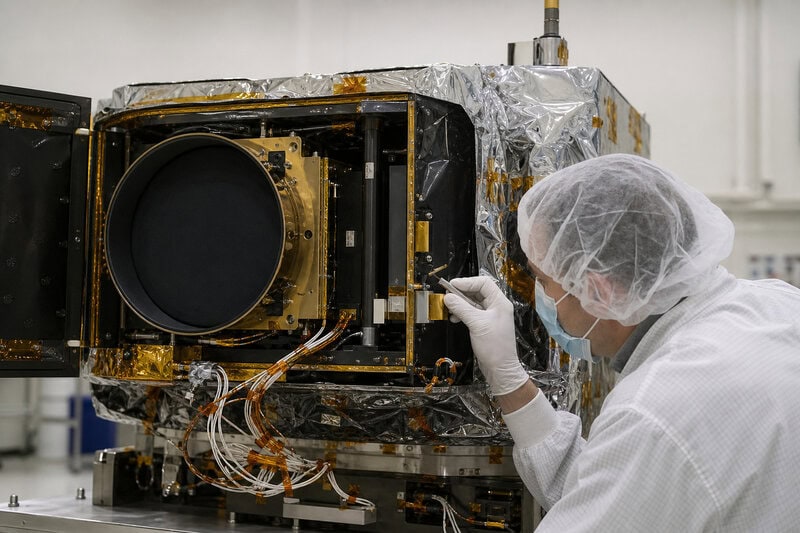
Engineers do not send satellites into orbit without calibration tools. Instruments are typically built with a number of calibration devices to ensure their stability and accuracy once they’re on orbit. These commonly include onboard blackbody targets — objects held at precisely known temperatures that serve as thermal references for infrared sensors — as well as solar diffuser panels that provide a consistent source of reflected sunlight. Scientists also use vicarious calibration, comparing satellite readings to ground-based measurements of stable, well-characterized surface targets such as desert sand flats or Antarctic ice sheets.
Each approach is valuable, but each carries a fundamental limitation: the calibration tool itself is subject to the same orbital degradation as the instrument it is monitoring. An onboard blackbody target can age. A solar diffuser can become contaminated or change reflectance over time. Internal checks cannot provide a truly independent, absolute reference, because they are part of the same degrading system.
The next layer of the calibration toolkit is inter-calibration — cross-referencing multiple satellites observing the same location at nearly the same time. When two instruments see the same patch of ocean or forest under identical lighting conditions and disagree, that disagreement reveals a relative error between them. Inter-calibration is powerful for catching differences between instruments, but it contains a critical weakness: if every satellite in a constellation is calibrated against other satellites in the same constellation, systematic errors shared across all of them go undetected. The fleet can agree with itself while every instrument is wrong by the same amount. Correcting this requires at least one instrument of sufficiently high absolute accuracy to anchor the entire system — an external reference standard that breaks the circular dependency.
That is precisely the gap CLARREO Pathfinder is designed to fill. As NASA explains in its discussion of satellite calibration methods, achieving reliable long-term climate records requires exactly this kind of independent, traceable reference in orbit.
CLARREO Pathfinder: An Absolute Reference Standard Arrives in Orbit
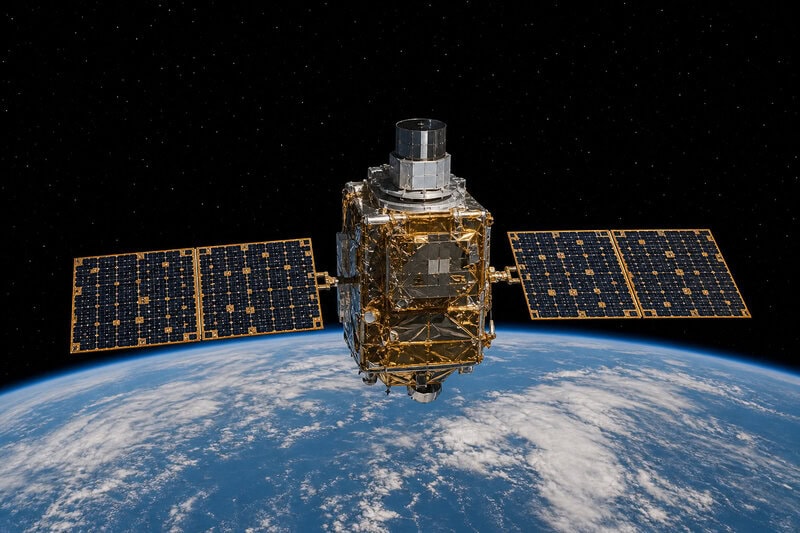
CLARREO Pathfinder — short for Climate Absolute Radiance and Refractivity Observatory Pathfinder — is designed to measure reflected sunlight from Earth and the Moon with unprecedented absolute accuracy. Its readings are traceable to fundamental physical standards, meaning they can be compared directly to laboratory measurements of light intensity rather than relying on the satellite’s own internal calibration chain.
The practical application is inter-calibration at a new level of rigor. When CLARREO Pathfinder and another Earth-observing satellite observe the same patch of land or ocean under the same illumination conditions, any difference in their readings reveals how far the second instrument has drifted from absolute physical truth. Scientists can then use that difference to correct the other instrument’s data — not only for current measurements, but potentially for historical records as well, by working backward through the drift trajectory.
The July 10, 2026 milestone marks the transition from engineering validation to actual scientific data collection. It is the moment CLARREO Pathfinder moved from being a carefully tested instrument to being an active producer of numbers the broader Earth-observation community can compare against their own instruments.
Precision matters here about what this mission is and is not. CLARREO Pathfinder is a pathfinder — a demonstration mission intended to prove the concept and begin building a calibration record, not a permanent operational system. Its long-term impact on global Earth observations depends on sustained follow-on missions that carry this capability forward across coming decades. The first measurements are a beginning, not a completion.
The Moon as a Calibration Target: NASA’s Arcstone Mission
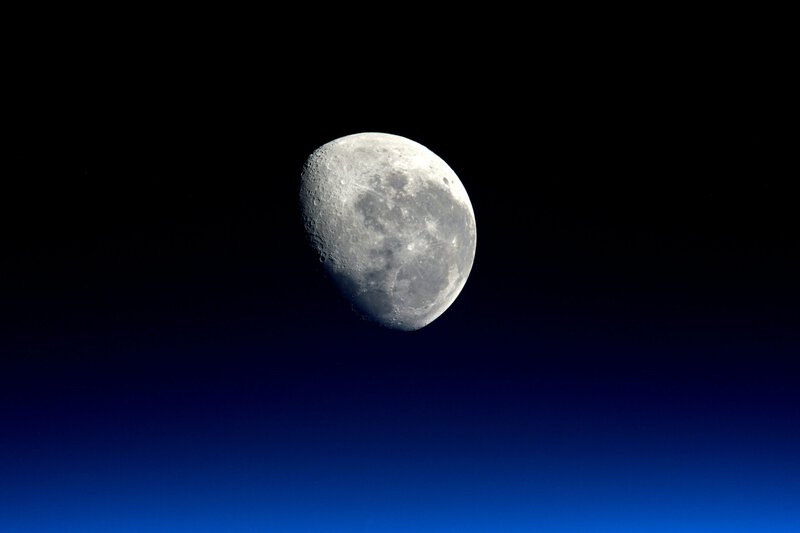
CLARREO Pathfinder’s ability to measure reflected sunlight from the Moon points toward a complementary approach to the calibration problem. NASA’s Arcstone instrument is designed to be the first mission exclusively dedicated to measuring lunar reflectance from space — the fraction of incoming sunlight the Moon reflects back toward Earth, a signal any satellite with a clear view of the Moon can observe.
The Moon is a uniquely attractive calibration reference for several reasons. It has no atmosphere to scatter or absorb light in variable ways. It has no weather. Its surface changes on geological rather than human timescales, making its reflectance an exceptionally stable signal across the operational lifetime of any satellite fleet. A highly accurate, well-characterized measurement of lunar reflectance becomes a calibration standard accessible to the entire global observing community, regardless of which agency built a given satellite or what orbit it occupies.
Both CLARREO Pathfinder and Arcstone are designed to observe reflected light from the Moon, creating the possibility of a coherent, cross-validated lunar calibration standard. When two independently designed, high-accuracy instruments agree on the Moon’s reflectance, that agreement strengthens confidence in both measurements and provides a more robust anchor for the broader satellite calibration system. The science supports the approach; the operational infrastructure to implement it at scale remains a work in progress.
Why This Matters: From Sensor Drift to Climate Decisions
The connection between calibration accuracy and real-world decisions is more direct than it might appear. Sea surface temperature trends inform hurricane intensification forecasts. Vegetation greenness indices track deforestation and drought stress across continents. Measurements of reflected solar energy are central to quantifying Earth’s energy imbalance — the fundamental driver of long-term warming. Every one of these data products begins with a raw signal recorded by a satellite sensor, and every one is only as reliable as the calibration of that sensor.
Improved calibration does not change the physical climate. It changes scientists’ ability to measure it with confidence. That distinction carries enormous practical weight: the difference between a 0.1 degrees Celsius per decade warming trend and a 0.3 degrees Celsius per decade warming trend in a given dataset can shift adaptation investment decisions by hundreds of billions of dollars. When measurement uncertainty is wide enough to encompass both values, policy planning becomes correspondingly harder to anchor.
The community of beneficiaries is broad. Weather agencies depend on well-calibrated atmospheric sounders for forecast accuracy. Agricultural monitoring services use vegetation indices that require stable, comparable readings across years and satellite generations. Ice-sheet research teams need consistent surface reflectance measurements to track albedo changes. Ocean color scientists require precise calibration to distinguish subtle biological signals from the optical noise of the water column itself. All of these communities operate instruments that could be inter-calibrated using the reference data CLARREO Pathfinder is now generating.
It is equally important to acknowledge what CLARREO Pathfinder does not immediately solve. The instrument addresses the absolute accuracy problem for reflected solar radiation — the portion of the electromagnetic spectrum it is designed to measure. Thermal infrared calibration, microwave sounding accuracy, and the decades of legacy satellite data collected before any such independent reference existed are separate, ongoing challenges that will require their own dedicated solutions.
What Comes Next: Building a Calibration Infrastructure for the Planet
CLARREO Pathfinder and Arcstone are best understood as early, foundational steps toward a permanent, independent calibration infrastructure — a stable, internationally recognized ruler in space that keeps the entire global observing system honest across agencies, instrument generations, and national borders.
Achieving that ambition is not a purely technical problem. It requires sustained cooperation among NASA, NOAA, the European Space Agency, and international partners, each operating instruments with different designs, different orbits, and different institutional data policies. Agreeing on shared calibration standards and building the data pipelines to implement them across a fragmented global observing system is a significant organizational and diplomatic undertaking, not merely a scientific one.
The most consequential near-term milestone to watch is the first published inter-calibration results comparing CLARREO Pathfinder’s measurements to those of existing operational satellites. Those comparisons will be a direct, empirical test of whether the concept delivers on its scientific promise. If CLARREO Pathfinder can demonstrably detect and quantify calibration offsets in other instruments, the mission’s core argument will be validated in the most concrete possible way — and those results will likely define its scientific legacy.
The problem of invisible measurement error has shadowed satellite science since its earliest days, quietly introducing uncertainty into the observations that society uses to understand its changing planet. CLARREO Pathfinder’s first data, recorded on July 10, 2026, is the clearest signal yet that a rigorous, lasting solution is finally within reach.