
On a 100°F afternoon in Phoenix, the interior of a mobile home can reach clinically dangerous temperatures far faster than a site-built house — a gap measured in minutes, not hours, according to ongoing participant studies by ASU Resilience Solutions researchers tracking real-time heat conditions inside occupied manufactured homes. For the millions of Americans who live in these structures, that speed is not a mere inconvenience. It is the difference between discomfort and a medical emergency.
Why This Moment Demands Attention
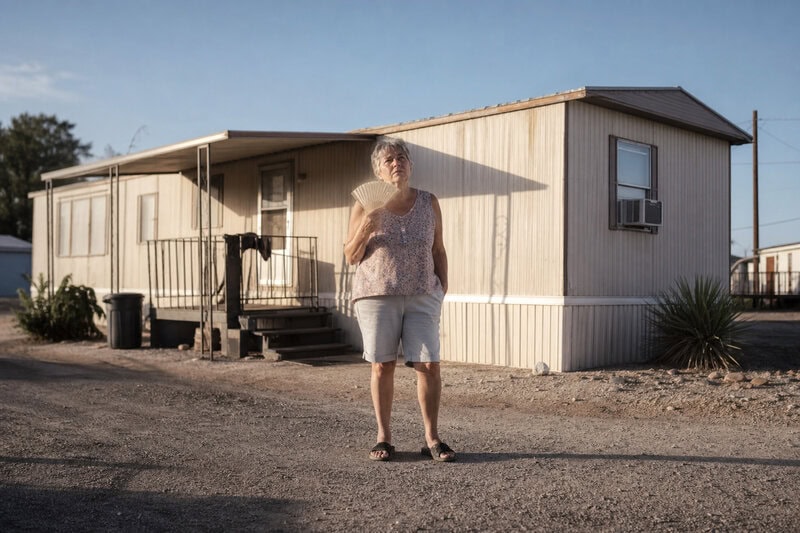
The summer of 2025 has brought another round of record-breaking heat to the Sun Belt, the rural South, and the inland West — precisely the regions where manufactured housing is most concentrated. Yet the specific danger these structures pose during extreme heat remains poorly understood outside specialist research circles, underreported in mainstream coverage, and largely unaddressed by federal policy. That combination of physical risk and institutional neglect is what makes this a public-health story, not merely a housing story.
Research published in the ASCE Natural Hazards Review found that households in manufactured housing face “consistently higher exposure to heat and fire hazards across all exposure measures” compared with residents of site-built homes. That is not an incremental difference. It is a structural disparity baked into the design of the units themselves — one that existing regulation has never fully corrected and that a warming climate is actively widening.
Terminology First: What “Mobile Home” Actually Means
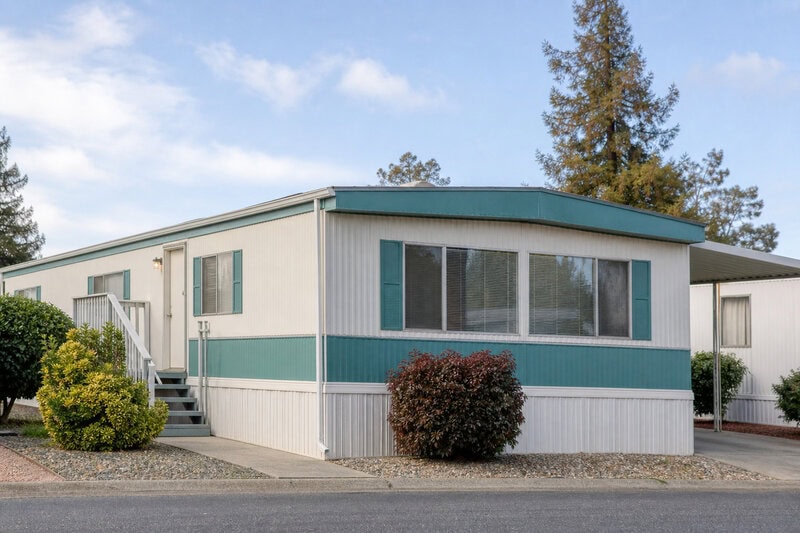
“Manufactured housing” is the federal regulatory term for factory-built homes constructed on a permanent steel chassis and governed by HUD’s Manufactured Home Construction and Safety Standards, which took effect in 1976. “Mobile home” technically refers to units built before that code existed, though researchers, policymakers, and residents use the two terms interchangeably. The legal distinction carries weight in regulatory contexts, but for the purposes of heat physics, the underlying structural realities of both older and many newer units present strikingly similar problems — and this article uses both terms in their common, overlapping sense.
Structure as Destiny: What Makes These Homes Heat Up So Fast
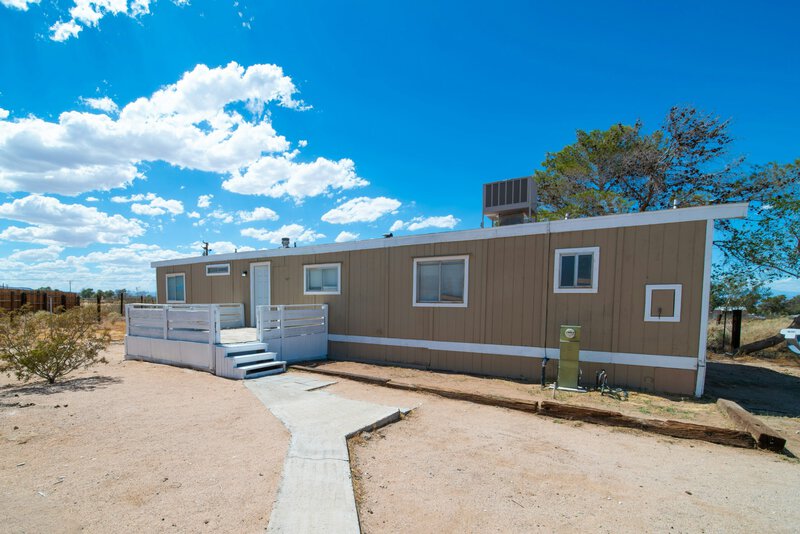
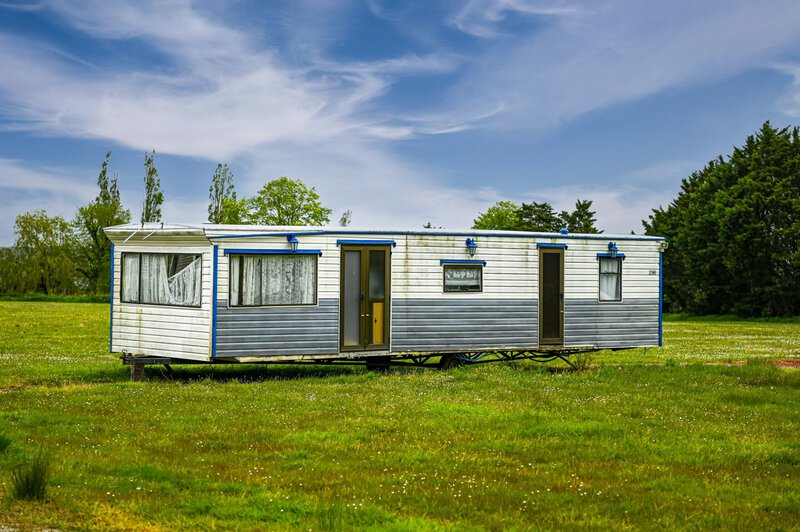
The core thermal problem is architectural. Mobile homes typically feature thinner walls, shallower roof cavities, and lower-grade insulation than site-built houses. Each characteristic reduces what building scientists call the building envelope — the physical shell separating conditioned indoor air from outdoor conditions. A thinner, less-insulated envelope offers far less resistance to radiant and conductive heat gain, meaning outdoor heat crosses into living spaces with relatively little friction.
The Urban Institute has documented that mobile homes are energy inefficient by design and are “difficult to heat and cool,” making them expensive to operate and physically dangerous during temperature extremes. Critically, that inefficiency is not a product of neglect by individual residents. It is a structural liability built into the units at the factory, often decades before climate projections indicated how extreme regional temperatures would become.
ASU Resilience Solutions researchers have confirmed that manufactured-home residents “are more exposed to heat because of their housing structure” — not solely because of geography or income, though both factors compound the risk in measurable ways.
The Physics of Heat Gain: A Plain Explanation
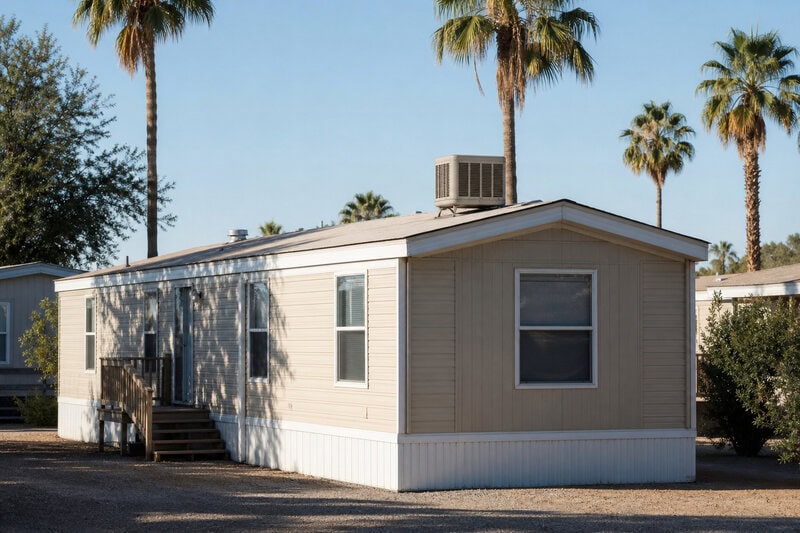
Understanding why mobile homes heat up so quickly requires a brief walk through building thermodynamics. Solar radiation strikes the roof — often metal or a low-mass material with minimal reflectivity — and that energy conducts rapidly through thin insulation into the living space below. The critical variable is thermal mass: the capacity of walls, floors, and ceilings to absorb incoming heat and release it slowly over time. Materials with high thermal mass — brick, poured concrete, thick wood framing — act as buffers, absorbing heat during the day and releasing it gradually through a process called thermal lag. That lag can keep indoor temperatures meaningfully lower during peak afternoon hours.
Mobile homes are built with lightweight materials specifically to remain transportable, which means they have very low thermal mass. Heat enters quickly, accumulates rapidly, and — critically — stays elevated long after outdoor temperatures begin to fall at sunset, because there is little stored cooling capacity to counteract it. The result is an indoor environment that can closely track outdoor extremes and sometimes exceed them when radiant heat from the roof is factored in.
That mechanism matters because of what it does to the human body. Heat-related illness describes a clinical spectrum: heat cramps and heat exhaustion at the less severe end, characterized by heavy sweating, weakness, and nausea; and heat stroke at the extreme, defined by a core body temperature above 104°F and accompanied by confusion and the risk of organ failure. All of these conditions are triggered when the body cannot shed heat fast enough to maintain a safe core temperature — a failure made more likely when the surrounding environment is itself hot, humid, and poorly ventilated. Elderly individuals, people on certain medications, and those with cardiovascular or respiratory conditions face elevated risk because their bodies’ thermoregulation mechanisms are already compromised.
ASU’s ongoing Phoenix study is moving the science from modeled estimates toward measured human exposure, deploying sensors inside occupied manufactured homes to capture real-time indoor temperature and humidity data. Researchers appropriately caution that data collection is ongoing and peer-reviewed results have not yet been fully published — an important distinction between emerging evidence and established scientific consensus. Early findings are nonetheless already shaping policy conversations at the state and municipal level.
Who Lives in Manufactured Housing — and Why Vulnerability Compounds
The population living in manufactured housing is not a random cross-section of America. It skews older, lower-income, and rural — precisely the demographics that public-health researchers identify as most vulnerable to heat-related illness and death. Each characteristic raises risk independently. Together, they create a compounding exposure that researchers at 10across.org describe as vulnerability to nearly all climate risks, including extreme heat, severe weather, and flooding.
The rural dimension is particularly acute. Reporting by NC Health News in July 2025 captured the problem directly: mobile homes, poor insulation, and limited access to care leave rural Americans dangerously exposed to rising temperatures. When heat stroke strikes, the nearest emergency room may be an hour or more away — a logistical reality that converts a treatable emergency into a fatal one.
Access to mechanical cooling is a critical chokepoint in that chain of risk. The Daily Yonder reported in September 2025 that extreme heat poses a “serious health threat to those living in mobile homes lacking modern HVAC systems.” Where window air-conditioning units exist, they are frequently undersized for the rapid heat gain these structures experience. Central air systems — standard in most site-built homes in hot climates — remain uncommon in older manufactured units.
Financial precarity closes the loop in a particularly punishing way. The same households least able to afford retrofits, higher electricity bills, or emergency medical care are the ones facing the highest indoor heat exposure. The Urban Institute identifies this dynamic explicitly, noting that manufactured housing is “expensive to own” in ways that compound during temperature extremes — utility costs spike precisely when the structural inefficiency of the home makes mechanical cooling most necessary and least effective.
How Regulation Fell Behind the Physics
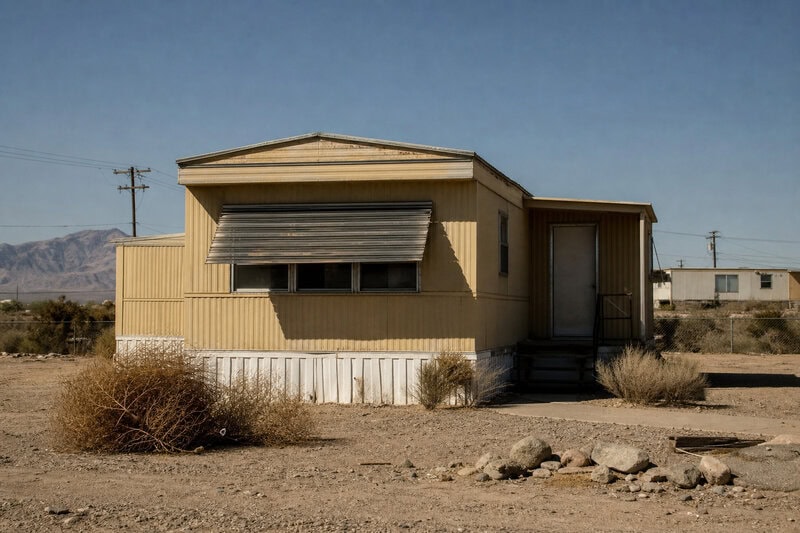
The 1976 HUD code represented genuine progress, establishing minimum construction and safety standards for manufactured housing for the first time. But the decades since have exposed its limits. Researchers at the University of Washington have documented that legal and regulatory factors are actively perpetuating mobile home heat risks in the United States — a finding that points not just to the original standards but to the failure to update them as both the climate and the housing stock have evolved.
Pre-1976 units remain in active use across the country with no mandatory upgrade pathway. Even post-code homes built to 1980s energy standards were not engineered for the heat extremes now classified as routine in Phoenix, Las Vegas, rural Texas, or inland California. The regulatory framework, in other words, was calibrated for a climate that no longer exists in many of the regions where manufactured housing is most prevalent.
Zoning and land-use rules compound the problem through a separate mechanism. Mobile home parks frequently occupy land with minimal tree canopy — the natural cooling that mature trees provide can reduce ambient temperatures by several degrees, but park operators and municipalities have rarely prioritized planting or preservation. More fundamentally, residents of manufactured-home parks typically do not own the land beneath their homes. That land-tenure arrangement limits their legal standing and practical ability to make structural improvements, even when they have the financial means and motivation to do so.
This is a genuinely contested policy space. Some housing researchers argue that HUD’s Manufactured Home Construction and Safety Standards have improved meaningfully in recent years, with updates tightening thermal performance requirements. Others, pointing to the ASCE data on persistent hazard-exposure gaps, argue that incremental updates are insufficient against the accelerating pace of climate change — and that the gap between regulatory intention and lived reality remains dangerously wide. Both positions are held by credentialed researchers working from the same underlying evidence base, which itself reflects how nascent the policy consensus remains.
What the Research Says Can Actually Help
Interventions with documented impact fall into two broad categories: structural changes to the homes themselves, and public-health responses that do not require homeowners to spend money they typically do not have.
On the structural side, radiant barrier insulation added to roof cavities can meaningfully reduce heat gain by reflecting solar radiation before it conducts into the living space. Reflective or “cool” roofing materials accomplish a similar goal at the roof surface. Properly sized mechanical cooling — matched to the actual heat-gain characteristics of a specific unit — is more effective than the undersized window units most residents currently rely on. The obstacle to all of these solutions is identical: they require upfront capital investment that most manufactured-home residents cannot access without targeted subsidy programs.
Public-health responses that bypass the capital barrier include extended cooling center hours during heat emergencies, proactive wellness checks on elderly residents of mobile home parks, and utility disconnection moratoria that prevent electricity shut-offs during periods of extreme heat. Researchers across the institutions cited in this article consistently identify these measures as near-term, life-saving interventions that can be deployed while structural solutions are developed and scaled.
The longer-term policy levers identified by researchers at the University of Washington and the Urban Institute include updating HUD energy and ventilation standards to reflect current and projected climate conditions; expanding weatherization assistance eligibility so that manufactured-home residents can access the same retrofit funding available to site-built homeowners; and reforming land-tenure rules to give park residents the legal standing to make improvements to structures they own but whose foundation they do not. None of these changes is politically simple. All of them have a clear evidentiary basis in the research published to date.
The Bottom Line
Manufactured-home heat danger is not a fringe risk or a rare outlier event. It is a structural, measurable, and growing threat to millions of Americans — disproportionately the most economically and physically vulnerable among them. The science describing that threat has advanced considerably over the past decade; the policy response has not kept pace. The research base now spans federal agencies, academic institutions, and independent policy organizations, and its findings are consistent: the design of these homes, the demographics of their residents, and the trajectory of the climate are converging in ways that demand a response commensurate with the scale of the problem. Waiting for another lethal summer to make the case is not a policy position. It is a choice about who bears the consequences of inaction.