
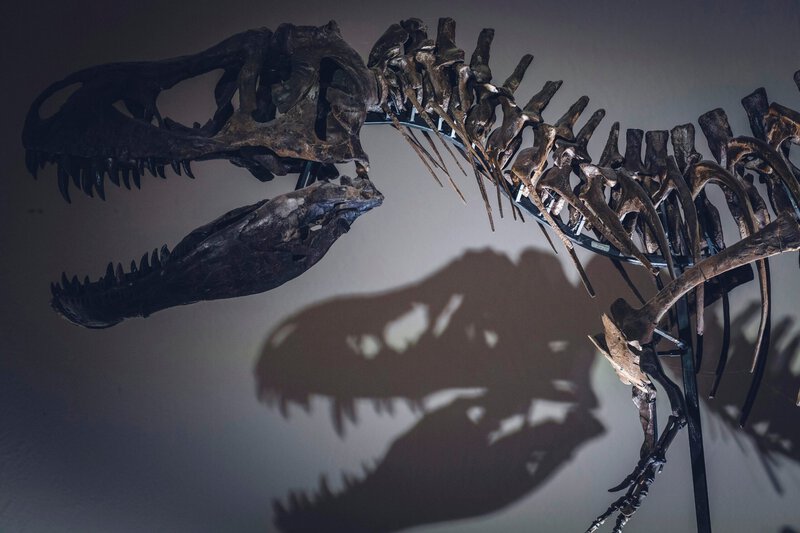
The most famous dinosaur skeleton in the world almost certainly had lips — and that single detail, easy to overlook in a museum hall, quietly demolishes the mental image of T. rex that decades of films and exhibits have burned into public consciousness. When SUE: The T. rex Experience opens at Liberty Science Center in Jersey City on October 4, 2025, running through May 25, 2026, visitors will stand before the most complete Tyrannosaurus rex skeleton ever recovered — and, if they look carefully, encounter an animal that science is still actively learning to describe.
What the Exhibition Actually Is
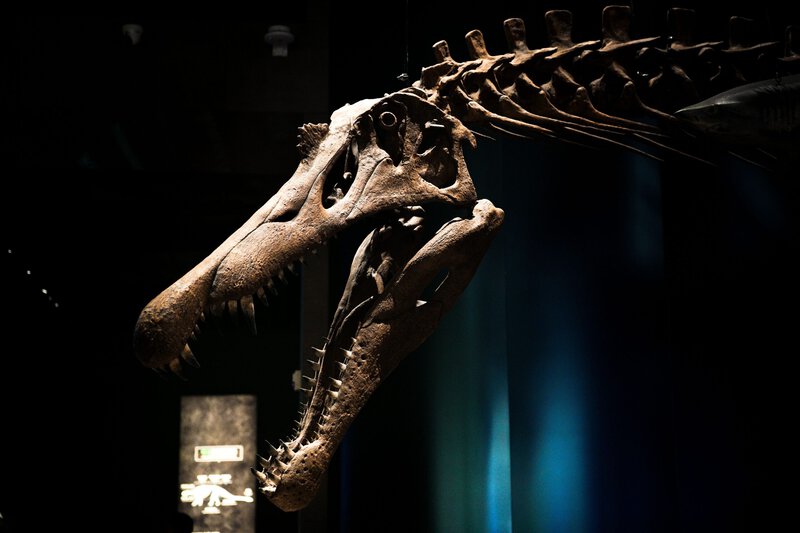
SUE is a real fossil, not a replica. The specimen — cataloged as FMNH PR 2081 — was excavated in 1990 from the Hell Creek Formation near Faith, South Dakota, and acquired by the Field Museum of Natural History in Chicago, where it was housed and studied for decades before beginning a traveling exhibition schedule. At approximately 90 percent complete by bone count, according to the Field Museum, SUE provides a skeletal foundation unusually well suited to the kind of detailed scientific analysis that this exhibition is designed to communicate.
Liberty Science Center, located at 222 Jersey City Boulevard in Liberty State Park, is hosting SUE for a third time — a measure of both the exhibit’s sustained public appeal and the institution’s ongoing commitment to paleontology programming. Interactive components are designed to explain the science of reconstruction, not merely to display a large predator. That pedagogical transparency places it among the more intellectually honest large-dinosaur exhibitions currently touring.
Admission, parking, and timed-entry details are available directly through Liberty Science Center. Families planning a visit should note that the exhibition runs nearly eight months, providing flexibility, but advance ticketing is advisable for weekend visits.
What a Skeleton Can — and Cannot — Tell You
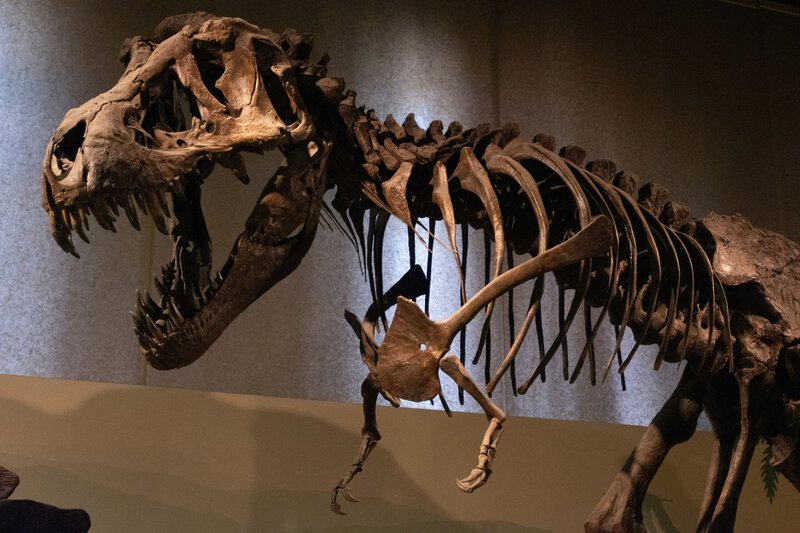
Bones are extraordinarily informative. Surface textures called muscle attachment sites allow researchers to estimate the size, routing, and relative power of major muscle groups. From a well-preserved skeleton, paleontologists can reconstruct body mass, basic posture, gait mechanics, and broad metabolic demands with reasonable confidence. For a specimen as complete as SUE, that foundation is unusually solid.
But a skeleton is a blueprint, not a finished building. Skin, fat, cartilage, and keratin structures — the biological material that produces feathers, scales, beaks, and claws — almost never fossilize under normal geological conditions. Roughly 60 to 80 percent of an animal’s outward appearance must therefore be reconstructed through comparisons with living relatives, using a formal method called phylogenetic bracketing, developed by paleontologist Lawrence Witmer of Ohio University in the 1990s.
Phylogenetic bracketing identifies a dinosaur’s closest living relatives on both sides of its evolutionary family tree — birds on one branch, crocodilians on the other — and assumes that soft-tissue features shared by both groups were likely present in the dinosaur lineage in between. The method is powerful but carries a built-in caveat: features that evolved independently in birds and crocodilians after the dinosaur lineage diverged cannot be reliably projected onto extinct animals. This is why rigorous paleontologists carefully distinguish findings that are “consistent with the skeleton” from findings that are “demonstrated by the skeleton.” That distinction is not pedantry; it is the load-bearing wall of the entire discipline.
The lip question illustrates the method in action. A landmark 2023 study published in Science, led by paleontologist Thomas Cullen and colleagues at the Canadian Museum of Nature, compared tooth-to-jaw proportions and the microscopic structure of tooth enamel in living lizards and crocodilians. Their finding: in every living scaled reptile whose teeth extend as far below the jaw line as SUE’s do, soft tissue — lips — covers those teeth completely. The perpetually bared-fang grimace of virtually every film and older museum mount is, by this evidence, an artifact of mounting convention rather than biology. Visitors who examine SUE’s skull closely can observe this proportion for themselves; the bones quietly make the argument without any signage required.
The Feather Revolution: How Fossils From China Changed the Field
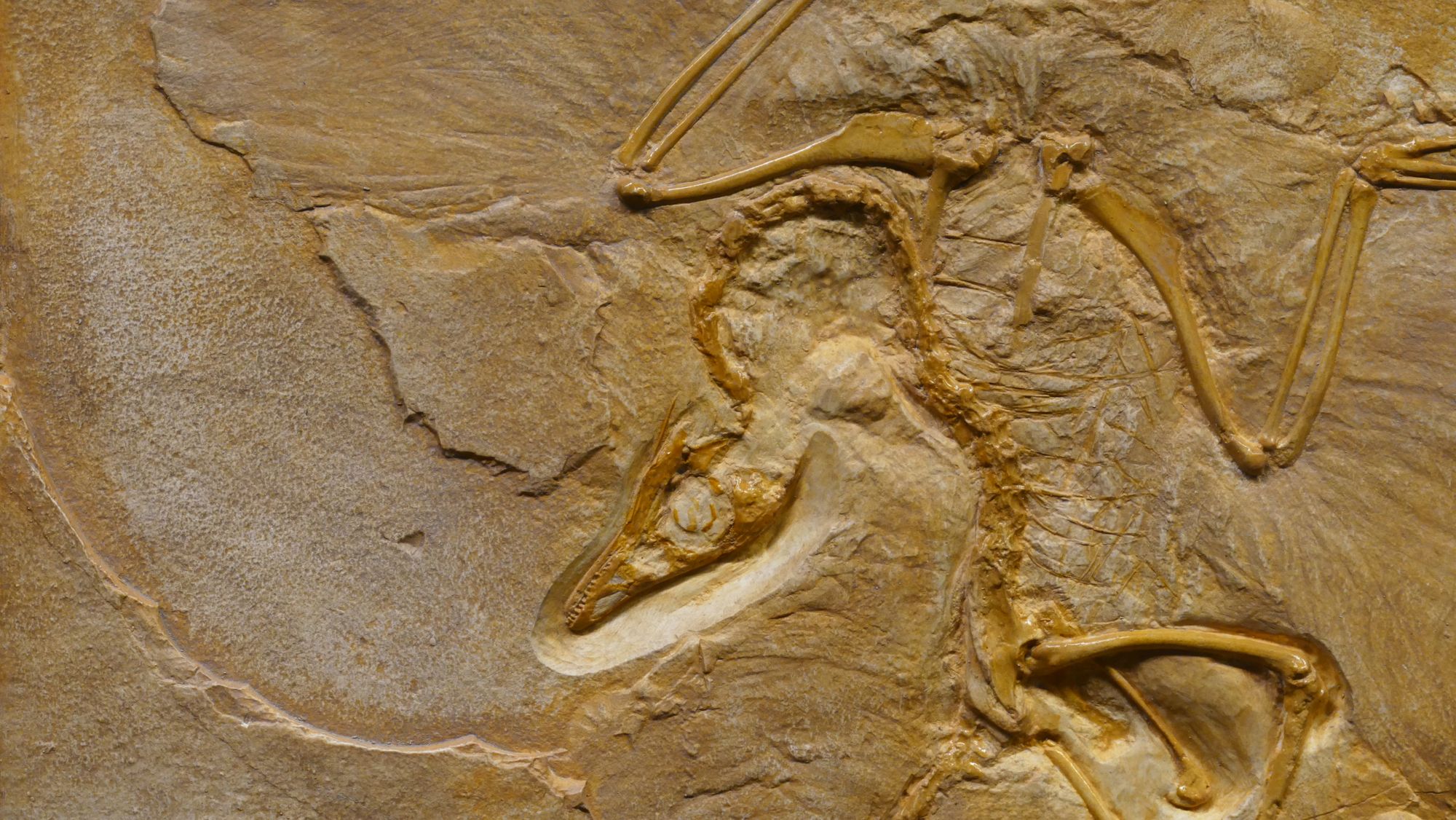
The lip study is one chapter in a longer story of dinosaur reconstruction science being systematically revised by new evidence. Beginning in the mid-1990s, a series of extraordinarily well-preserved specimens from the Yixian Formation in Liaoning Province, China, began delivering something paleontologists had never seen before: direct physical evidence of dinosaur feathers. Not inferred. Not bracketed. Carbonized impressions, physically present on rock surfaces, showing filamentous and vaned structures in unmistakable detail.
By the mid-2020s, feathered dinosaur specimens had been documented from scores of species across the theropod family tree, establishing that feathers were almost certainly ancestral to all coelurosaurs — the broad evolutionary group that includes T. rex, the various raptor lineages, and every living bird. The question in the field is no longer whether large theropods had feathers at any stage of their lives, but where and how much coverage adult animals carried.
On that narrower question, the evidence is genuinely mixed. Rare preserved skin impressions from T. rex specimens, reported by paleontologist Phil Bell of the University of New England in a 2017 paper in Biology Letters, show pebbly scales on portions of the neck, pelvis, and tail, suggesting the adult body may have been predominantly scaly, with feathers possibly restricted to the head, dorsal surface, or juvenile life stages. That finding does not overturn the broader consensus on feathered theropods; it refines it, which is precisely how mature scientific fields are supposed to behave.
Feather color is a younger and more contested frontier. Since 2010, researchers including Jakob Vinther at the University of Bristol have extracted melanosomes — microscopic pigment-bearing organelles preserved within fossilized feathers — to reconstruct color patterns in species such as Microraptor and Sinosauropteryx. This technique has not yet been applied to T. rex integument, meaning the animal’s coloration remains genuinely unknown. Any specific color shown in a reconstruction of SUE is, for now, an educated artistic choice rather than a scientific finding.
Posture, Speed, and the Hollywood Mistakes That Persisted for Decades
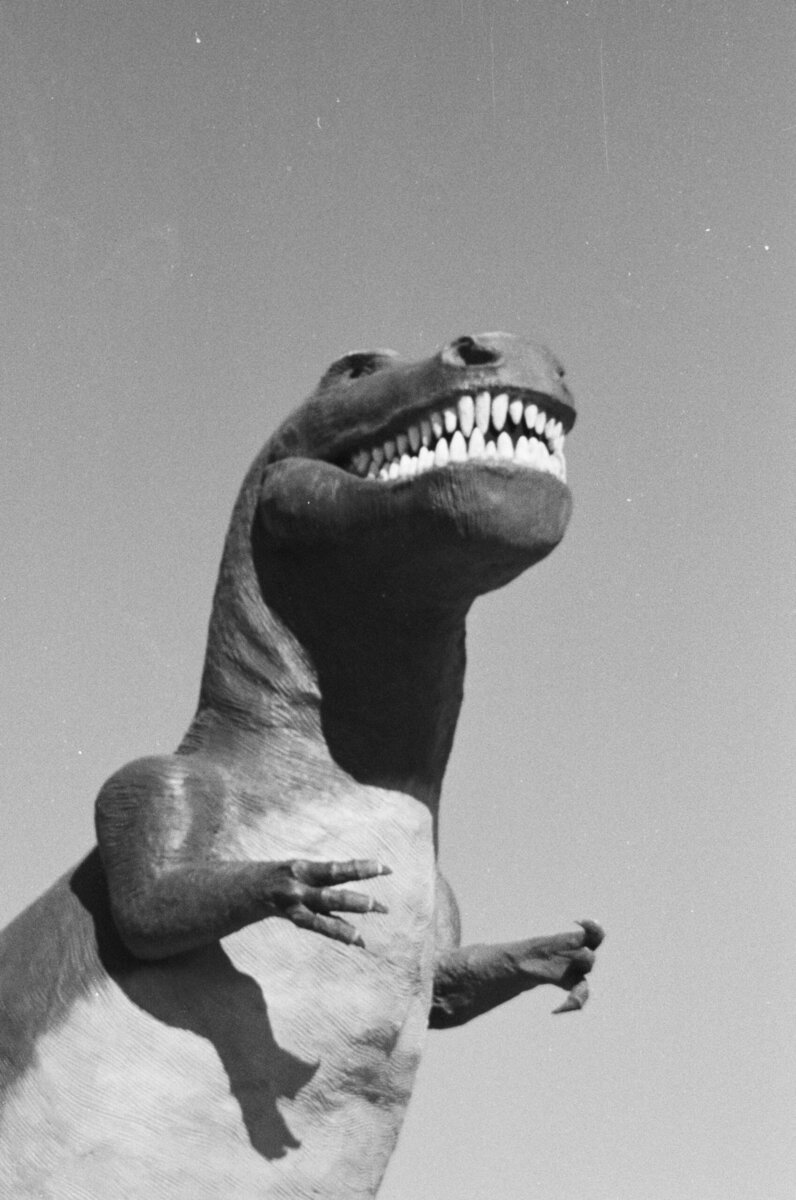
Soft tissue is not the only domain where popular depictions diverged from evidence. For much of the 20th century, museum mounts and film representations showed T. rex standing nearly upright, kangaroo-style, with its tail dragging along the ground. The problem: no T. rex trackway has ever recorded a tail-drag mark, and biomechanical modeling published in 2007 and led by William Sellers at the University of Manchester established through skeletal geometry and muscle force calculations that the tail was held horizontally as a dynamic counterbalance to the forward-leaning torso. The horizontal, head-forward posture familiar from the Jurassic Park franchise is now considered scientifically accurate for body axis — even as other elements of those depictions, including the absence of lips, continue to be revised.
Speed estimates have also shifted, this time downward. A 2021 study by Pasha van Bijlert and colleagues at Vrije Universiteit Amsterdam modeled T. rex skeletal resonance and preferred gait, calculating a comfortable walking speed of approximately 4.6 kilometers per hour — roughly 2.9 miles per hour, slower than a brisk human walk. The calculations suggest the animal optimized for energy-efficient locomotion rather than explosive pursuit, a behavioral implication that flows directly from skeletal mechanics.
Air sac systems, homologous to the highly efficient respiratory structures in modern birds and documented in sauropod vertebrae by paleontologist Matthew Wedel of Western University of Health Sciences, indicate that many dinosaur lineages possessed respiratory anatomy fundamentally unlike any living non-avian reptile. Those air sacs would have affected body shape, internal volume, and almost certainly vocalization — another dimension of what these animals were like that bones can suggest but not fully confirm.
How Paleontologists Actually Rebuild a Dinosaur
A modern reconstruction follows a defined sequence. It begins with osteology: precise measurement and three-dimensional laser or CT scanning of every recovered bone, followed by digital assembly into a complete skeletal model. Institutions including the Field Museum and the American Museum of Natural History have built open-access skeletal databases that allow researchers worldwide to cross-check proportions, flag asymmetries caused by post-mortem distortion, and identify bones that belong to the original specimen versus those reconstructed from related individuals.
Musculature is then layered onto the digital skeleton using dissection data from living archosaurs — the evolutionary group encompassing birds and crocodilians. Muscle volumes are estimated from the area and texture of attachment scars, a technique made increasingly precise by CT scanning that reveals internal bone density, trabecular architecture, and load-bearing pathways. Where fossil skin impressions exist, their texture is mapped onto the surface model. Where impressions are absent, researchers apply what is sometimes called the minimum soft-tissue principle: adding only what the skeleton mechanically requires, and clearly labeling speculative additions in published work.
The final visual reconstruction is produced in close collaboration between scientists and paleoartists, a professional relationship that has become substantially more formalized in recent decades. The Society of Vertebrate Paleontology’s ethics guidelines now encourage published reconstructions to explicitly distinguish evidence-based elements from artistic inference — a standard that was rarely enforced before the 1990s and that represents a meaningful improvement in scientific transparency.
What the Exhibition Offers Families — and What Remains Open
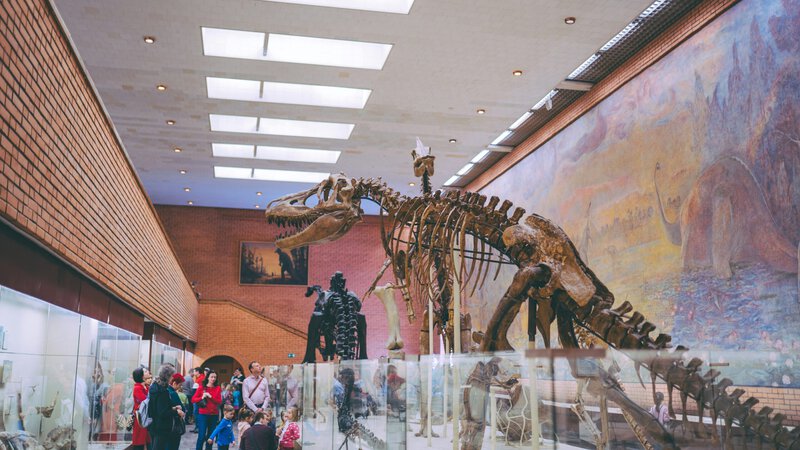
Even with SUE’s exceptional completeness, the open questions are substantial. Lip structure, integument coverage across the body, eye morphology, color, and vocalization all remain genuinely unsettled. That is not a failure of the science; it is an accurate representation of where the evidence currently stands. An exhibition that communicates that uncertainty honestly serves its audience better than one that presents a single confident image as the final answer.
The SUE exhibition follows Liberty Science Center’s Dino Dig program, which ran through September 3, 2025, and gave visitors hands-on fossil-casting experience — part of a broader museum trend toward active-learning models that foreground scientific process rather than finished conclusions. The two programs together reflect a coherent institutional philosophy: that the most valuable thing a natural history museum can teach is not what scientists currently believe, but how they came to believe it and why that belief might yet change.
For younger visitors, that framing is particularly valuable. Children who understand that SUE’s lip structure was argued from tooth proportions and enamel chemistry — not invented — leave with a more durable intellectual tool than any single fact about T. rex biology. They leave with a working model of what scientific evidence looks like and how it accumulates.
Why Getting Dinosaurs Right Matters Beyond the Museum Hall
Accurate dinosaur reconstruction is not merely an aesthetic concern. The metabolic and physiological picture that emerges from reconstruction informs evolutionary biology and helps calibrate Mesozoic climate models, since dinosaur geographic ranges and activity levels are inputs into broader reconstructions of ancient Earth systems.
Ancient protein analysis has already demonstrated the technique’s potential: a 2007 paper in Science by Mary Schweitzer of North Carolina State University reported the recovery of collagen fragments from a 68-million-year-old T. rex femur, providing direct biochemical evidence linking the animal to modern birds and opening a new avenue of inquiry that purely skeletal analysis could not have reached. Emerging methods — including proteomics applied to older specimens, isotopic analysis of diet and habitat, and increasingly fine-grained CT modeling of bone microstructure — promise to further close the distance between skeleton and living animal in the coming decades.
The broader intellectual point is worth stating plainly. The transformation of T. rex from the sluggish, cold-blooded, tail-dragging reptile of early 20th-century paleontology to the warm-blooded, dynamically postured, likely feathered, and possibly lip-bearing animal that current evidence supports is one of the clearest examples in any scientific field of a paradigm shift driven entirely by new data. No ideology changed; the fossils did. That is science working as designed — and a museum exhibit that makes that process visible, rather than hiding it behind a seamless reconstruction, earns something more valuable than a visitor’s wonder. It earns their trust in the method itself.
SUE: The T. rex Experience runs at Liberty Science Center from October 4, 2025, through May 25, 2026. Details on tickets, hours, and accessibility are available on the Liberty Science Center website.