
On a mild evening in a Mecklenburg County park, two environmental educators were scanning the forest floor when they noticed something unusual: a soft, pale blue-white light drifting slowly through the understory — no rhythmic flash, no yellow tint, just a quiet, continuous glow moving close to the ground. That single observation, made by Skye Young and Megan Knight, has since triggered a scientific announcement with implications that stretch well beyond one park in the Charlotte area.
A Blue Ghost in Mecklenburg County — and Why It Matters
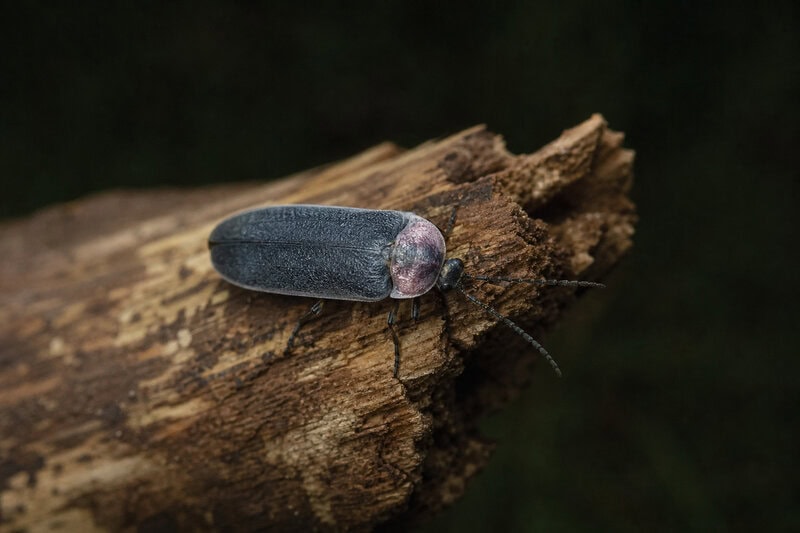
On June 29, Mecklenburg County Parks and Recreation announced that Young and Knight’s sighting constitutes the first documented record of a Blue Ghost firefly in the county — and not just any Blue Ghost, but Phausis christineae, commonly known as the Piedmont blue ghost or foxfire ghost. The species was formally described as distinct only in recent years, meaning it still carries the fresh ink of scientific recognition.
The stakes of that identification are easy to understate. The park where the sighting occurred already hosts 19 documented firefly species, a figure that places it among the more firefly-diverse green spaces in any American metropolitan area. Adding Phausis christineae to that list raises a pointed question: if a visually distinctive, ground-drifting firefly went unrecorded in Mecklenburg County until now, how many other species may be hiding in plain sight across the American Southeast?
Meet the Piedmont Blue Ghost: A Firefly That Doesn’t Blink
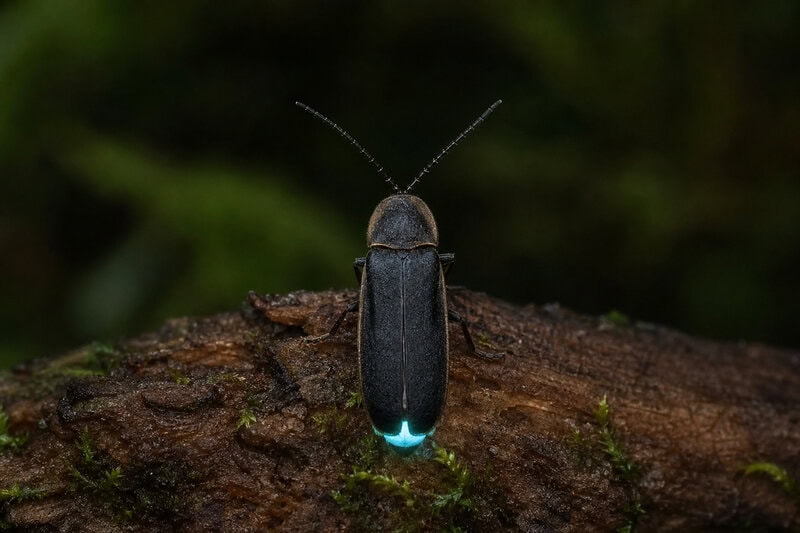
Most people’s mental image of a firefly involves a quick yellow flash — a signal produced through bioluminescence, in which the enzyme luciferase catalyzes the oxidation of a molecule called luciferin to release light. Phausis christineae uses the same underlying chemistry, but with a strikingly different result: rather than a rhythmic pulse, it emits a continuous, pale blue-white glow that can persist for several seconds as the insect drifts along.
The behavior compounds the visual difference. Male Piedmont blue ghosts fly slowly and stay close to the forest floor — rarely more than a foot or two above the leaf litter — while females are entirely wingless and remain stationary on or near the ground. Neither sex produces the quick overhead flash that draws most observers’ eyes upward. The combination of slow movement, low altitude, and non-flashing light makes both sexes genuinely easy to miss, even for experienced naturalists.
Blue Ghost fireflies as a group are rarely seen in the Charlotte area, making the Mecklenburg County sighting notable even before the species-level identification is factored in. Phausis christineae is associated with moist, mature hardwood forests — the kind of shaded, leaf-litter-rich habitat found in intact forested ravines — which concentrates the species in microhabitats that casual visitors may never enter after dark.
The name Phausis christineae follows standard taxonomic convention: the genus Phausis groups the Blue Ghost fireflies as a distinct lineage within the family Lampyridae, and the species epithet christineae honors an individual, as is customary in species naming. Readers seeking the identity of that honoree should consult the formal species description directly; this article does not speculate beyond what has been formally published.
Could This Be a Whole New Species?
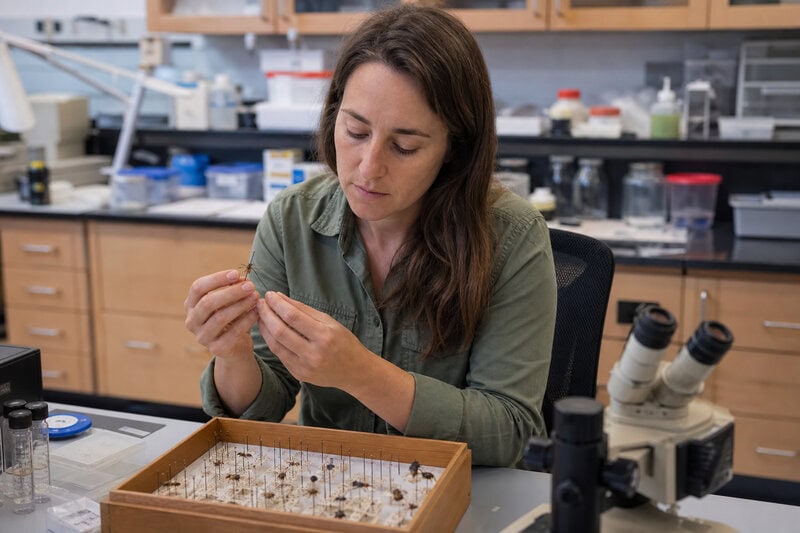
Several sources covering this story have raised the possibility that the firefly observed in Mecklenburg County could represent not just a rare county record but an entirely new species yet to be formally described. That question is scientifically legitimate. Researchers familiar with the find have noted that the specimen’s characteristics warrant closer examination, and the formal process of ruling out — or confirming — novelty requires morphological analysis, genetic sequencing, and comparison against all known Phausis relatives.
A species becomes scientifically official through a specific and deliberate process. A taxonomist must publish a formal description in a peer-reviewed journal, including morphological, genetic, or behavioral evidence that distinguishes the new taxon from all known relatives. A type specimen — the physical reference individual against which all future identifications are compared — must be deposited in a recognized natural history collection. And the species must receive a unique scientific binomial: genus plus species epithet. That process can take years from initial observation to published nomenclature, which is why “recently discovered” and “newly described” are not always the same thing.
As of the June 29 announcement, the identification of the Mecklenburg specimen as Phausis christineae represents the working scientific assessment. Whether further analysis elevates it to a new species remains an open question — one that follow-up field work and laboratory study will need to answer.
How Two Educators Made the Call — and Why That’s Not Surprising
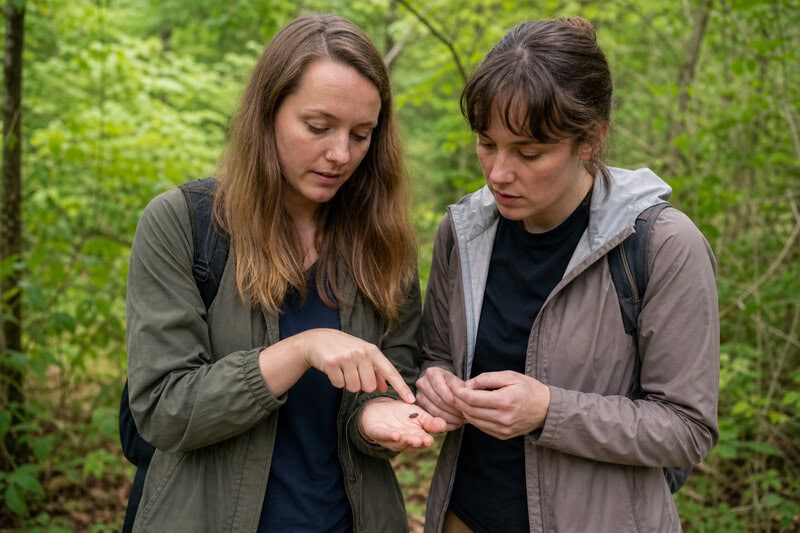
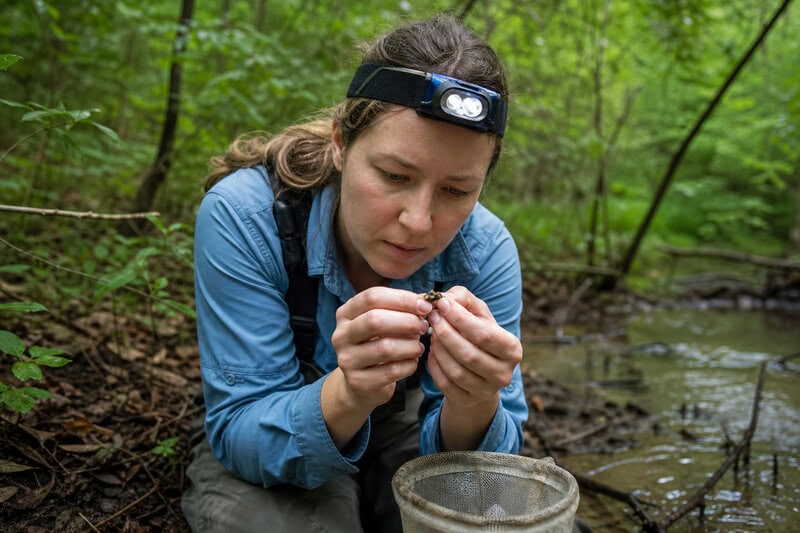
Skye Young and Megan Knight are local environmental educators, not credentialed taxonomists — and that distinction matters less than it might seem. Their professional background in naturalist observation develops exactly the kind of perceptual skill that firefly identification requires in the field: the ability to register anomalous light behavior against a noisy visual background and recognize whether what you are seeing matches any known pattern.
Distinguishing Phausis christineae from other firefly species does not require laboratory equipment. The relevant field criteria — glow color (blue-white rather than yellow-green), flight pattern (slow, sustained drift rather than a quick flash), and habitat (moist, forested ravines) — are observable with the naked eye by anyone who knows what to look for. Young and Knight recognized quickly enough that what they were seeing did not match anything familiar.
Their sighting illustrates a well-documented pattern in biodiversity research: trained non-institutional observers working in under-surveyed habitats routinely generate the first data points that professional taxonomists later formalize. Citizen science programs across entomology, ornithology, and botany have produced peer-reviewed findings precisely because species don’t restrict themselves to sites with active research programs. Parks, backyards, and forest edges are full of organisms that no scientist has ever systematically looked for after dark.
Why Undescribed Species Still Exist in the United States
The existence of undescribed species in the United States surprises many people, but entomologists consider it entirely expected. Tens of thousands of invertebrate species in North America are estimated to remain formally undescribed, partly because small invertebrates occupy microhabitats that receive little systematic survey effort after dark, and partly because taxonomic expertise in groups like Lampyridae is concentrated in a small number of specialists worldwide.
A firefly that glows only for a few weeks in late spring, only after dusk, only in specific forest types, and only close to the ground is exactly the kind of organism that slips through the gaps of conventional biological inventory. The Mecklenburg sighting is a concrete illustration of that gap — and of how quickly it can close when an observant person is in the right place at the right time.
The Park as a Biodiversity Hotspot — and What 19 Species Signals

The park where Young and Knight made their observation hosts 19 documented firefly species. That number is ecologically significant. Firefly species richness — the count of distinct species in a given area — functions as a practical proxy for overall habitat quality, because fireflies are sensitive to light pollution, pesticide use, and the loss of the leaf-litter and moisture conditions that support their larvae. A location sustaining 19 species is, by that measure, a functioning forest ecosystem within a metropolitan county that faces constant development pressure.
Research supported by the Xerces Society for Invertebrate Conservation has documented the mechanisms behind firefly population decline: suburban light pollution disrupts mating signals, lawn pesticides reduce larval prey and directly harm larvae, and habitat fragmentation cuts off the moist microhabitats that ground-dwelling species like the Piedmont blue ghost depend on. High species richness in an urban park is not inevitable — it reflects active stewardship choices about what kinds of habitat to maintain and how to manage light and chemical inputs.
Phausis christineae‘s preferred habitat — moist, mature hardwood forest with intact leaf litter — is precisely what intact urban parks in the Carolinas’ Piedmont region protect against development. The Piedmont blue ghost’s presence is, in that sense, a conservation dividend: evidence that preserving large, connected patches of mature forest pays off in biodiversity that extends down to the smallest, least-noticed organisms.
North Carolina’s Firefly Landscape — and the Honest Limits of One Sighting
North Carolina sits within a region that firefly researchers recognize as one of the world’s centers of Lampyridae diversity. The southern Appalachians and Piedmont together support an unusually high concentration of firefly species, though public and scientific attention has historically concentrated on high-profile mountain phenomena — most notably the synchronous firefly (Photinus carolinus) at sites like Elkmont, Tennessee — rather than on the quieter, less dramatic species of Piedmont forests.
The Mecklenburg County record doesn’t change that picture overnight, but it points toward a clear gap. If Phausis christineae — a species visually distinct enough that two non-specialists noticed it immediately as anomalous — had no prior county record, the monitoring infrastructure for Piedmont fireflies is clearly incomplete. Conservation biologists argue that systematic firefly surveys in similar parks across the Southeast could produce comparable surprises, simply because the baseline data are thin.
What the Mecklenburg sighting does not establish is equally important to communicate clearly. One confirmed occurrence demonstrates presence; it does not establish a breeding population, document year-to-year persistence, or define range extent. Whether the individual or individuals observed by Young and Knight represent a stable local population, a recent range expansion, or an isolated occurrence is, as of the June 29 announcement, an open scientific question. Responsible interpretation of the find requires holding that uncertainty explicitly.
The logical next steps are identifiable even if the timeline is not: follow-up surveys timed to the species’ late-spring to early-summer flight season, DNA barcoding of collected specimens to confirm species-level identification at the molecular level, and systematic monitoring across multiple park sites within the county. Community observers trained in firefly field identification could meaningfully accelerate that data collection, building on models established by programs that have paired amateur naturalists with professional researchers to fill exactly these kinds of biodiversity gaps.
The Piedmont blue ghost’s appearance in a Charlotte-area park is a reminder that the boundaries of known biodiversity in the United States are not fixed. They shift every time a knowledgeable observer slows down, looks at the ground, and notices something that doesn’t quite blink the way it should.