
Hummingbird-pollinated bromeliads split into new species at twice the rate of those pollinated by other animals — a single number, produced by scientists at the University of Reading, that reframes one of nature’s most familiar birds as an active architect of tropical biodiversity rather than a passive visitor to pretty flowers. The pineapple sitting on a supermarket shelf is, in a quiet but measurable sense, one of the results.
One Bird, Twice the Species

The bromeliad family — Bromeliaceae — contains roughly 3,700 described species, ranging from the commercial pineapple (Ananas comosus) to the silver-leaved air plants clinging to Andean cloud-forest branches. That breadth of form has long demanded an explanation. Research from the University of Reading now offers a compelling one: hummingbirds have functioned as an evolutionary accelerant throughout the family’s history, driving speciation at a rate that no other pollinator group in the dataset matched.
Most people carry some intuition that flowers and pollinators are connected, but the University of Reading findings push that intuition into unexpected territory. The central question the data raise is deceptively simple: how does a bird’s appetite for sugar translate into an evolutionary engine powerful enough to multiply species across an entire plant family?
What Coevolution Actually Means — and Why Bromeliads Are a Textbook Case
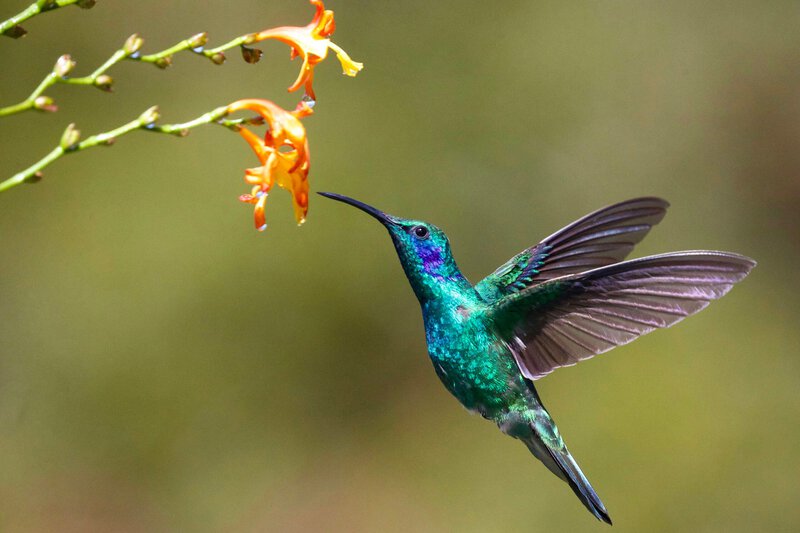
Coevolution is the process by which two or more species exert reciprocal selective pressure on each other’s traits across generations, as distinct from one species simply adapting to a static physical environment. A flower that evolves a longer tube does not do so in isolation; it does so partly because the pollinators visiting it — and the competitors those pollinators also visit — are themselves changing. The relationship is a moving target for both parties.
Plant-animal coevolution is among the best-documented forms of the phenomenon. Most cited examples, however, involve insects: Darwin’s famous prediction of a long-tongued Madagascan moth to match an orchid’s nectar spur, or the yucca moth’s exclusive relationship with yucca plants. The hummingbird-bromeliad system offers something rarer — a vertebrate-driven case of unusual clarity and scale, operating across an entire species-rich family rather than a narrow two-species pairing.
Pollinators have shifted throughout the evolutionary history of the pineapple family. Ancestral bromeliads were likely visited by insects or bats at various points before hummingbirds entered the picture as the group radiated into new Neotropical habitats. Hummingbirds are not the only chapter in this story, but they appear to be the most consequential chapter for speciation rate — the period in the family’s history when diversification accelerated most dramatically.
The Mechanism: How a Hovering Bird Becomes a Species-Splitting Force
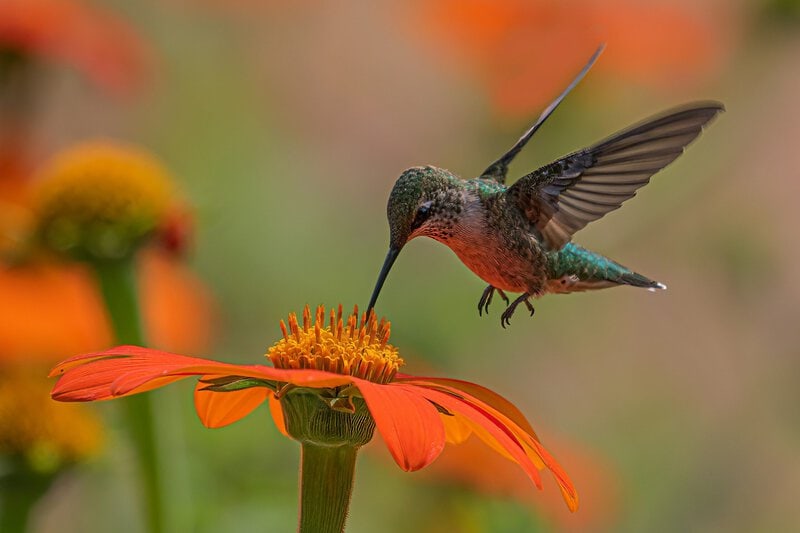
The basic loop is straightforward to describe. A hummingbird hovers at a bromeliad flower to drink energy-rich nectar. In doing so, it brushes pollen onto its bill or forehead, then carries that pollen to the next flower it visits — which may be on a different hillside or in a different forest patch entirely. Every visit is an act of gene transfer between plants.
What makes hummingbirds particularly potent as speciation drivers, rather than merely useful as pollinators, comes down to three interacting qualities. First, they are highly mobile, capable of moving pollen across distances that most insects rarely manage. Second, many species show strong fidelity to particular flower morphologies — a bill curved to match one corolla tube fits poorly in another, channelling gene flow toward some plant populations while effectively cutting it off between others. Third, that tight morphological fit between bill curve and flower tube creates stronger selective pressure on plant traits than generalist insect visitors typically impose.
Reproductive isolation — the condition in which two populations stop interbreeding and begin accumulating genetic differences independently — is a prerequisite for speciation. By selectively connecting some plant populations while bypassing others, hummingbirds can create exactly that isolation without any geographical barrier needing to intervene. The quantified finding from the University of Reading is that this mechanism operates at statistically twice the speciation rate compared with other pollinator groups.
The Pineapple’s Own Evolutionary Story
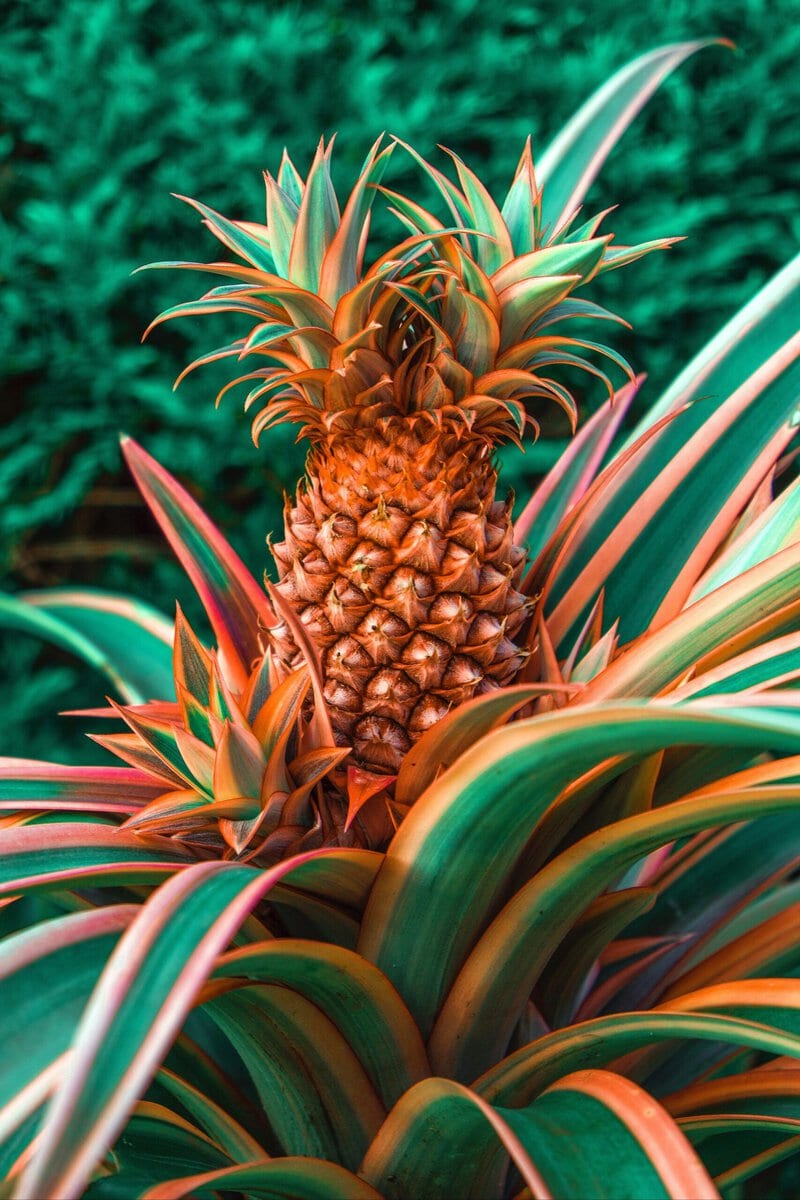
Ananas comosus and most of its close wild relatives depend on hummingbirds for pollination, making the commercial pineapple a direct, if distant, product of this ancient relationship. Hummingbird pollination helped the pineapple lineage diversify into the spectrum of fruit sizes, flesh chemistries, and leaf architectures visible across wild Ananas relatives scattered across South America — genetic variation that plant breeders have drawn on for centuries, even if they rarely credited the birds responsible for generating it.
The practical consequence is worth pausing on. Commercial pineapple growers rely heavily on the plant’s capacity for vegetative propagation — cloning plants without any pollinator involvement. But the genetic diversity that underpins those cultivars, and that breeders reach for when they need disease resistance or novel flavour profiles, was largely generated by hummingbird-mediated cross-pollination over millennia. The bird’s role is upstream of the orchard, written into the genome rather than visible in the field.
The pineapple’s story is best understood as one episode in a longer coevolutionary drama. Ancestral bromeliads did not begin as hummingbird plants; the relationship deepened as hummingbirds themselves diversified and as bromeliads spread into habitats where insect or bat pollination became less reliable. The current partnership is the outcome of millions of years of mutual adjustment, not a fixed arrangement that sprang into being fully formed.
The University of Reading Research: What the Data Show
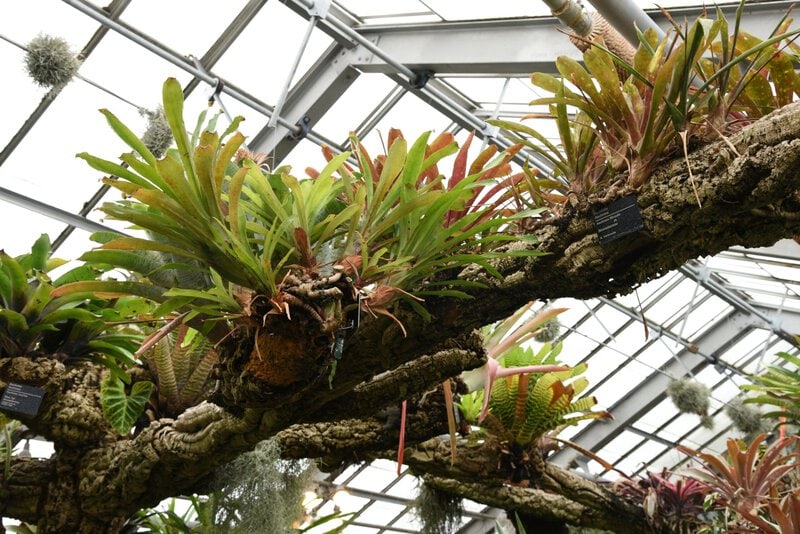
The empirical backbone for these claims comes from a comparative analysis conducted by scientists at the University of Reading. Researchers compared speciation rates across bromeliad lineages grouped by their primary pollinator type, using phylogenetic analysis — the construction and interrogation of evolutionary family trees — to control for factors other than pollinator identity that might otherwise explain differences in diversification speed.
The headline result, as reported in coverage of the study, is that hummingbird-pollinated bromeliad lineages diversify into new species approximately twice as fast as lineages relying on other pollinators. That figure should be understood as a statistical pattern detected across a large evolutionary dataset, not a universal law operating identically in every forest patch or every bromeliad genus.
What remains an active area of inquiry is the precise weighting of mechanisms driving the elevated rate. Whether the signal is produced primarily by reproductive isolation — hummingbirds cutting off gene flow between populations — or by hummingbird-imposed selection on floral traits pushing populations into divergent forms, or by some combination of both, has not been definitively resolved. The Reading findings are significant precisely because they quantify a pattern that was previously assumed but not rigorously demonstrated at this scale; they open as many questions as they close.
Broader Implications: Rethinking Who Shapes Biodiversity
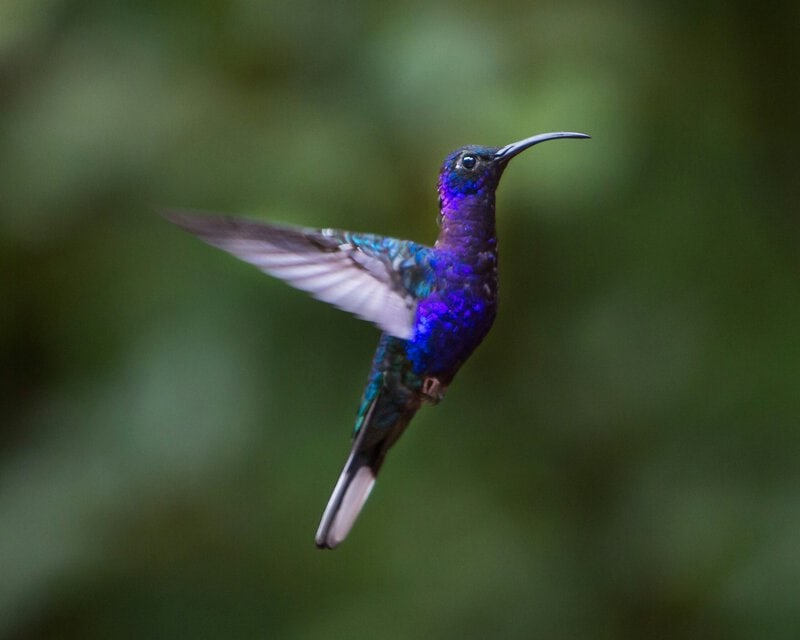
The hummingbird-bromeliad system is one of the clearest demonstrations available that animal behaviour — not just geology, climate shift, or random mutation — can be a primary driver of plant speciation at the family level. Hummingbirds did not merely respond to a landscape; they helped sculpt the botanical contents of it.
For the coevolution literature, this case adds vertebrate-pollinator evidence to a field long dominated by insect examples. If the rules of coevolution turn out to be significantly pollinator-dependent — if birds drive speciation differently from moths, which drive it differently from beetles — then existing models of diversification may need recalibration. That is a hypothesis, not yet a conclusion, but it is a productive one that the Reading research helps motivate.
A conservation implication follows, though it warrants careful framing. If hummingbirds are speciation accelerators for bromeliads, their decline in regions facing deforestation could slow or interrupt the evolutionary diversification of an entire plant family. This connection between pollinator loss and long-term diversification is a hypothesis worth taking seriously and studying further — speciation operates on timescales that make direct measurement of deforestation’s effect on diversification rates extremely difficult. What can be said is that removing the pollinators responsible for double the speciation rate is unlikely to be ecologically neutral, even if the consequences unfold far beyond any human planning horizon.
The evolutionary influence runs in both directions. The long, curved bills of many Neotropical hummingbird species are themselves a product of selection pressure from tubular bromeliad and other tropical flowers. The birds shaped the plants; the plants shaped the birds. That reciprocal loop — each party remodelling the other across deep time — is precisely what distinguishes coevolution from ordinary one-sided adaptation.
An Ancient Partnership With Modern Relevance
Return to the opening number — twice the speciation rate — and it reads differently now than it did as a bare statistic. It is, in effect, a measure of accumulated ecological service: the biodiversity of thousands of bromeliad species, including the pineapple available in any supermarket, is partly a receipt for work performed by hummingbirds across millions of years of natural history.
Hummingbird pollination does not merely sustain existing plant species; according to University of Reading research, it actively generates new ones at a rate that has helped make the pineapple family one of the most species-rich plant lineages in the American tropics. That finding is specific and grounded in peer-reviewed comparative analysis — which is exactly what a result this counterintuitive needs to be.
Researchers are still mapping exactly which mechanisms within the hummingbird-bromeliad interaction are most responsible for the speciation signal, and each answer is likely to reveal new layers of an evolutionary relationship far older and more intricate than any single study can fully capture. The science is advancing, but it remains appropriately humble about the complexity of what it is measuring.
For now, consider what it means the next time a hummingbird hovers at a flower. It is not just feeding. It is, in a slow and measurable sense, doing the painstaking work of making new species — one nectar stop, one pollen grain, one gene-flow decision at a time.