
Inside a leafcutter ant colony, thousands of workers spend their lives tending larvae that share none of their DNA — and scientists have now identified the molecular switch behind this remarkable collective nursery. The surprising answer involves two brain chemicals best known for making animals hungry.
One Chemical, Two Jobs Separated by Hundreds of Millions of Years
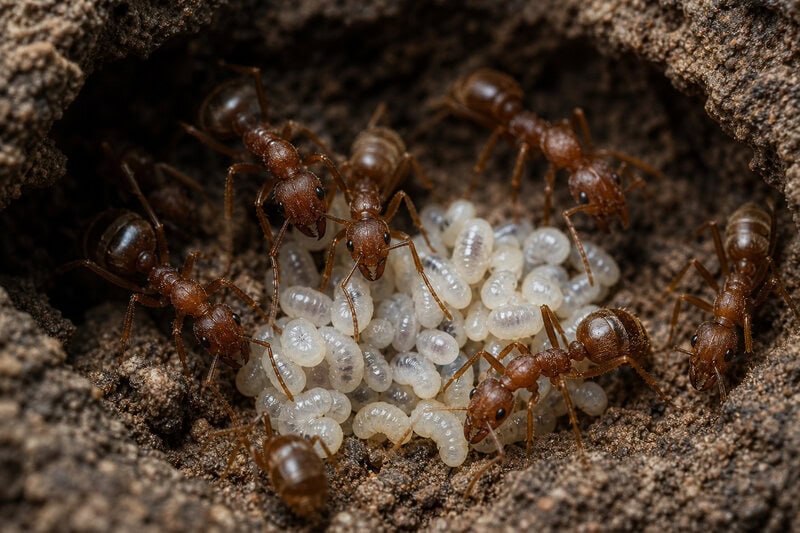
Research covered by Rockefeller University and The Scientist found that a neuropeptide called Neuropeptide F (NPF) — a small signaling protein produced in the brain — promotes caregiving behavior toward ant larvae, while a second neuropeptide, Allatostatin A (AstA), drives workers away from the brood and toward foraging instead. Both molecules are evolutionarily ancient, predating the emergence of social insect colonies by hundreds of millions of years, and both are well documented as regulators of feeding behavior in solitary animals.
The discovery that evolution did not discard these ancient hunger signals as ants became social — but instead repurposed them to orchestrate a colony-wide childcare system — is the study’s most significant contribution to evolutionary neuroscience. It raises a question with implications well beyond myrmecology, the scientific study of ants: could the neurochemical roots of parenting behavior across the animal kingdom trace back not to dedicated bonding circuits, but to hunger?
What Is Alloparenting — and Why Ants Are an Extreme Case
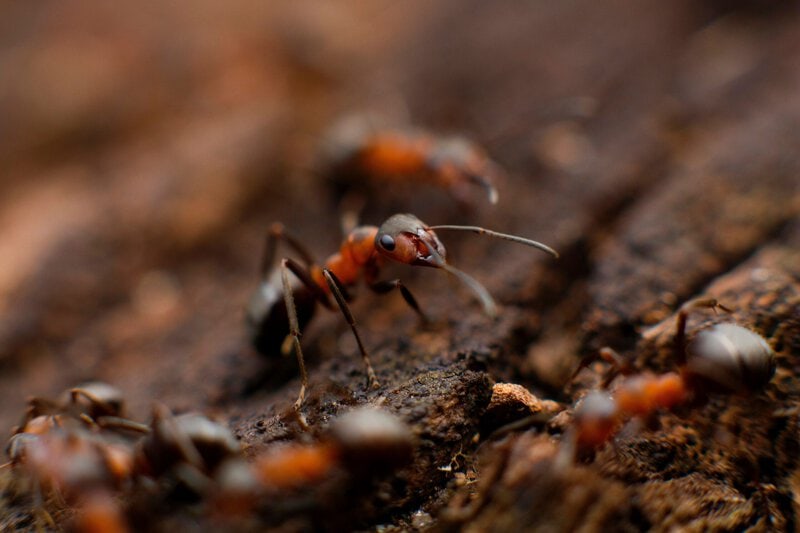
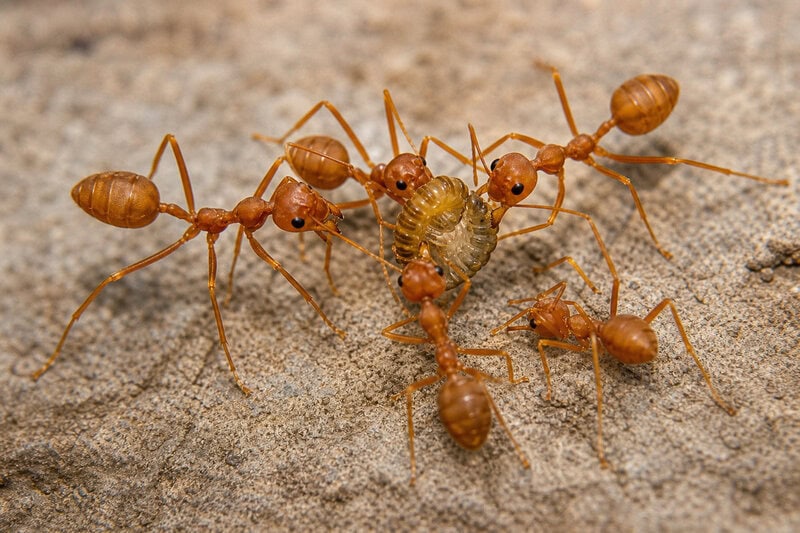
Alloparenting refers to the care of young by individuals other than the biological parents. In many species it is occasional and flexible — a helpful relative, a cooperative neighbor. In ant colonies, it is the entire organizational foundation. Most workers never reproduce at all, yet they spend their lives feeding, grooming, and protecting the queen’s offspring. The behavior is not incidental; it is the mechanism by which a colony functions as a single superorganism.
Leafcutter ants are a particularly useful model for studying this phenomenon. Their colonies contain distinct subcastes — groups of workers that differ in body size and reliably perform different roles, with some individuals consistently tending larvae while others consistently forage for vegetation. This clear division of labor gave researchers a clean behavioral baseline against which to measure the effects of neuropeptide manipulation.
Unlike vertebrate alloparenting, which is often context-dependent and individually variable, ant alloparenting is deeply embedded in a colony-wide labor system. The brain signals governing it must coordinate behavior across potentially millions of individuals simultaneously, making the colony one of evolution’s clearest natural experiments in redirecting individual motivational systems toward collective, cooperative outcomes.
The Two Neuropeptides: NPF and Allatostatin A
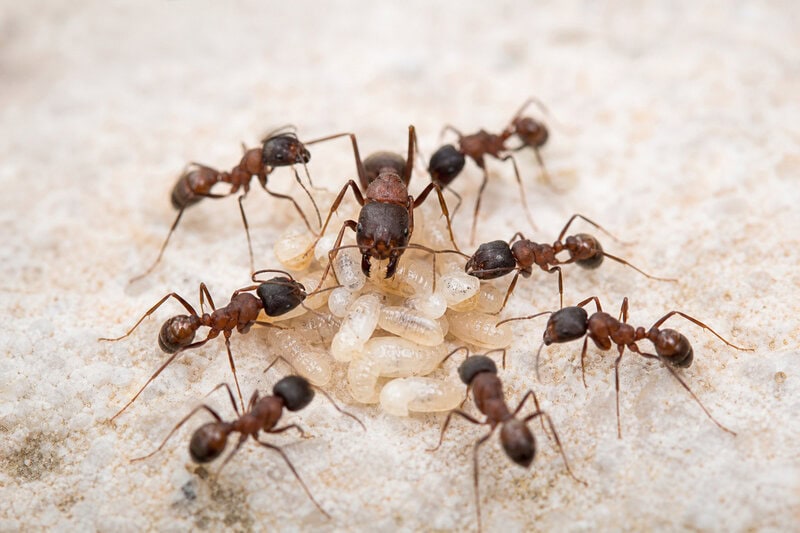
Neuropeptide F (NPF) is a small protein signal produced in the brain. In solitary insects, it is well established as a regulator of hunger and food-seeking behavior. Its role in ant caregiving therefore represents an unexpected evolutionary pivot: the same molecule that once told a solitary insect to approach and consume food now tells a worker ant to approach and tend a larva.
Allatostatin A (AstA) is a second ancient neuropeptide with documented feeding-related functions in solitary animals. In the ant context, research reported by Bioengineer.org found it produces the opposing behavioral effect: promoting foraging and causing workers to leave larvae behind rather than care for them. Together, NPF and AstA function as a two-part switch — one signal pulling workers toward the brood, the other pushing them away from it and out into the colony’s wider environment.
Both molecules are conserved across a wide range of invertebrate species, meaning they have persisted largely intact through hundreds of millions of years of evolution. The central mechanistic claim of this research, as detailed in the peer-reviewed study, is that these molecules were not lost or replaced as ants evolved complex sociality, but were instead co-opted — retained and redeployed to serve new social functions without necessarily abandoning their ancestral roles.
How the Research Was Done
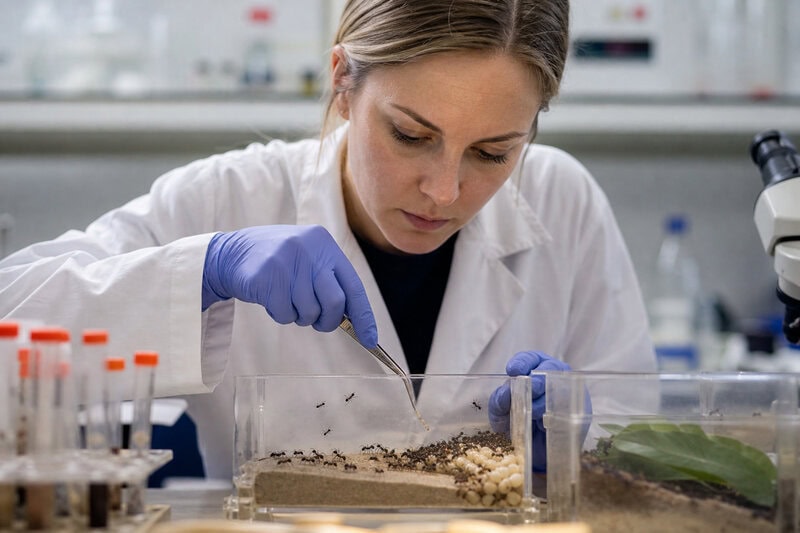
Researchers manipulated NPF and AstA signaling in leafcutter ants and observed measurable shifts in behavior. Boosting NPF activity increased caregiving toward larvae. Activating AstA signaling pushed workers toward leaving the brood and foraging instead. The ability to experimentally shift social roles by targeting specific neuropeptides provides evidence that these molecules do not merely correlate with behavior — they actively govern it within the colony’s division of labor.
Notably, younger ants showed caregiving behavior specifically tied to NPF signaling, suggesting the neuropeptide plays a developmental role in determining when a worker enters a caregiving phase. This is significant: it implies the neuropeptide system is not a static on-or-off switch, but a dynamic signal that changes over an individual ant’s lifetime, potentially governing transitions between social roles as a worker ages.
The choice of leafcutter ants as a model system was strategically important, as explained in coverage by The Transmitter. Their well-defined subcaste structure provided behavioral clarity that made it possible to attribute changes in caregiving or foraging directly to neuropeptide manipulation, rather than to broader disruptions in colony function. The research demonstrated that these neuropeptides serve specific roles within the subcaste structure to specify complex alternative behaviors — not merely nudging tendencies, but determining roles.
The Evolutionary Logic: From Hunger to Nurturing
The classical framework for understanding the evolution of parental care focuses on bonding hormones — oxytocin in mammals, for example — as the neurochemical foundation of nurturing behavior. The ant findings suggest a different and complementary evolutionary pathway: feeding-motivation circuits, already present in solitary ancestors, were repurposed to direct an animal’s attention and behavioral energy toward offspring rather than toward food.
Co-option is the process by which a molecule retains its original function while acquiring an additional one in a new biological context. It is a well-documented evolutionary mechanism, but applying it to the transition from solitary feeding behavior to complex, colony-scale alloparenting is a conceptually significant step. NPF’s role in promoting approach-and-care behavior toward larvae mirrors its ancestral role in promoting approach-and-consumption behavior toward food. The behavioral output changed; the underlying motivational logic — move toward and engage with a valued stimulus — appears to have been conserved.
Researchers have been careful to note that this does not mean ants confuse larvae with food. Rather, the same ancient signaling pathway was recruited by natural selection to encode a new category of valued stimulus in a social context. Evolution, in this framing, is less an inventor than a tinkerer — modifying existing tools rather than fabricating new ones from scratch.
What This Means for Understanding Social Brains
The human equivalent of NPF is Neuropeptide Y (NPY), one of the most potent appetite-stimulating molecules in the mammalian brain. The study makes no direct claim about human parenting, and drawing a straight line from ant brain chemistry to human behavior would be a significant overstatement. But the research opens a legitimate scientific question: did feeding-related motivational circuits contribute to the evolution of parental motivation in vertebrates as well? That question remains unanswered, and is now more precisely formulated than it was before this work.
More broadly, the research adds to a growing body of evidence that social complexity in animals does not necessarily require the evolution of entirely new brain systems. Existing motivational machinery — circuits built for hunger, satiation, and the drive to approach or avoid — can be re-tuned through changes in when, where, and how strongly ancient neuropeptides are expressed. The neurobiological gap between a solitary forager following its appetite and a colonial worker caring for thousands of unrelated larvae may be narrower than it appears.
For neuroscientists studying the origins of cooperation, the ant model is valuable precisely because it is experimentally tractable in ways that primate models are not. Researchers can manipulate specific neuropeptides and directly observe colony-level behavioral outcomes, providing a level of mechanistic resolution that is difficult to achieve in more complex nervous systems.
An Emerging Finding, Not a Settled Consensus
The mechanistic link between NPF, AstA, and alloparenting in leafcutter ants is newly demonstrated, and these findings should be understood as an important emerging result rather than settled scientific consensus. Whether the same neuropeptide co-option logic applies broadly across other social insect species — bees, wasps, termites — or whether similar principles operated during the evolution of vertebrate parental care, remains an active and open area of investigation.
Future research will likely focus on identifying exactly which neurons express NPF and AstA in different ant subcastes, tracking how their expression patterns shift across an individual ant’s lifetime, and determining whether experimental manipulation of these signals produces consistent effects across different colony contexts and environmental conditions. The molecular picture is compelling; the full behavioral and evolutionary picture is still being assembled.
What the current research establishes clearly is a principle with wide applicability: leafcutter ant colonies, which can sustain millions of individuals and maintain complex fungal agriculture across decades, achieve this organizational sophistication not through exotic neurobiology, but through the elegant reprogramming of circuits that existed long before the first social insect colony ever formed. The boundaries between feeding, caregiving, and social motivation may be far more porous — and far more ancient — than the categories we typically use to describe them.