
Twenty-seven thousand years ago, someone pressed woven plant fibers into wet clay at a site in what is now the Czech Republic — and left behind the oldest indirect evidence of textile-making ever recorded. That object, discovered at Dolní Věstonice, predates agriculture, the wheel, and writing, and it raises a quietly astonishing question: why, in an age of smartphones and streaming, are neuroscientists increasingly interested in what that Ice Age craftsperson was doing with their hands?
How Old Is Weaving, Really? Following the Fiber Evidence
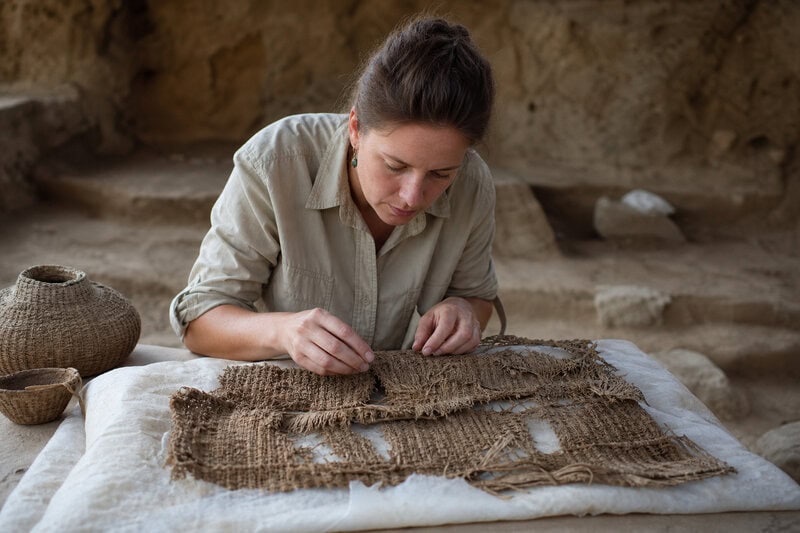
Pinning down the true age of weaving requires understanding why the archaeological record is so incomplete. Organic materials — plant fibers, grasses, bark — decompose rapidly in most soil conditions, meaning the absence of ancient textiles in a dig site tells archaeologists almost nothing. What survives tends to be indirect: clay impressions like those at Dolní Věstonice (dated to roughly 27,000 BCE), bone needles, and spindle whorls — small perforated weights used to spin thread — that imply textile production without preserving the textiles themselves. Every direct find is therefore extraordinary.
Among the oldest recovered textile fragments are linen pieces from Nahal Hemar Cave in Israel, dated to approximately 8,500 BCE, and woven cloth remnants associated with the settled community at Çatalhöyük in modern Turkey, dating to around 7,000 BCE. These are not curiosities from the margins of human history. Çatalhöyük was, by most measures, one of the world’s first proto-cities, and its inhabitants were already weaving alongside farming, trading, and building permanent structures. The craft was embedded in the earliest foundations of organized human life.
Basket weaving — a close structural relative of textile weaving, using grasses, reeds, and bark rather than spun thread — is widely regarded by archaeologists as one of humanity’s oldest crafts, connecting practitioners directly to the seasonal rhythms and local ecosystems of their landscapes. The materials themselves encoded knowledge: which reeds were supple enough to bend, which grasses held dye, which bark strips would not crack in winter.
Perhaps most telling is the global distribution of weaving. Independent traditions developed in the Americas, sub-Saharan Africa, East Asia, and Europe — societies with no documented contact — each arriving at similar structural solutions to the same problem. In evolutionary terms, when a behavior emerges independently across isolated populations, researchers treat that convergence as evidence of a deep and possibly universal human need. Weaving’s ubiquity suggests it was never merely about keeping warm.
What Happens in Your Brain While You Weave
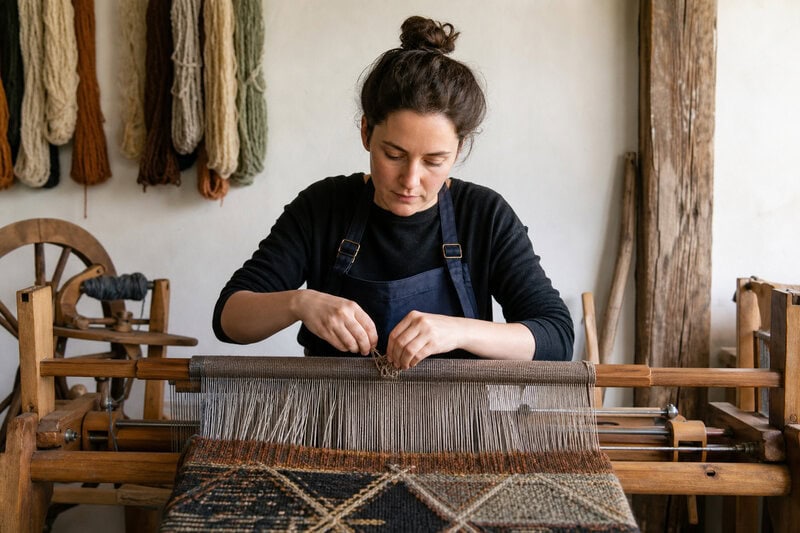
The psychologist Mihaly Csikszentmihalyi spent decades studying what he called the flow state — a condition of absorbed, effortless concentration in which time seems to dissolve and self-consciousness recedes. His research identified a precise precondition: the task must be challenging enough to require genuine attention, but not so difficult that it triggers anxiety. Repetitive hand crafts sit in exactly that zone for most practitioners, and neuroscience is beginning to explain why.
The default mode network (DMN) is the brain’s internally directed circuit — active when the mind wanders, rehearses social scenarios, or ruminates on past and future events. Neuroimaging studies have consistently associated elevated DMN activity with anxiety and depression. Structured, rhythmic tasks appear to quiet the DMN by redirecting attentional resources outward, without demanding the kind of effortful, high-stakes focus that depletes rather than restores. Weaving, with its regular over-under rhythm and immediate visual feedback, functions as a reliable DMN dampener.
Research associated with Harvard Medical School’s Mind/Body Medical Institute has shown that rhythmic, repetitive physical activities can activate the parasympathetic nervous system — the branch responsible for the body’s rest-and-digest response — reducing physiological markers of stress such as elevated heart rate and cortisol levels. Cardiologist Herbert Benson coined the term relaxation response for this physiological shift, initially studying it in the context of meditation. The mechanism, it turns out, is not exclusive to sitting still; the rhythmic, predictable quality of the activity matters more than its cultural framing.
A frequently cited data point in emerging craft-and-wellbeing research comes from a 2016 study published in the British Journal of Occupational Therapy, in which more than 3,500 knitters were surveyed about the psychological effects of their practice. Eighty-one percent reported feeling calmer after knitting, and frequent knitters scored lower on measures of depression and anxiety. It is important to be precise about what this finding does and does not establish: this is self-reported survey data from a self-selected population, not a controlled clinical trial. It cannot prove causation. What it does suggest is a relationship strong enough to warrant more rigorous investigation — and that investigation is underway.
The honest summary of the current field is this: the signals are promising, the proposed mechanisms are plausible and grounded in established neuroscience, but most craft-and-wellbeing studies remain small or observational. Large randomized controlled trials are still limited. This area of research should be characterized as emerging, not settled — a distinction that matters when evaluating claims made on its behalf.
Bilateral Coordination — The Neuroscience of Using Both Hands
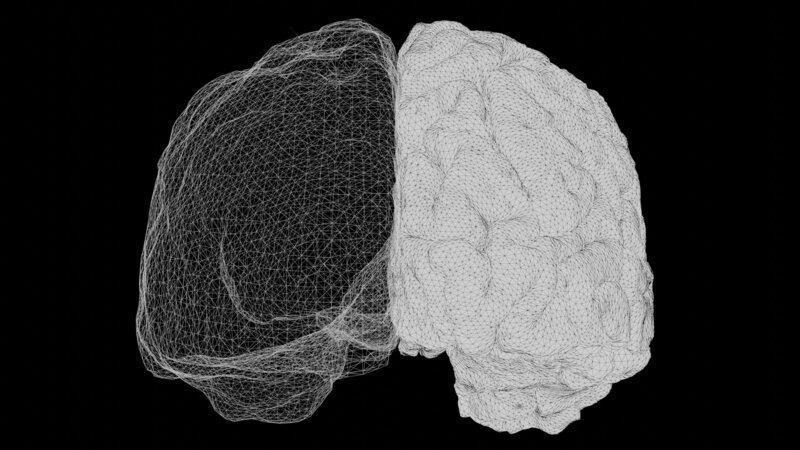
Weaving is not a one-handed activity. The left and right hands perform different, synchronized tasks — one managing the warp threads, the other passing the weft — which requires the brain’s two hemispheres to communicate continuously via the corpus callosum, the dense bundle of nerve fibers connecting them. This is called bilateral coordination, and it is more neurologically demanding than it appears.
Occupational therapy literature has long documented the use of fine motor bilateral tasks in cognitive rehabilitation, including stroke recovery, because such tasks stimulate the repair and reinforcement of neural pathways across hemispheres. The underlying principle — that engaging both sides of the body in coordinated, differentiated movement drives cross-hemispheric neural activity — is well established in rehabilitation science, even if specific clinical applications continue to be refined.
Pediatric occupational therapists have incorporated weaving and braiding into developmental programs for decades, precisely because the bilateral demand supports attention regulation in children. This real-world application predates the neuroscience that now partly explains it — a reminder that craft traditions have often been ahead of the laboratory in understanding what the body and mind need.
A careful distinction is necessary here: none of this means weaving treats or cures neurological conditions. It means the motor demands of weaving overlap with mechanisms that researchers are actively studying for their broader cognitive benefits. The craft is not a medical intervention; it is a practice with a biologically plausible basis for the effects that practitioners have reported experiencing for millennia.
The Attention Economy Antidote — Craft as Cognitive Rest

Environmental psychologists Rachel and Stephen Kaplan at the University of Michigan developed Attention Restoration Theory (ART) to explain why certain environments and activities help recover mental capacity after depletion. Their framework distinguishes between directed attention — the effortful, voluntary focus demanded by screens, deadlines, and multitasking — and soft fascination, a gentle, involuntary interest that holds attention without draining it. Nature was the Kaplans’ original focus, but the theory extends to activities that share nature’s key restorative properties.
Weaving meets all four of the conditions the Kaplans identify as restorative. It offers a sense of being away — a psychological departure from the pressures of daily life. It engages fascination through color, texture, and the visible emergence of pattern. It provides extent — enough richness to occupy the mind without requiring effortful navigation. And it satisfies compatibility — the activity matches what the practitioner, in that moment, wants and needs to be doing. The loom does not push notifications. It does not demand a response.
The cognitive cost of digital fragmentation is real and well-documented. Research from institutions including Carnegie Mellon University has demonstrated that task-switching and continuous partial attention impose measurable costs on working memory and executive function. The question is not whether digital environments deplete attention — that is reasonably well established — but what reliably restores it. Weaving, as a structured analog practice that demands gentle but sustained focus, is a credible candidate.
This is where a brand like Pretty Together enters the picture as more than a product. Its guided weaving kits are designed to satisfy the Kaplans’ compatibility criterion precisely: the learner begins with a structure that matches their current skill level, preventing the frustration that collapses the restorative state before it can take hold. The scaffolding is the point.
Cultural Continuity and the Psychology of Making Something Real
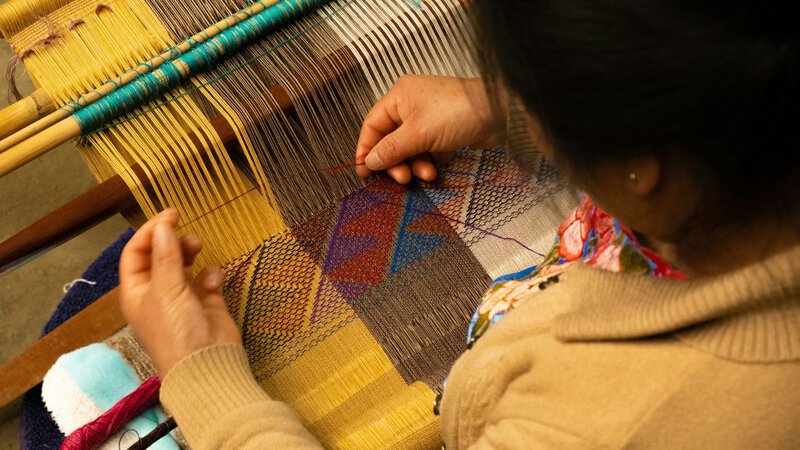
Archaeologist Lambros Malafouris at the University of Oxford has proposed what he calls material engagement theory — the idea that the boundary between mind and material is far more porous than Western philosophy has typically assumed. Thinking and making are not sequential; they are entangled. When a weaver adjusts tension in response to the feel of the thread, that is not merely the execution of a mental plan — it is cognition happening in the hands, through the material, in real time. The cloth is not just the product of thought; it is a medium of thought.
This framing illuminates why weaving has carried meaning so far beyond its functional purpose across so many cultures. Andean quipu — knotted cord systems used to record information in pre-Columbian South America — encoded numerical and possibly narrative data in the structure of knots and fibers. Navajo weaving traditions map cosmological order onto the structure of the loom. West African kente cloth patterns carry social and historical significance in their geometry. In each case, the weaving is simultaneously a mnemonic system, a social technology, and a practice of meaning-making — a form of intelligence distributed across hands and thread.
Positive psychology offers a complementary lens. Martin Seligman at the University of Pennsylvania identified accomplishment as one of five core pillars of wellbeing in his PERMA framework. Completing a physical, tangible object delivers a concrete achievement signal that abstract digital work — emails answered, documents revised, metrics monitored — rarely provides. The finished piece of weaving is irrefutably real. It did not exist before; now it does. That is a neurologically and psychologically distinct experience from closing a browser tab.
A growing body of social science research observes that declining engagement with physical craft correlates with rising rates of anxiety in high-income, digitally saturated societies. The causal direction of this relationship remains genuinely unclear — it is equally possible that anxious people disengage from craft, rather than disengagement driving anxiety — and it would be irresponsible to overstate the case. But it is a hypothesis that several research groups are currently investigating with greater methodological rigor.
Starting Your Own Practice — What the Evidence Actually Supports
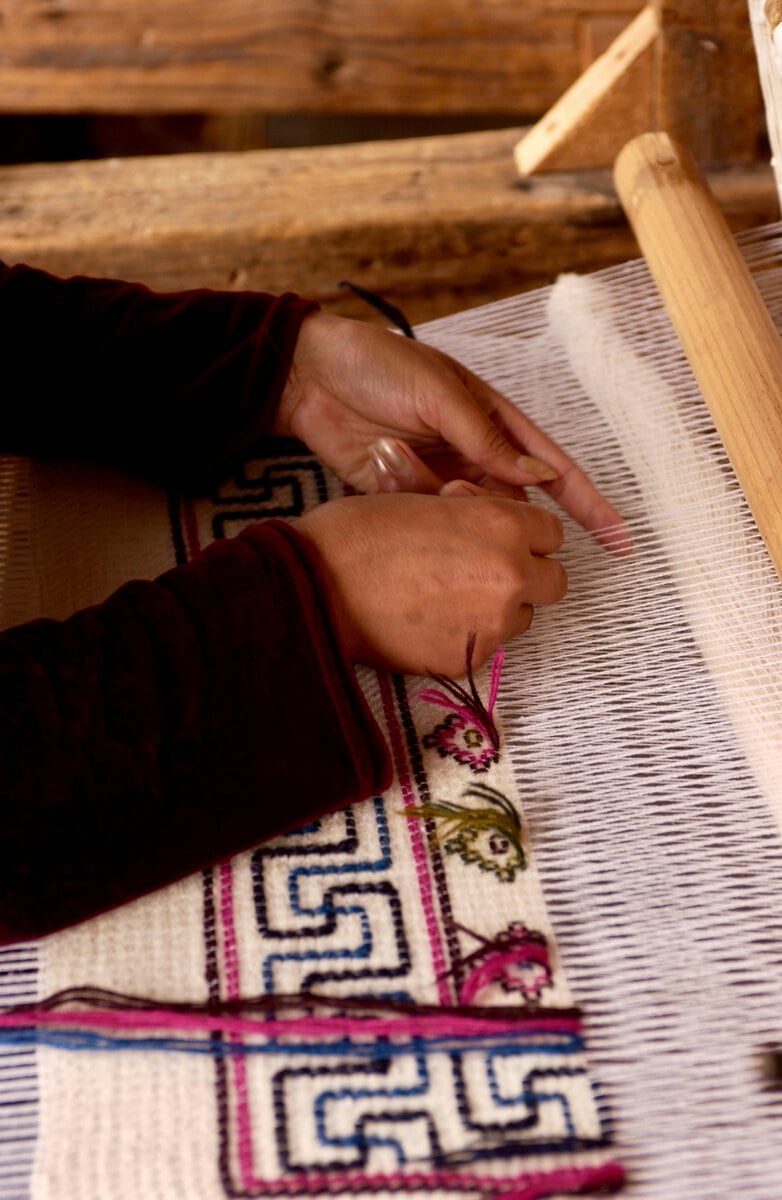
Stripping away overstatements and acknowledging genuine gaps, the evidence-based case for weaving rests on three defensible pillars. First, the rhythmic, repetitive quality of the practice activates the relaxation response, with measurable physiological effects on the stress system. Second, its gentle engagement of attention meets the criteria for soft fascination described in Attention Restoration Theory, offering genuine cognitive rest in a way that passive screen consumption does not. Third, the completion of a tangible physical object delivers the kind of concrete accomplishment signal that positive psychology consistently associates with wellbeing.
Occupational science offers practical guidance for beginning. Start with the tabby weave — the most elemental over-under sequence — before moving to more complex patterns. This is not merely pedagogical conservatism; it reflects Csikszentmihalyi’s insight that flow depends on a careful balance between challenge and skill. Beginning too far above one’s current ability produces frustration, not restoration. The goal is to find the rhythm first, then grow into complexity.
Pretty Together’s kits and guided tutorials are structured around this challenge-skill curve, providing entry points calibrated to prevent the early frustration that causes most beginners to abandon a new craft before the practice has a chance to take hold. Equally important is the community dimension: positive psychology research consistently finds that shared practice amplifies wellbeing outcomes beyond what solitary activity achieves. Learning to weave with others — even asynchronously, through a shared platform — adds a social layer that research on belonging suggests is genuinely worth having.
As this field matures and larger, better-controlled studies are completed, weaving may join yoga and meditation in developing a robust, peer-reviewed evidence base that satisfies clinical research standards. That day has not yet arrived. But 27,000 years of unbroken human practice across every known culture is not nothing. It is, at minimum, a very long experiment — and the preliminary results are encouraging enough to pick up a shuttle and begin.