
Approximately $250 million flows from the oil, gas, and coal industries into U.S. lobbying and political influence operations every single year. This spring, that figure began appearing simultaneously in the letters-to-the-editor sections of regional newspapers from Bakersfield, California, to Newburyport, Massachusetts, to Victoria, Texas — signaling something more deliberate than coincidence.
One Letter, Seven Newspapers, One Coordinated Civic Campaign

When the same citizen letter surfaces in the Freeman Journal in Iowa, the Newburyport News in Massachusetts, and the Victoria Advocate in Texas within days of one another — spanning red and blue media markets, coastal cities and agricultural heartland — it reflects organized civic strategy rather than isolated opinion. The letter appeared across at least seven regional U.S. outlets, including papers in California, Iowa, Pennsylvania, Massachusetts, and Texas. It makes two core claims: that the modern world was genuinely built on fossil fuels, and that the industry supplying those fuels has spent lavishly to control the government policies that might now constrain it.
Neither claim is scientifically controversial in its basic form. What makes this moment notable is that peer-reviewed science has caught up to — and in some cases surpassed — the claims circulating in local opinion pages. What follows translates that science into plain language and draws a clear line between what is settled, what is actively being refined, and what remains genuinely contested.
What Burning Fossil Fuels Actually Does to the Atmosphere
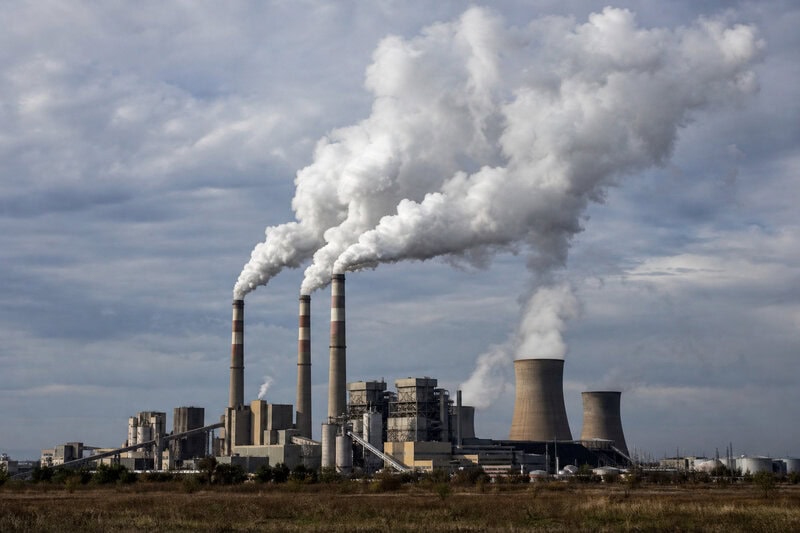
The mechanism is straightforward, even if its consequences are vast. When coal, oil, or natural gas combusts, it releases carbon dioxide — CO₂ — into the atmosphere. CO₂ is a greenhouse gas: it absorbs infrared radiation that Earth’s surface emits toward space and redirects a portion of it back downward. The more CO₂ accumulates, the more heat the atmosphere retains. The Intergovernmental Panel on Climate Change, in its Sixth Assessment Report covering 2021 through 2023, describes the link between human-caused greenhouse gas emissions and observed warming as “unequivocal” — the panel’s strongest language, representing the consensus of thousands of peer-reviewed studies.
The scale of accumulation is striking. Before industrialization, atmospheric CO₂ concentrations hovered around 280 parts per million. The National Oceanic and Atmospheric Administration reported in 2023 that concentrations had exceeded 420 parts per million — the highest level in at least 800,000 years of ice-core records, which preserve ancient air bubbles that function as chemical time capsules. That 50 percent increase has occurred almost entirely since the mid-19th century, when large-scale fossil fuel combustion began.
Scientists broadly agree on the direction and primary driver of this change. Where active research continues is in refining the precise sensitivity of the climate system — specifically, how much warming results from a doubling of atmospheric CO₂. The IPCC currently places that range at 2.5°C to 4°C, a span that reflects genuine scientific complexity rather than uncertainty about whether warming is occurring. Every ton of CO₂ from fossil fuel combustion adds an incremental but measurable amount of heat to the Earth system — an effect that persists for centuries because CO₂ is chemically stable and mixes globally through the atmosphere.
How Much Have Fossil Fuels Raised Global Temperatures?
NASA’s Goddard Institute for Space Studies and NOAA jointly report that Earth’s average surface temperature has risen approximately 1.1°C to 1.2°C above pre-industrial averages, with warming accelerating in recent decades. The IPCC characterizes the rate of warming over the past 50 years as “unprecedented in at least the last 2,000 years” — language that closely mirrors the framing in the letters appearing across regional papers, which described emissions as warming the world at a rate that has never occurred in the history of the planet.
Attribution science — the field that isolates human-caused warming from natural variability — has grown considerably more precise. A 2023 study published in Nature Climate Change by Labe and Barnes used machine-learning fingerprinting techniques to identify the human-caused warming signal at regional scales with greater confidence than previous methods allowed, identifying fossil fuel CO₂ as the dominant driver of observed temperature trends. This kind of work answers not just whether warming is happening, but where, how fast, and what is responsible.
One of the most policy-relevant concepts in this space is the carbon budget — the total cumulative CO₂ that can be emitted globally while maintaining a given probability of staying below a temperature threshold. The IPCC estimated in 2023 that the remaining budget for a 50 percent chance of limiting warming to 1.5°C had shrunk to roughly 500 gigatons of CO₂. At current global emission rates, that budget would be exhausted in approximately 12 to 13 years. The budget for limiting warming to 2°C is larger, but the physical consequences of crossing that threshold — more intense heat waves, accelerated sea-level rise, increased frequency of extreme weather events — are substantially greater than those associated with 1.5°C, according to the same IPCC assessment.
Researchers such as Richard Heede at the Climate Accountability Institute have extended this science further, attempting to apportion historical emissions to specific corporate producers. That work is rigorous in its accounting methodology, but the question of legal or financial liability for those emissions remains genuinely contested — a policy and legal question that science can inform but not resolve on its own.
The Industry’s Playbook: Lobbying, Influence, and the Research Record

The $250 million annual lobbying figure cited across the syndicated letters aligns with federal disclosure data tracked by OpenSecrets, which compiles oil, gas, and coal industry lobbying filings with the U.S. Congress. The number is verifiable and sourced — a factual claim, not advocacy rhetoric.
What that money targets matters. The policy the industry has historically fought hardest is direct supply-side limits — legislation designed to keep fossil fuels in the ground rather than manage their use after extraction. This strategic priority is corroborated by internal industry documents analyzed in peer-reviewed research. Harvard researchers Geoffrey Supran and Naomi Oreskes, publishing in Environmental Research Letters in 2017 and in One Earth in 2022, analyzed decades of ExxonMobil’s public communications and found systematic discrepancies between the company’s internal scientific understanding of climate risk and its public messaging — a pattern they characterized as climate disinformation.
A subsequent 2023 paper by Supran, Stefan Rahmstorf, and Oreskes, published in Science, went further: it compared Exxon’s internal temperature projections from the 1970s and 1980s against the actual observed warming record and found the company’s scientists had made accurate predictions that were not reflected in the company’s public statements. Lobbying is legal and practiced across all major industries. The separate and scientifically documented phenomenon is the decades-long funding of organizations that manufactured public uncertainty about climate science — uncertainty that the industry’s own researchers did not privately share.
The science of climate attribution and the history of climate communication have converged on the same finding: warming is real, fossil fuels are the primary cause, and significant public doubt about that cause was, in significant part, deliberately constructed.
Settled Consensus, Active Research, and Genuine Uncertainty: Drawing the Line
Not all climate claims carry the same evidentiary weight, and intellectual honesty requires distinguishing among them clearly.
Settled scientific consensus — these points are not legitimately debated:
- CO₂ from fossil fuel combustion is the primary driver of observed warming since industrialization.
- Current warming is unprecedented in rate across at least two millennia of reconstructed climate records.
- Continued emissions increase the probability of crossing 1.5°C and 2°C thresholds, with documented physical consequences including sea-level rise, intensified precipitation extremes, and ecosystem disruption.
Active research with high confidence, still being refined:
- Regional impact projections — science can identify where risks concentrate, but local timelines involve ongoing modeling work.
- Tipping-point thresholds, such as the temperature levels that could trigger Amazon forest dieback or West Antarctic Ice Sheet instability — these are areas of serious scientific concern, though exact trigger points remain under study.
- The precise contribution of methane — a potent greenhouse gas released during fossil fuel extraction and use — to near-term warming, given its shorter atmospheric lifetime but higher heat-trapping potency relative to CO₂.
Genuinely contested or early-stage — these warrant appropriate uncertainty:
- Legal frameworks for corporate climate liability.
- The feasibility and timeline of carbon capture and storage at the scale needed to affect climate targets.
- The precise economic cost per ton of CO₂ emitted, known as the social cost of carbon. The U.S. Environmental Protection Agency revised this figure upward to approximately $190 per ton in 2023, but the number remains disputed in economic modeling because it depends heavily on assumptions about future discount rates and the valuation of long-term harms.
Science has closed the question of whether fossil fuels are warming the planet. It is actively working on exactly how much, how fast, and — increasingly — who bears the cost.
Why These Letters Matter — and What They Cannot Settle

Regional newspaper letters pages are among the higher-trust information environments in American civic life. Research by the Reuters Institute for the Study of Journalism consistently finds that local and regional news outlets retain stronger reader trust than national cable or digital outlets. A syndicated, science-grounded letter appearing across outlets from Bakersfield, California to The Derrick in Pennsylvania reaches audiences that may not follow climate science through specialized outlets — and does so in the vernacular of civic conversation rather than academic publishing.
The rhetorical strategy embedded in these letters is also worth examining. By explicitly conceding that “the world as we know it was built on the back of burning fossil fuels,” the letters disarm a common defensive response before making the case for transition. Communication researchers describe this as steel-manning — acknowledging the strongest version of the opposing position before advancing your own. It is a more durable persuasive approach than simple condemnation, and it reflects a sophistication beyond typical advocacy messaging.
What the letters do not resolve — and what science alone cannot resolve — are the genuinely contested policy questions that follow from the evidence: who pays for the transition, how fast it can realistically happen, which technologies replace fossil fuel infrastructure at scale, and how costs are distributed across nations at different stages of industrial development. These are political, economic, and ethical questions that science informs but cannot answer on its own. The IPCC, the International Energy Agency, and the UN Environment Programme all conclude that meeting Paris Agreement targets requires both demand-side reductions and supply-side limits on new fossil fuel development. The IEA’s 2021 Net Zero by 2050 report found that no new oil, gas, or coal development beyond already-approved projects is consistent with a 1.5°C pathway. How to implement that finding — and who bears the burden — remains genuinely open.
The letters circulating from Iowa to Oregon to Massachusetts did not produce new science. They performed a function that journalism researchers argue is essential for democratic deliberation on technical subjects: translating a dense body of peer-reviewed evidence into the language of local civic life. From Utah to Texas to Pennsylvania, these letters reached readers in the communities where energy policy is not an abstraction but a daily economic reality — and they did so by first acknowledging what fossil fuels made possible before presenting the scientific case for what continuing to burn them will cost. The fossil fuel era gave humanity electricity, mobility, and modern medicine. Science has now mapped, with increasing precision, the atmospheric debt that era accumulated. The letters appearing across the American regional press suggest the public is beginning to read the bill.