
Eat a ripe mango about 45 minutes before consuming cannabis, and the high will arrive faster, hit harder, and last longer. That instruction has circulated in cannabis communities for well over a decade — repeated in forums, passed between friends, and eventually adopted as informal dispensary lore. What makes it more than pure mythology is a single shared molecule: myrcene, a fragrant terpene found in both ripe mango flesh and cannabis flower, whose pharmacological behavior is now the subject of genuine scientific inquiry. Whether the folk claim holds up to scrutiny, however, is a more complicated story than most retellings admit.
What Myrcene Is — and Why It Appears in Both Fruit and Flower
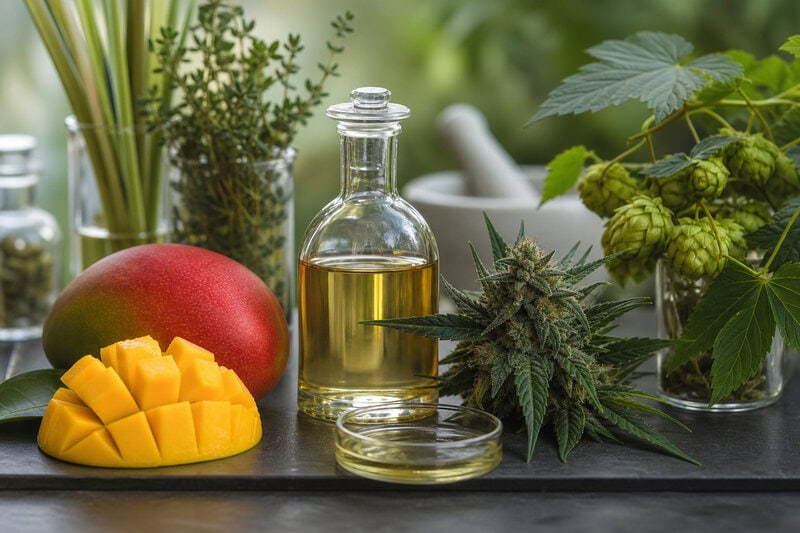
Myrcene (β-myrcene) is a monoterpene hydrocarbon — a member of the terpene class, aromatic compounds produced by plants primarily as insect deterrents and pollinator attractants. It is far from exotic: myrcene occurs naturally in hops, lemongrass, thyme, and mangoes, as well as in Cannabis sativa L. What makes it notable in the cannabis context is its abundance. Analyses published in the journal Flavour and Fragrance have documented myrcene accounting for up to 65 percent of the essential-oil profile in some cannabis cultivars, making it frequently the single dominant terpene in the plant.
In cannabis, myrcene is biosynthesized inside trichomes — the microscopic resin-producing glands that coat the surface of cannabis flowers — alongside cannabinoids like THC and CBD. Gas chromatography studies have documented myrcene concentrations in cannabis flower ranging from trace levels to more than 30 milligrams per gram, with the variation driven primarily by genetics, curing method, and storage temperature.
Ripe mango pulp contains myrcene in concentrations typically between 0.05 and 3 milligrams per gram depending on cultivar and ripeness, according to food-science literature. Those are meaningful quantities — enough to justify the biological question — but substantially lower than what a concentrated cannabis product delivers. That dose gap becomes critical when evaluating the mango claim directly.
The Blood-Brain Barrier Hypothesis: Mechanism and Early Evidence
The central pharmacological claim underlying the mango folklore is specific: myrcene may act as a membrane fluidizer, temporarily increasing permeability of the blood-brain barrier (BBB) — the selective cellular interface that governs which substances pass from the bloodstream into brain tissue — potentially allowing THC to cross more rapidly or in greater quantity. If true, that mechanism would explain why a high-myrcene environment might produce a subjectively more intense experience.
A 2021 preclinical study published in Frontiers in Pharmacology by Ferber and colleagues at the Hebrew University of Jerusalem offered the first direct mechanistic support. Using cell-culture models, the researchers found that myrcene did increase membrane permeability in a dose-dependent manner. The finding was significant enough to establish biological plausibility. The authors were careful, however, to note that in-vitro results cannot be directly extrapolated to human physiology — a standard and essential caveat for preclinical work.
Earlier rodent research added a complementary data point. A 2002 study by Rao and colleagues reported sedative and muscle-relaxant effects from myrcene at high doses, consistent with central nervous system activity. The critical limitation was dose: the quantities used far exceeded what a person would realistically obtain from eating a mango or consuming typical cannabis flower. Preclinical pharmacology routinely uses doses calibrated to produce measurable effects in animals, not doses reflecting real-world human consumption patterns.
The National Center for Complementary and Integrative Health’s established position is measured: terpenes in cannabis are pharmacologically active compounds, but the specific claim that dietary mango consumption measurably alters a cannabis high in humans has not been confirmed in a controlled clinical trial as of 2024. That distinction — between “pharmacologically active in the lab” and “clinically demonstrated in humans” — is the most consequential line in this entire conversation.
The Entourage Effect: A Framework Under Genuine Scientific Debate
The mango-myrcene hypothesis sits inside a larger theoretical structure known as the entourage effect, a term introduced by Israeli pharmacologist Raphael Mechoulam and colleagues in a 1998 paper in the European Journal of Pharmacology. The concept proposes that cannabinoids and terpenes work synergistically — that the combined effect of multiple cannabis compounds exceeds the sum of each component acting alone. If the entourage effect is robust, terpene composition would be a meaningful predictor of a product’s experiential profile, not merely a fragrance characteristic.
A 2020 systematic review by Cogan in the British Journal of Pharmacology found encouraging but preliminary evidence for terpene-cannabinoid interactions — interesting signals, not settled conclusions. The review stopped well short of endorsing specific claims about individual terpenes like myrcene modulating THC potency in humans.
A direct challenge arrived in 2021 from Abrams and colleagues at UC San Francisco, publishing in JAMA Psychiatry. Their study found no significant difference in subjective high intensity between high-terpene and low-terpene cannabis products when THC content was held constant. That result does not disprove the entourage effect, but it constrains its practical magnitude and underscores how much depends on study design, dose, and measurement instrument. The scientific picture is genuinely split: the mechanism is biologically plausible, preclinical support exists, and human-trial data either is absent for the mango-specific claim or has produced mixed results where terpenes broadly have been tested.
Researchers Russo and McPartland proposed a complementary terpene selectivity model in a 2001 paper in the Journal of Cannabis Therapeutics, arguing that terpene profiles may explain strain-to-strain variation in clinical effect even at identical THC concentrations. If that model is eventually validated through rigorous trials, it would give the mango-myrcene intuition a firmer scientific footing — but that validation has not yet arrived.
A Dose Reality Check: What You Would Actually Need to Eat
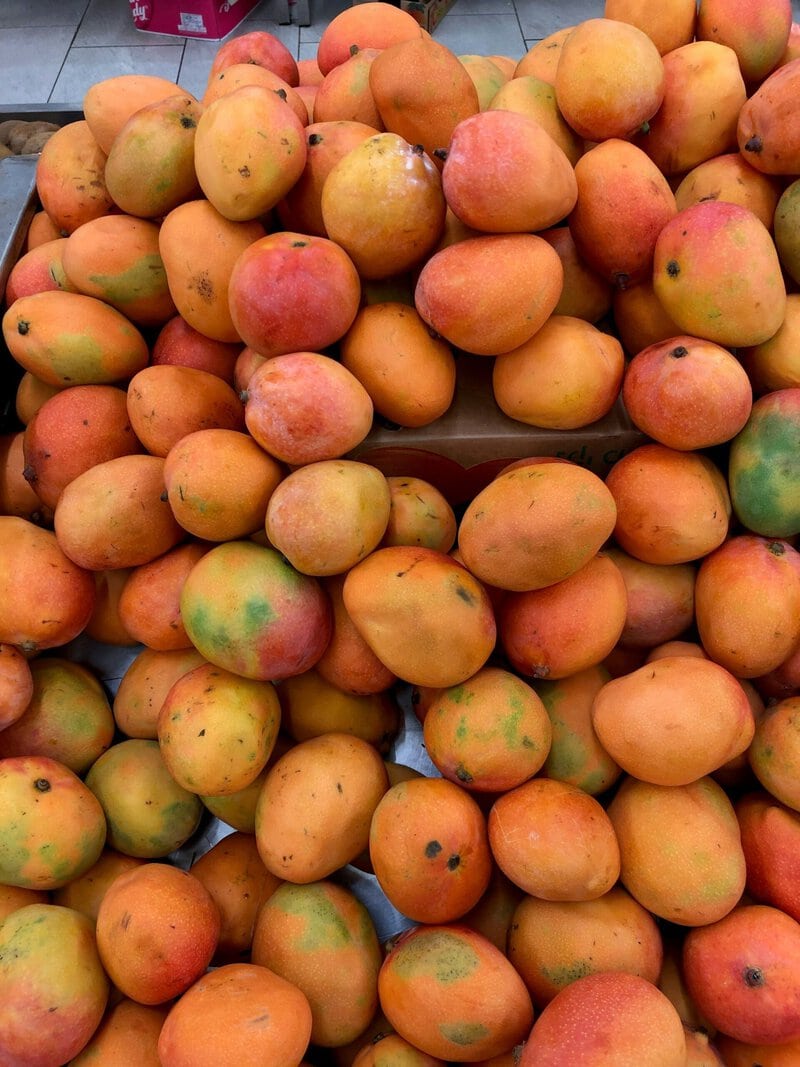
Back-of-envelope pharmacology reveals a significant practical obstacle to the mango hypothesis as typically stated. To approach the myrcene doses used in the Ferber et al. cell-culture study that demonstrated blood-brain barrier permeability effects, a person would need to consume quantities of mango well beyond a single piece of fruit — a limitation Ferber’s own team acknowledged when discussing translation of the finding toward any dietary application.
Bioavailability introduces a second complication. Oral consumption of myrcene from fruit subjects the compound to first-pass hepatic metabolism — breakdown by the liver before the compound reaches systemic circulation — potentially reducing the fraction that ultimately reaches the brain to levels too low to meaningfully affect membrane permeability. Inhaled or vaporized terpenes bypass this metabolic step entirely, reaching the bloodstream through the lungs via a fundamentally different pharmacokinetic pathway. A mango eaten before smoking cannabis and a high-myrcene cannabis product consumed by vaporization are, pharmacologically speaking, two quite different interventions.
A more scientifically defensible reading of the mango folklore may therefore be this: high-myrcene cannabis strains themselves — not supplemental mango — may produce a different experiential profile than low-myrcene strains when THC content is equivalent. That hypothesis is consistent with the entourage framework and with the Russo-McPartland terpene selectivity model, and it represents the version of the claim most worth investigating in future human trials.
Dr. Jordan Tishler of Harvard Medical School has consistently emphasized in public pharmacology guidance that THC dose, individual metabolism, and tolerance are vastly more predictive of high intensity than terpene co-ingestion — a corrective worth foregrounding whenever the mango claim circulates.
What Dispensary Culture Reflects About Demand for Terpene Science
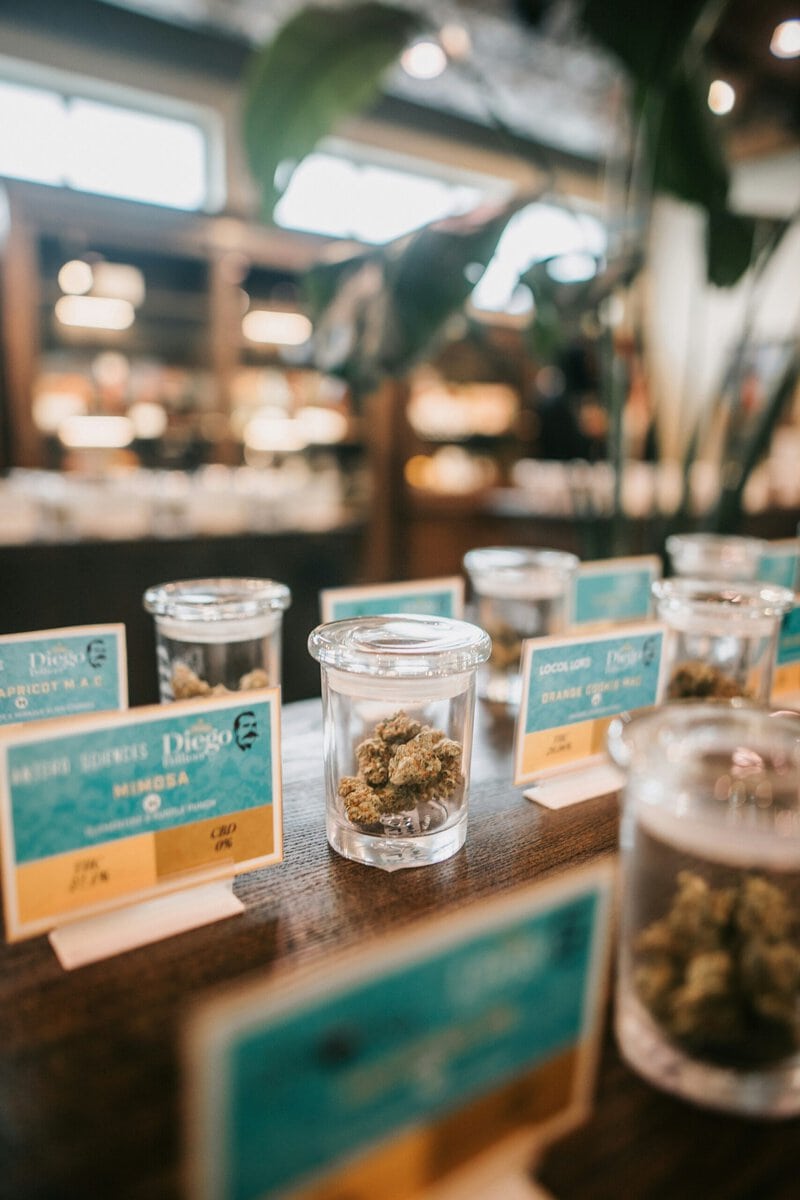
The persistence of the mango-cannabis connection in popular culture is not merely anecdotal noise — it reflects a consumer base actively seeking science-informed purchasing decisions. Operations like Mango Cannabis in Sunland Park, New Mexico represent a broader industry positioning that leans into the intersection of consumer curiosity and cannabis chemistry. The Sunland Park location, listed on Dutchie as a recreational dispensary, describes its service philosophy as grounded in knowledge and respect — language that mirrors an industry-wide shift toward science-adjacent branding.
That shift has a structural driver: terpene profiling is increasingly standard on certificates of analysis, the lab documents that disclose a product’s full chemical composition. As those documents become routine, consumers are beginning to ask budtenders about myrcene percentages the way informed wine buyers ask about tannin structure — treating aromatic chemistry as a meaningful purchase signal rather than marketing flavor. Customer reviews of Mango Cannabis Sunland Park on Yelp consistently cite staff knowledge as a differentiating factor, a pattern suggesting the demand for terpene literacy is being driven by consumers, not just producers.
The product diversity at locations like Mango Cannabis Tulsa — carrying flower, cartridges, wax, topicals, capsules, and edibles — illustrates why the bioavailability question matters practically, not just academically. Each delivery format presents a radically different terpene absorption profile. Terpenes vaporized from flower or a cartridge reach systemic circulation through pulmonary absorption; terpenes in an edible travel through the digestive system and liver before any fraction reaches the brain. Any honest terpene conversation with a consumer must account for that difference, and dispensaries positioned around cannabis science carry a particular responsibility to make it explicit.
Researcher Ethan Russo, formerly of GW Pharmaceuticals, has argued publicly that consumer market pressure on producers to substantiate terpene claims with data is ultimately beneficial for the science — a pragmatic observation suggesting that even when popular claims outrun the evidence, they can help direct research attention toward questions worth answering.
Where the Science Is Heading — and What Would Settle the Question
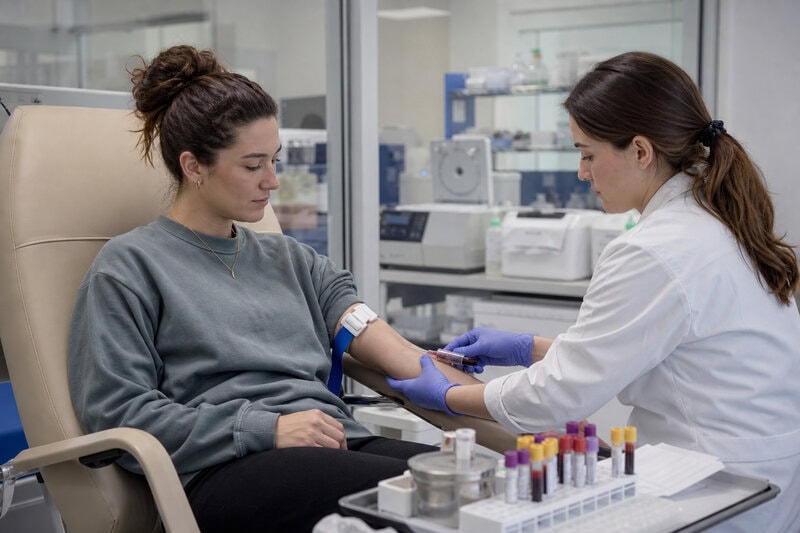
A definitive answer to the myrcene-THC interaction question would require a randomized, double-blind, placebo-controlled human trial in which participants receive standardized isolated myrcene doses alongside controlled THC doses, with pharmacokinetic blood sampling and validated subjective-experience instruments. That study is technically feasible. It has not been funded or completed as of 2024.
The regulatory environment is improving. The 2018 U.S. Farm Bill and expanding state-level cannabis legalization have progressively removed barriers that previously made cannabis pharmacology research in the United States prohibitively difficult. The National Institute on Drug Abuse has expanded its research portfolio on cannabinoid-terpene interactions since 2020, and the field is attracting more rigorous academic attention than at any previous point in its history.
The honest summary is this: myrcene is a real compound shared between mangoes and cannabis, with documented pharmacological activity in preclinical models. The entourage effect is a credible and actively investigated framework. The blood-brain barrier permeability hypothesis has early cell-culture support and a mechanistically plausible basis. The specific claim that eating a mango before consuming cannabis meaningfully intensifies the resulting high, however, remains exactly what good science demands we call it — an intriguing, chemically grounded hypothesis, not an established fact. Responsible dispensary staff, certificate-of-analysis transparency, and a consumer culture curious enough to ask hard questions about terpene claims are, collectively, more likely to advance that science than the folklore alone ever could.