
A single undetected methane “super-emitter” well can release as much greenhouse-gas warming potential in one hour as hundreds of cars do in a year — yet most go undetected for months, according to findings from the Environmental Defense Fund’s MethaneSAT mission. That invisible, fast-acting, and stubbornly difficult-to-track gas is responsible for roughly 30 percent of the net rise in global temperatures since the Industrial Revolution, making it one of the most consequential climate threats hiding in plain sight.
Methane vs. CO₂: Why Potency and Timescale Both Matter
When most people think about climate change, carbon dioxide dominates the conversation. That framing obscures a critically important variable: methane (CH₄), which over a 20-year timeframe traps approximately 80 times more heat per unit of mass than CO₂ — a metric called Global Warming Potential over 20 years, or GWP20. This figure comes from the Intergovernmental Panel on Climate Change’s Sixth Assessment Report (2021) and reflects the gas’s dangerous early-decade punch on the atmosphere.
Methane’s atmospheric lifetime is only about 12 years, compared with centuries for CO₂. That relatively short life is actually a strategic opportunity: emissions reductions produce measurable cooling benefits within years, not generations, giving policymakers a rare near-term lever for slowing warming this decade rather than deferring results to the next century.
Over the conventional 100-year GWP benchmark — the figure most commonly cited in policy documents — methane is still roughly 29 to 30 times more potent than CO₂. The choice of timeframe is both scientifically legitimate and politically charged. The fossil fuel industry has historically preferred the 100-year figure because it dilutes methane’s apparent urgency. Public-health advocates and rapid-decarbonization researchers argue the 20-year figure better reflects the actual near-term climate emergency, particularly given the proximity of critical warming thresholds. Neither framing is dishonest; the question is which lens policymakers choose to look through.
The United Nations Environment Programme’s Global Methane Assessment (2021) framed the stakes clearly: cutting human-caused methane emissions by 45 percent this decade could avoid nearly 0.3°C of warming by the 2040s — a margin that could prove decisive in staying below 1.5°C of total warming.
Where Fossil Fuel Methane Actually Comes From
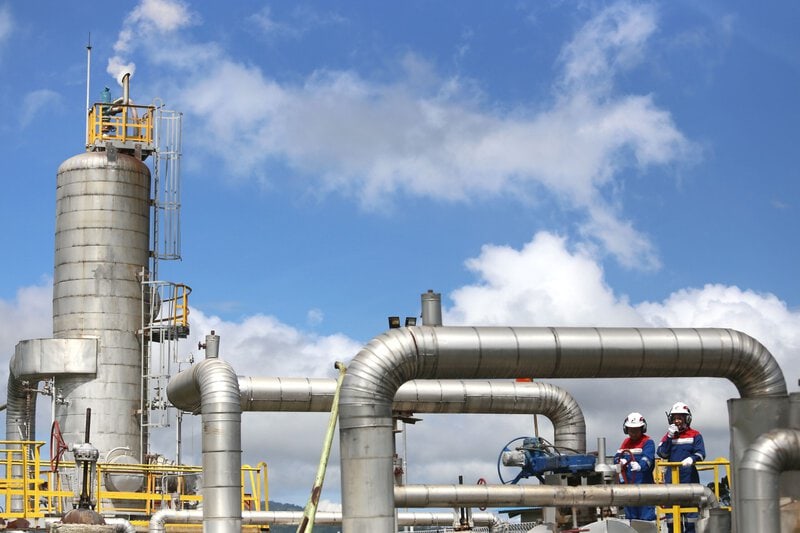
The oil and gas supply chain — spanning wellheads, pipelines, processing plants, and distribution networks — accounts for approximately 40 percent of all human-caused methane emissions globally, according to the International Energy Agency’s Global Methane Tracker 2024. Coal mines add another roughly 12 percent of fossil-fuel methane, a source that receives far less public attention than leaking gas pipelines despite its substantial contribution.
A key distinction often lost in public debate is the difference between fugitive emissions — unintended leaks from equipment failures, loose fittings, and aging infrastructure — and intentional venting and flaring. Both categories remain chronically under-reported in national greenhouse gas inventories. A landmark 2018 study published in Science by Alvarez and colleagues found that U.S. methane emissions from the oil and gas sector were approximately 60 percent higher than Environmental Protection Agency estimates — a gap so large it called into question the foundational assumption behind natural gas as a “bridge fuel.”
Natural gas is roughly 90 percent methane. When marketed as cleaner than coal, that claim depends entirely on assuming minimal leakage throughout the supply chain. The Alvarez et al. findings demonstrated that U.S. supply-chain leak rates were high enough to erode much of natural gas’s climate advantage over coal when assessed on a 20-year warming basis. In other words, the “clean gas” narrative was always contingent on a measurement assumption that turned out to be wrong.
Peer-reviewed economic analyses reinforce a related point: unpriced methane emissions represent a massive, unaccounted subsidy to fossil fuel producers, who externalize these climate costs onto everyone else while booking the revenue. As CleanTechnica reported in June 2026, the fossil fuel industry’s chronic methane leakage functions as a kind of invisible “demon” haunting the climate — a metaphor that is scientifically apt. The gas cannot be seen, acts fast, and has proven surprisingly difficult to bring under control.
The Measurement Problem: An Industry on the Honor System
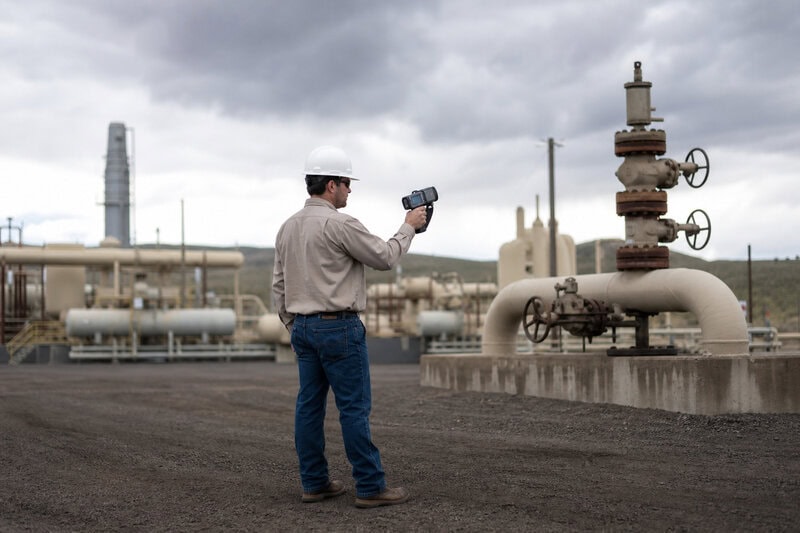
Methane is colorless and odorless at ambient concentrations — the distinctive smell associated with household gas is an added odorant called mercaptan, not the methane itself. This means large leaks can persist undetected for months without specialized infrared cameras or laser-based sensors, technology that until recently was expensive, rare, and not required by law.
Ground-based monitoring relies on sparse sensor networks and self-reported corporate data, creating what researchers describe as a “measurement-to-inventory gap” — the systematic difference between what atmospheric observations detect in the field and what official government inventories claim. That gap is not a rounding error. A 2022 study published in Nature found that fewer than 5 percent of all oil and gas facilities globally were subject to any form of independent methane monitoring, leaving the vast majority of emissions essentially on the honor system.
This is not merely a technical footnote for scientists. It has direct regulatory, financial, and legal consequences. If emissions inventories are systematically low, then climate targets built on those inventories are also systematically miscalibrated. Companies reporting compliance with voluntary pledges may be doing so against a baseline that understates actual emissions by a factor of two or more.
The Satellite Revolution: Making the Invisible Visible
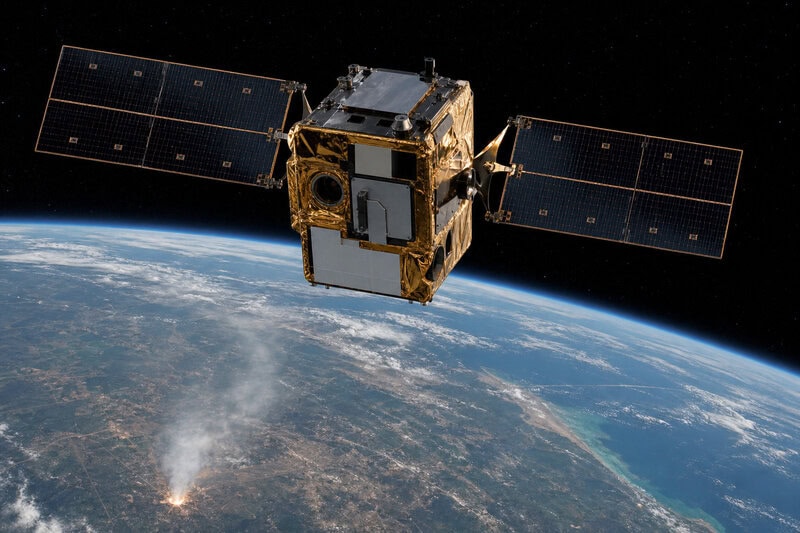
The most significant development in methane accountability in a generation is the emergence of purpose-built detection satellites capable of continuous, basin-wide surveillance. The Environmental Defense Fund’s MethaneSAT, launched in March 2024, can detect methane plumes as small as 3 kilograms per hour across entire oil and gas regions simultaneously — transforming what was once sporadic spot-checking into something approaching real-time oversight. This capability is central to why climate advocates, including those sharing related coverage on LinkedIn, have highlighted the intersection of satellite technology and industry accountability.
GHGSat, a Canadian commercial satellite operator, and the European Space Agency’s Sentinel-5P — carrying the TROPOMI instrument — have together produced the first global, near-real-time maps of methane super-emitter events. These missions have identified previously unknown hotspots in Turkmenistan, Algeria, and the Permian Basin of Texas, in several cases revealing emissions orders of magnitude larger than operators had disclosed.
The Carbon Mapper coalition — a partnership between NASA’s Jet Propulsion Laboratory, Planet Labs, and several U.S. states — launched its Tanager-1 satellite in 2024 specifically to attribute point-source emissions to individual facilities. That level of precision shifts the accountability dynamic from the aggregate to the specific: regulators and litigants can identify which operator owns which leak, a capability that makes enforcement genuinely actionable rather than aspirational.
An important caveat is that current satellite constellations still miss a significant fraction of smaller, intermittent “pulsed” leaks — brief releases that may not be visible during a satellite’s overpass window. This means even the best current data likely underestimates total methane emissions from fossil fuel operations, a point policymakers and journalists should bear clearly in mind when treating satellite-based inventories as definitive.
Policy Levers: From Voluntary Pledges to Binding Enforcement
The Global Methane Pledge, launched at COP26 in 2021 and signed by over 150 countries, commits signatories to a 30 percent reduction in methane emissions by 2030 relative to 2020 levels. The IEA estimates this target alone could avoid roughly 0.2°C of warming by mid-century — placing it among the highest-impact near-term climate agreements currently in effect. Whether signatories will meet that target is a separate question; many lack the monitoring infrastructure to verify their own progress.
In the United States, the EPA’s Methane Emissions Reduction Program, finalized in 2024 under the Inflation Reduction Act, introduced the first federal fee on excess methane from large oil and gas facilities. The fee starts at $900 per metric ton and rises to $1,500, creating a financial incentive structure that voluntary pledges historically failed to generate. Critics from fossil fuel industry trade groups argue the fee imposes compliance costs before measurement technology is mature enough to fairly attribute emissions to specific operators — a concern that some independent scientists acknowledge as technically legitimate even while supporting the regulatory direction overall.
The European Union’s Methane Regulation, which entered into force in 2024, goes further in one important respect: it requires mandatory measurement, reporting, and verification across the entire oil, gas, and coal supply chain sold into European markets, including imports. That provision effectively extends EU standards to non-EU producers seeking access to European customers — a form of regulatory reach with few precedents in energy markets, and one being closely watched by trade lawyers and climate advocates alike.
What Individuals and Communities Can Actually Do
The argument advanced in coverage aggregated at GreenTV.com and in the summary at Ecotopical — that readers can meaningfully help “exorcise” the fossil fuel industry’s methane problem — rests on real, documented leverage points rather than symbolic gestures. Four categories of action stand out.
- Support organizations funding satellite monitoring and enforcement litigation. Groups like the Clean Air Task Force and the Environmental Defense Fund translate satellite data into regulatory and legal pressure, creating accountability mechanisms that would not otherwise exist. Financial support for these organizations directly funds the infrastructure of independent verification.
- Electrify home heating and cooking. Research published in 2022 found that end-use natural gas appliances contribute meaningfully to indoor air pollution even when functioning as designed. Electrification eliminates personal exposure to these emissions while simultaneously removing a demand-side justification for expanding gas distribution infrastructure.
- Advocate for mandatory third-party methane reporting at the state and municipal level. Climate policy researchers consistently identify local and state-level mandatory monitoring requirements — rather than reliance on federal action alone — as among the highest-leverage interventions available to organized communities, particularly in states with significant oil and gas production.
- Use publicly available satellite data. MethaneSAT, Carbon Mapper, and TROPOMI data are all publicly accessible through online dashboards. Local journalists, municipal governments, and community organizations can use these tools to independently assess industry emissions claims, turning sophisticated scientific instruments into mechanisms for democratic accountability.
Methane’s invisibility has long been its greatest political asset: what cannot be seen cannot easily be regulated, litigated against, or held to account. The convergence of satellite technology, binding international policy frameworks, and informed public pressure is beginning to close that gap. Thousands of wells and pipeline systems that were never designed to be scrutinized from orbit are now receiving exactly that scrutiny — and the results are forcing a reckoning with emissions that were hidden for decades not because they were small, but because no one was required to look.