
Five thruster failures and a helium leak measured in cubic centimeters per minute grounded two NASA astronauts at the International Space Station for months longer than anyone planned — and forced one of the world’s most scrutinized engineering programs to publicly acknowledge that it simply did not have enough data to call the situation safe. That admission, uncomfortable as it is, is precisely how crewed spaceflight is supposed to work.
The Number That Stopped a Mission
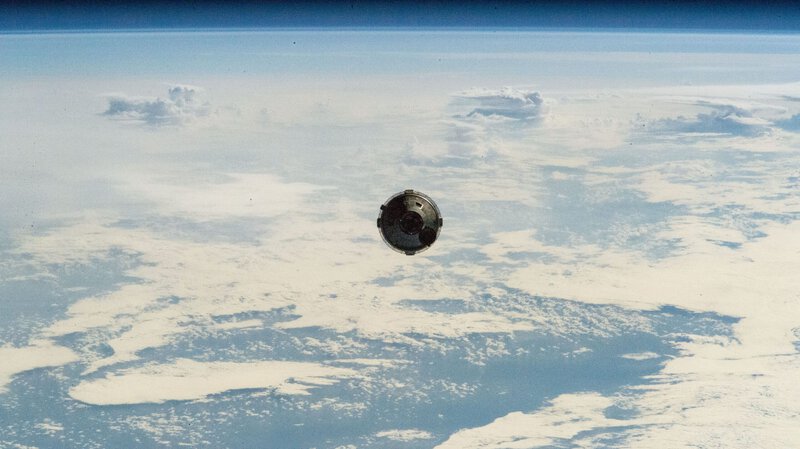
Boeing’s Starliner Crew Flight Test launched in June 2024 expecting a station stay of roughly ten days. NASA’s safety advisers subsequently indicated it could be up to a year before the capsule flies crew again — a timeline mismatch that encapsulates the brutal calculus of human spaceflight. NASA and Boeing remained uncertain about a firm return-to-flight date throughout the reporting period, a situation that is as much a story about engineering philosophy as it is about any single hardware failure.
The proximate cause was a helium leak — helium being the inert pressurant gas that pushes propellant into Starliner’s maneuvering thrusters — small enough to be measured in standard cubic centimeters per minute, yet large enough to cast doubt on five of the service module’s twenty-eight reaction control thrusters. By early September 2024, NASA and Boeing had shifted to planning an uncrewed return, choosing to leave mission astronauts Butch Wilmore and Suni Williams aboard the ISS rather than accept unquantified risk on reentry. Boeing had targeted September 7, 2024 for the Crew Flight Test’s departure from the station. The next crewed Starliner mission is now expected no sooner than 2025, illustrating how a single unresolved anomaly can cascade across an entire program schedule.
What a Helium Leak Actually Means Inside a Spacecraft
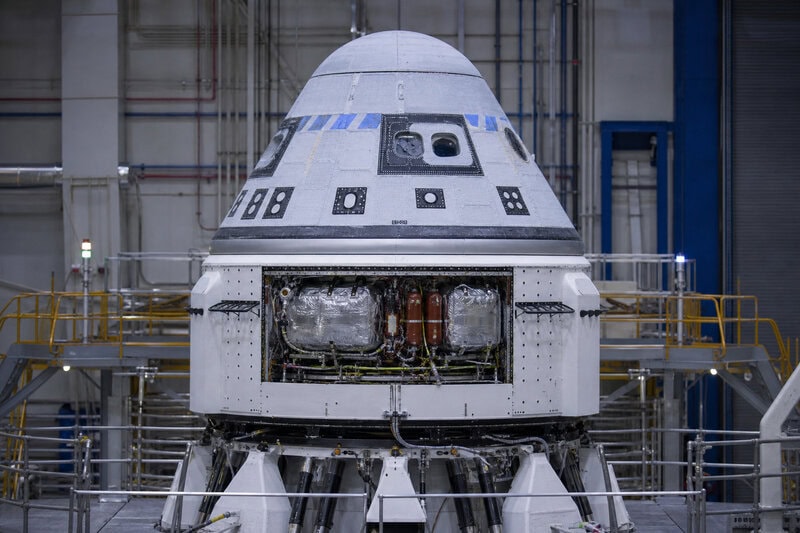
To understand why a small gas leak carries such large consequences, it helps to understand what helium is doing aboard a crewed capsule in the first place. In Starliner’s propulsion system, helium serves as a pressurant: it occupies a sealed bladder that squeezes storable propellants — monomethyl hydrazine fuel and nitrogen tetroxide oxidizer — toward the thruster valves at consistent pressure. In microgravity, there is no gravity to feed a propellant tank, so pressurized helium does the work instead. Remove that consistent pressure, and thrust becomes unpredictable.
A leak in the helium circuit does not immediately mean propellant escapes, but it degrades the system’s ability to maintain the pressure margins required for predictable thrust output. In orbital mechanics, even a small deviation in a deorbit burn can shift a capsule’s landing zone by hundreds of kilometers. NASA classifies propulsion anomalies on crewed vehicles using a tiered hazard framework. A leak affecting multiple thrusters simultaneously elevates the event toward what the agency terms a “criticality 1” concern — a single failure mode with potential catastrophic consequence. At that classification level, the agency’s standard practice is to ground the vehicle until the failure mode is fully characterized.
An additional complication is architectural: Starliner’s service module, which houses the propulsion system, is jettisoned before reentry and burns up in the atmosphere. Engineers therefore cannot physically inspect the hardware after the mission. Ground-based analysis and high-fidelity simulation become the only tools available to close the risk — a constraint that methodically slows every decision in the investigation chain.
How NASA Certifies a Crewed Spacecraft — and Why It Takes So Long
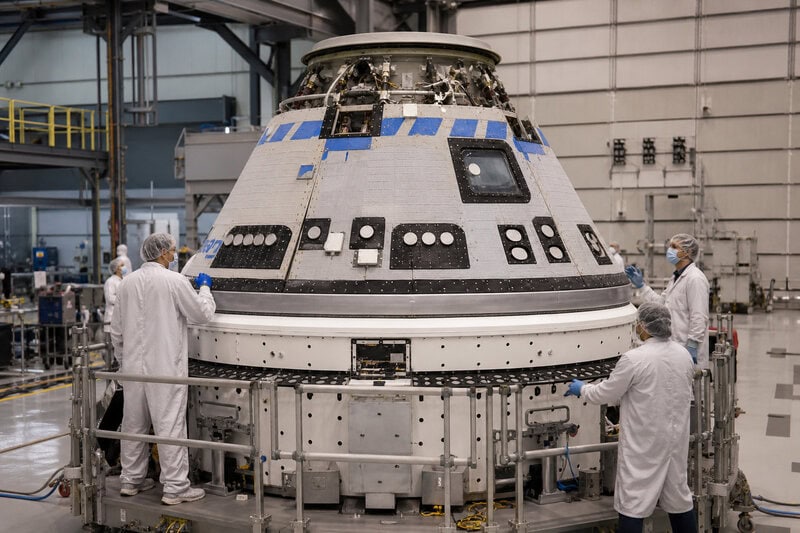
The certification process for a commercial crewed spacecraft is not a single test or a single document. Under NASA’s Commercial Crew Transportation Capability contracts, Boeing must demonstrate compliance with hundreds of technical requirements spanning structural margins, abort system performance, atmospheric entry loads, and life-support reliability before the agency issues an operational certification. NASA’s official FAQ on the Crew Flight Test return status makes clear that the Crew Flight Test itself functions as the final verification gate — explicitly designed to expose unexpected system interactions that simulations and ground tests cannot replicate.
That design intent is important context for why the helium leak and thruster anomalies carry such regulatory weight. They did not appear in simulation. They appeared in the actual flight environment, which is the one environment the test was specifically meant to probe. NASA’s Flight Readiness Review process requires that every open anomaly be formally dispositioned — classified as either “accepted risk with documented rationale” or “resolved” — before a crew is permitted to board. The agency’s reluctance to immediately clear Starliner’s thruster issues reflects that standing standard, not an unusual escalation of caution.
According to NASA’s safety advisers, the agency could need up to a year to fully characterize the anomalies and re-certify Starliner for crew transport. That timeline is consistent with how similar in-flight anomaly investigations have proceeded on previous human spaceflight programs, where root cause analysis, corrective action proposals, ground test validation, and formal review together consume most of the calendar.
Boeing Starliner vs. SpaceX Crew Dragon: A Study in Development Paths
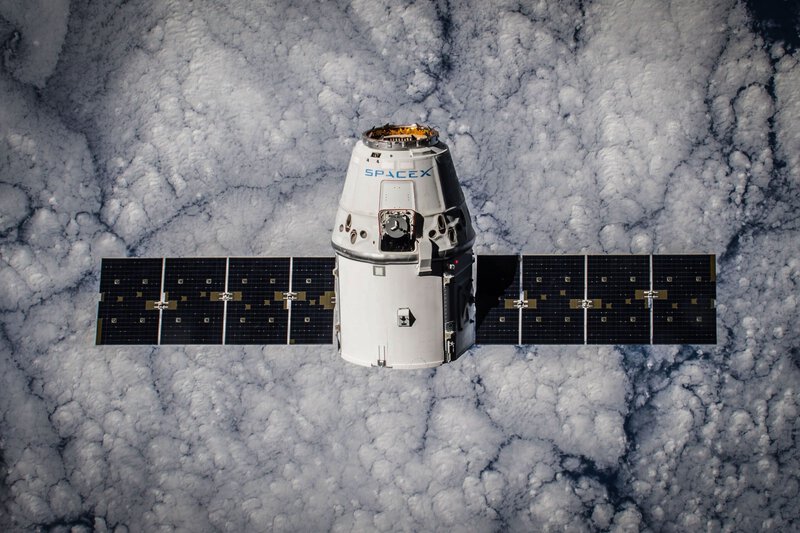
Comparing Boeing’s trajectory to SpaceX’s is instructive, though the comparison requires care. SpaceX’s Crew Dragon completed its uncrewed Demo-1 mission in March 2019 and its crewed Demo-2 in May 2020 before NASA certified it for operational missions — a roughly fourteen-month gap between first crewed flight and full certification that now serves as the contemporary commercial crew benchmark. Boeing’s Starliner program arrived at its June 2024 Crew Flight Test carrying a heavier documented history: two troubled uncrewed orbital flight tests preceded it, the first in December 2019 due to a software timing error, and the second in May 2022 due to stuck propellant valves.
The engineering architectures differ in ways that matter to certification. Boeing’s Starliner uses a solid-fuel launch abort system mounted above the capsule, while Crew Dragon integrates its escape system into the capsule’s side walls using liquid-fueled SuperDraco engines. Neither design is inherently superior, but each creates a distinct fault-tree map — the branching diagram engineers use to trace every possible failure path — that must be independently validated. A fault tree for one vehicle offers no shortcuts for the other.
Industry analysts have noted, and NASA has not disputed, that Boeing’s fixed-price Commercial Crew contract — valued at approximately $4.2 billion, compared to SpaceX’s $2.6 billion award — created financial pressure that may have influenced program pacing decisions over the years. NASA has stated publicly that schedule was never permitted to override safety gates, a position consistent with the agency’s ultimate decision to send Starliner home without crew rather than accept uncharacterized risk.
The Engineering Margin Problem: Why ‘Small’ Anomalies Are Never Trivial
Spacecraft are designed to rigid safety margins because the operational environment imposes simultaneous extremes that interact in ways difficult to fully replicate on the ground. Structural components are typically sized to withstand at least 1.4 times the expected maximum load. Flight-critical systems require redundant architectures. The reason these margins exist is not theoretical conservatism — it is the accumulated record of what happens when they are relaxed.
A helium leak that appears minor at the rate measured during ground testing can behave differently in the thermal environment of low Earth orbit, where hardware temperatures swing by more than 200 degrees Celsius between the sunlit and shadowed portions of each ninety-minute orbit. Seals expand and contract repeatedly through that cycle. A leak rate stable at one temperature may grow nonlinearly at another. Engineers must account for this variability across the full envelope of possible conditions, not just the nominal ones.
NASA’s lessons-learned documentation, maintained since the Apollo era and regularly cited in agency engineering guidance, consistently identifies what organizational researchers call “normalization of deviance” — the gradual institutional acceptance of small anomalies as routine — as a precursor factor in major failures. The Space Shuttle Challenger and Columbia accidents both involved systems whose warning signs had been observed, discussed, and accepted as tolerable before the fatal mission. That institutional memory is embedded in NASA’s current anomaly disposition requirements, and it helps explain why the agency treats even a modest helium leak with the seriousness it has applied to Starliner’s situation.
NASA confirmed it had enough data to verify that Starliner’s battery life could sustain a docked configuration through early September 2024, giving engineers a defined planning window for the uncrewed return without the additional pressure of a power emergency. The decision to proceed with an uncrewed return is therefore best understood not as a program failure but as the safety management system functioning as intended: when risk cannot be adequately bounded, crew protection takes precedence over schedule.
What Happens Next: The Road Back to Flight
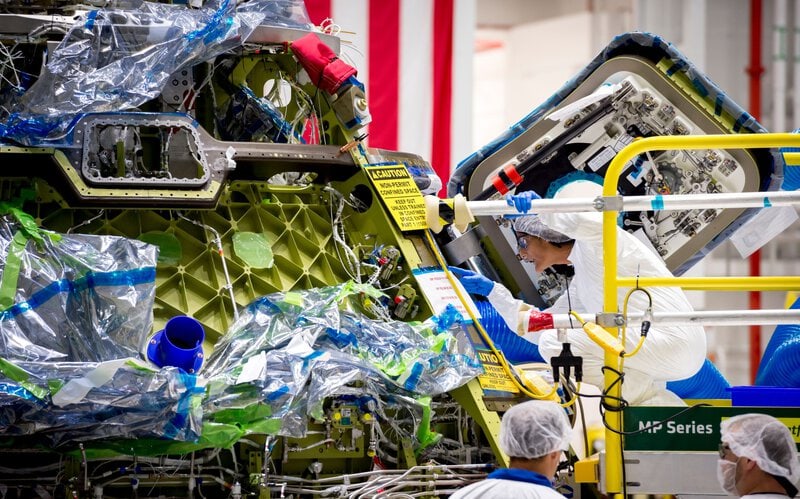
Before Starliner can carry crew again, Boeing must complete a formal root-cause investigation of the helium leaks and thruster anomalies, propose corrective actions, demonstrate those corrections through ground testing, and present the complete findings to NASA’s Mission Management Team and safety advisers for disposition. Each of those steps is sequential — findings from one phase inform the scope of the next — which is why the timeline extends to the scale of months rather than weeks.
The next crewed Starliner mission to the ISS is now expected no earlier than 2025, a gap that will require NASA to rely more heavily on SpaceX Crew Dragon for ISS crew rotation in the interim. That operational dependence on a single commercial provider is itself a risk factor that NASA’s commercial crew program was explicitly designed to mitigate — which is a core reason the agency has continued investing in Starliner’s development despite the program’s persistent difficulties.
The outcome of the investigation carries implications beyond any single mission. It will inform how NASA structures future commercial crew certification requirements, particularly around how the agency handles in-flight anomalies discovered during certification test flights. It will also bear on how the agency balances fixed-price contract incentives — which reward efficiency and schedule adherence — against the open-ended timeline that genuine anomaly resolution demands. Those two pressures are, by nature, in tension, and the Starliner program has brought that tension into unusually sharp public relief.
Crewed Spaceflight Engineering Punishes Half-Answers
The Starliner situation is a working illustration of why human spaceflight programs routinely take longer and cost more than initial projections. The engineering standard is not “probably safe” — it is “demonstrably safe within quantified probability bounds,” a distinction that systematically eliminates shortcuts. Every delay in Starliner’s certification timeline reflects the compounding nature of in-flight anomalies: each unresolved question raises the possibility that it is a symptom of a deeper design issue rather than an isolated event, and that possibility must be methodically eliminated before crew boards.
NASA’s public communications throughout the Starliner episode have been notably measured, consistently distinguishing between what is known, what is under analysis, and what remains uncertain. That communication posture reflects guidance the agency explicitly adopted after the Columbia Accident Investigation Board recommended more transparent risk communication in 2003 — a recommendation that acknowledged overconfident public statements had historically understated genuine uncertainty in ways that eroded institutional honesty about risk.
For aerospace engineers, program managers, and space policy observers, the Starliner case is likely to become a durable reference point: a well-documented example of how the intersection of commercial contracting pressures, iterative anomaly accumulation, and irreducible physical risk creates decision environments where the only defensible answer is more time, more data, and more testing. In crewed spaceflight, that is not a failure of ambition. It is the discipline that keeps people alive.