
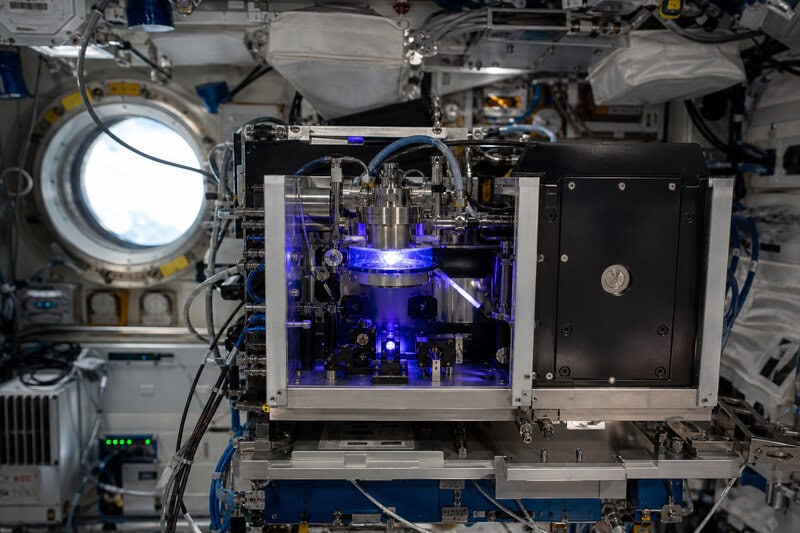
At any given moment, one of the coldest places in the entire universe is not located in the vast frozen darkness between galaxies — it is orbiting roughly 400 kilometers above Earth, inside a device about the size of a microwave oven, bolted to the International Space Station. NASA’s Cold Atom Lab has chilled matter to temperatures billions of times colder than the average temperature of deep space, pushing physics into territory so extreme that the normal rules governing solids, liquids, and gases simply cease to apply.
A Fifth State of Matter — and Why It Breaks the Rules
When atoms of certain elements are cooled to within a fraction of a degree of absolute zero — the thermodynamic basement of the universe, defined as 0 Kelvin or −273.15°C — something extraordinary happens. Rather than continuing to behave as individual particles, the atoms collectively collapse into the lowest possible energy state and begin acting as a single, unified quantum entity. That merged cloud of matter is called a Bose-Einstein Condensate, or BEC, and it represents a fifth state of matter distinct from solids, liquids, gases, and plasma.
The phenomenon was predicted independently by physicist Satyendra Nath Bose and Albert Einstein in 1924 and 1925. It remained theoretical for seven decades until 1995, when Eric Cornell and Carl Wieman at JILA — a joint institute of the University of Colorado and the National Institute of Standards and Technology — created the first BEC in a laboratory, work the Nobel Committee recognized with the 2001 Nobel Prize in Physics.
BECs matter to science because they function as a kind of quantum microscope. Quantum effects — phenomena like superfluidity, wave-particle duality, and quantum tunneling — normally operate at subatomic scales that are impossible to observe directly. In a BEC, those same effects manifest across the entire condensate, which can be large enough to photograph with conventional imaging equipment. That makes BECs one of the few tools physicists have for studying quantum mechanics in a controlled, observable way. It is worth noting, however, that while BEC physics is well-established in laboratory settings, applying those findings to cosmology, quantum gravity, or next-generation precision sensors remains an active and unsettled area of research.
Why Gravity Is the Enemy of Quantum Experiments
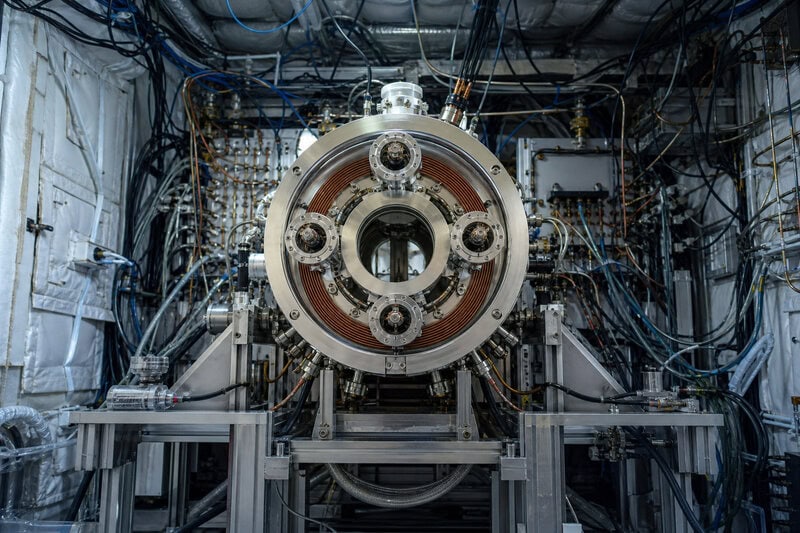
Producing a BEC on Earth is technically grueling, and observing one for any meaningful length of time is even harder. The problem is gravity. Earth’s gravitational pull causes the ultracold atom cloud to sag and fall through the magnetic field used to trap it, typically dispersing the condensate within fractions of a second. That razor-thin observation window constrains what scientists can study and how precisely they can cool atoms before the cloud escapes the trap entirely.
The solution, as NASA’s Jet Propulsion Laboratory describes in its Cold Atom Lab mission overview, is to remove gravity from the equation — or as close to removing it as current technology allows. Aboard the International Space Station, the entire facility exists in a continuous state of free fall around Earth, producing the effective weightlessness known as microgravity. In that environment, the atom cloud is no longer pulled downward through the magnetic trap. It simply floats, giving scientists dramatically longer windows to observe the condensate and to cool it to temperatures that would be unachievable on the ground.
According to NASA and the Cold Atom Lab science team, the facility can cool atom clouds to temperatures on the order of a few hundred picokelvin — that is, a few hundred trillionths of a degree above absolute zero. For perspective, the average temperature of outer space is approximately 2.7 Kelvin, a remnant of the cosmic microwave background radiation left over from the Big Bang. The Cold Atom Lab operates at temperatures billions of times colder than that ambient cosmic baseline, making it, during active operation, one of the coldest known locations in the universe.
One point of precision matters here: absolute zero itself is a thermodynamic limit, not an achievable destination. The Third Law of Thermodynamics prohibits any physical system from actually reaching 0 Kelvin. What the Cold Atom Lab demonstrates, as NASA’s own science visualization resources explain, is how extraordinarily close it is possible to get — and how much that proximity reveals about the quantum world.
How NASA Builds the Coldest Matter in the Universe
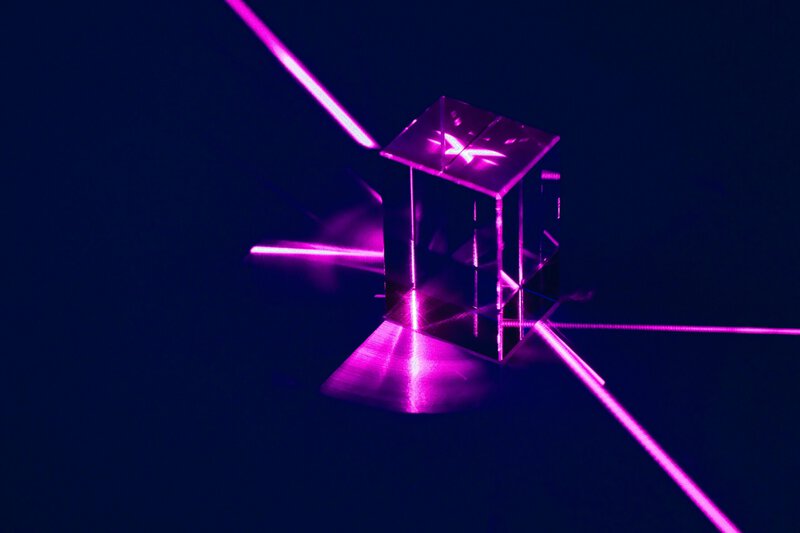
The Cold Atom Lab accomplishes its temperature feats through a two-stage process combining two of the most sophisticated techniques in experimental physics. The first is laser cooling, in which precisely tuned laser beams slow the motion of rubidium and potassium atoms — motion being the physical expression of thermal energy — until those atoms are moving at speeds far below anything achievable through conventional refrigeration. The lasers are tuned to a specific frequency that causes atoms moving toward them to absorb photons and lose momentum, effectively braking the atomic cloud.
Once laser cooling has done its work, magnetic fields confine the atoms while a second technique, evaporative cooling, brings temperatures down to their final extreme. The process is conceptually similar to what happens when a hot cup of coffee cools: the most energetic molecules escape as vapor, carrying disproportionate heat with them and leaving the remaining liquid cooler. In the Cold Atom Lab, the magnetic trap is adjusted to allow the most energetic atoms to escape, so that only the coldest, least-energetic atoms remain. Those atoms, once the trap reaches a critical threshold, collapse into a BEC.
The engineering challenge involved in running this process aboard the ISS should not be understated. The entire apparatus must operate autonomously in an environment subject to radiation, microvibrations from crew activity and station systems, and strict power constraints. It is controlled remotely by scientists on the ground, who cannot intervene physically if something goes wrong. That the system functions reliably is itself a significant engineering achievement, as Nature reported when examining the broader implications of space-based quantum research.
What the Cold Atom Lab Has Already Demonstrated
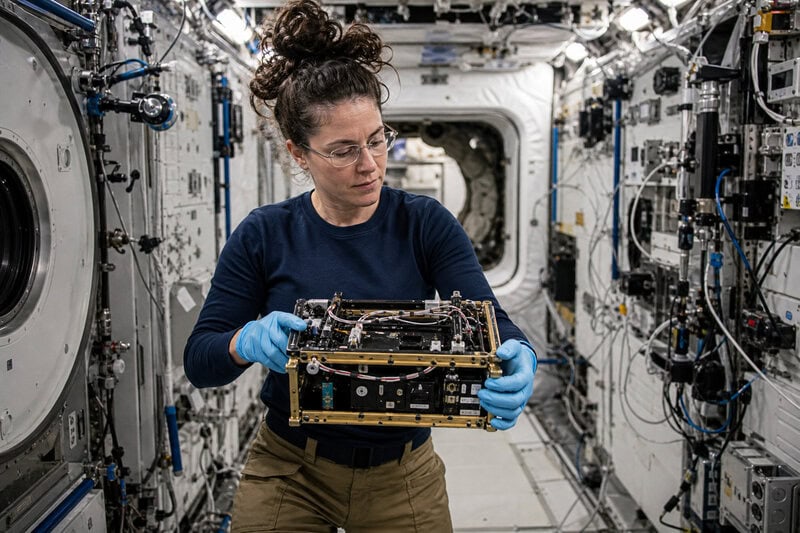
The production of a Bose-Einstein Condensate aboard the International Space Station marked the first time in history that a BEC had been created in Earth orbit. That milestone, confirmed by NASA and the Cold Atom Lab science team, was not merely symbolic. It established that quantum matter of this kind could be reliably produced and maintained in the space environment — a prerequisite for any future program of space-based quantum science.
Since achieving that milestone, the facility has operated as a shared research platform for multiple science teams, each probing different aspects of quantum matter in microgravity. Investigations have targeted fundamental questions about how matter behaves at quantum scales when gravity is effectively removed — questions that cannot be answered with ground-based experiments alone. The extended observation times enabled by microgravity allow researchers to study phenomena such as long-range quantum coherence and the behavior of matter waves in ways that are either impractical or entirely impossible to replicate in a terrestrial laboratory.
It is important to be precise about what is established and what remains speculative. The ability to produce and observe BECs in orbit is confirmed. The full scientific implications of those observations — particularly for fields such as dark energy detection, tests of general relativity, or quantum-enhanced inertial navigation — are promising areas of active investigation, but conclusions in those domains have not yet been settled by the broader scientific community and should not be treated as foregone outcomes.
Quantum Sensors and Deeper Physics on the Horizon
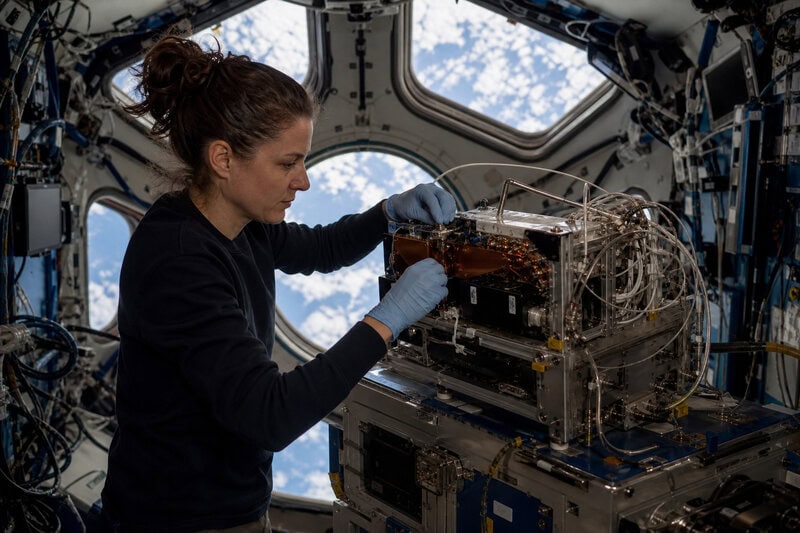
The longer-range significance of the Cold Atom Lab connects to some of the deepest unsolved problems in physics. One is the persistent tension between quantum mechanics — which governs matter at subatomic scales — and general relativity, Einstein’s theory of gravity that governs the large-scale structure of the universe. These two frameworks, each spectacularly successful within its own domain, have resisted every attempt at unification for nearly a century. Space-based BEC experiments offer a way to test whether quantum behavior changes measurably under different gravitational conditions, which could yield clues about where and how those frameworks might ultimately be reconciled.
A second area of practical interest involves atom interferometry. BEC-based atom interferometers exploit the wave nature of ultracold atoms to measure gravitational fields, acceleration, and rotation with extraordinary precision. In principle, such devices could eventually improve geodetic surveys of Earth’s gravitational field and enable rigorous tests of general relativity. Operational quantum sensors of this kind remain years away from deployment, and the path from laboratory demonstration to practical instrument involves substantial unsolved engineering and scientific challenges — but the Cold Atom Lab’s work contributes directly to that long-term program.
NASA’s efforts also exist within a broader international context. Space-based cold-atom research is an active priority for European and Chinese space agencies as well, reflecting wide consensus within the physics community that microgravity quantum experiments represent a genuine research frontier rather than a scientific curiosity. NASA JPL has described the Cold Atom Lab as the coldest experiment in space — a description that, in the most literal thermodynamic sense, is difficult to dispute.
A Tiny Cold Cloud With Universe-Sized Questions
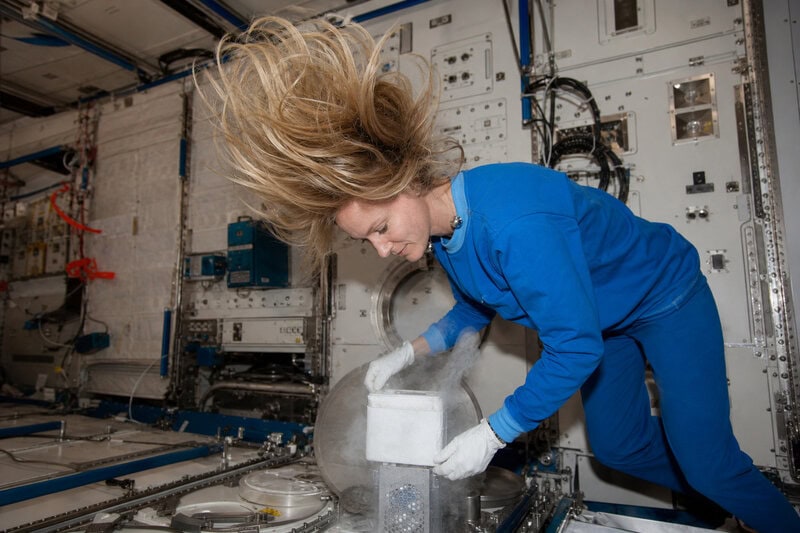
NASA’s Cold Atom Lab has produced Bose-Einstein Condensates in Earth orbit for the first time in history, creating one of the coldest and most exotic forms of matter known to exist anywhere in the universe. By exploiting microgravity to hold quantum matter still and cold for longer than any ground-based laboratory can manage, scientists are gaining a genuinely unprecedented lens on the rules that govern reality at its most fundamental level.
The Cold Atom Lab remains in active operation. Its science program is ongoing, and the insights it generates are expected to shape quantum physics, precision measurement technology, and humanity’s understanding of the cosmos for decades to come. The facility is not a finished achievement but a beginning — a proof that the extreme quantum frontier can be reached and studied from orbit.
In a universe that averages just a few degrees above absolute zero, NASA has managed to build something colder — and far stranger — right above our heads.