
Maneuvering a satellite in orbit requires burning precious propellant with extraordinary precision — and even a minor miscalculation can send a spacecraft drifting into useless, or dangerous, trajectories. Against that unforgiving backdrop, Viennese startup GATE Space has secured €6.3 million to push its proprietary spacecraft propulsion technology from the lab bench toward the factory floor, in a deal that signals growing European institutional confidence in a new generation of in-space mobility systems.
A €6.3 Million Vote of Confidence From the European Commission
GATE Space secured €6.3 million (approximately $7.1 million USD) through the European Innovation Council’s EIC Accelerator Programme — one of Europe’s most competitive deep-tech funding instruments. The EIC Accelerator selects only a small fraction of applicants across all technology sectors, making any award a meaningful institutional signal rather than a routine grant. For an early-stage space startup, where capital constraints routinely determine which promising technologies survive long enough to reach orbit, the material scale of this raise is significant.
Blended Grant and Equity: An Unusual Financial Architecture
Unlike a straightforward grant or a standard venture round, the EIC Accelerator deal combines a non-repayable grant component with a direct equity stake taken by the European Commission — a structure formally known as blended finance. This arrangement makes the European Commission a part-owner of GATE Space, aligning public-sector incentives with the company’s commercial success in a way that a grant alone would not achieve.
Blended grant-and-equity financing is specifically designed to de-risk deep-tech ventures that are too capital-intensive for most private investors at early stages, yet too commercially promising to rely solely on public subsidy. For spacecraft propulsion technology — where development cycles are long and hardware qualification is expensive — that financial architecture is particularly well suited to the risk profile involved.
A Spinout From TU Wien With Patented Technology

GATE Space originated from research conducted at TU Wien (Vienna University of Technology), Austria’s largest and most research-intensive technical university, with roots stretching back to 1815. University spinouts in the space sector typically carry foundational intellectual property — patents, specialized know-how, and academic pedigree — that distinguishes them structurally from purely commercially founded startups.
That academic lineage matters in practice: GATE Space describes its spacecraft mobility technology as patented, meaning it has secured intellectual property protection for what it asserts is a non-obvious, novel approach to orbital maneuvering. Patent protection in spacecraft propulsion carries particular weight because the field is well-mapped. Established thruster architectures — cold-gas systems, Hall-effect thrusters, chemical propulsion — carry decades of prior art, making it genuinely difficult to carve out new protected ground. The existence of patents also creates a potential licensing revenue stream independent of hardware sales, offering a durable strategic asset beyond any single product cycle.
Industrialization, Not Just Proof of Concept
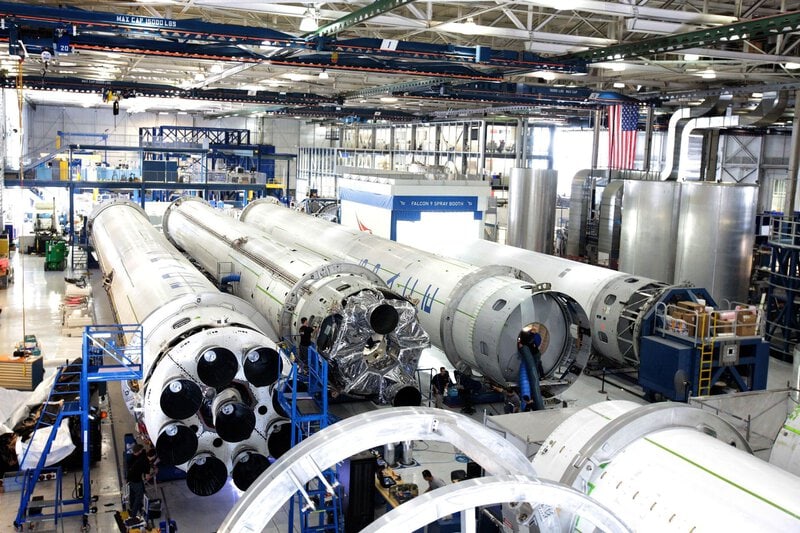
GATE Space has stated that the funding will specifically accelerate the industrialization of its technology — the transition from laboratory-validated prototypes to repeatable, scalable manufacturing. Industrialization is frequently the most capital-intensive and underappreciated phase of deep-tech development, bridging the gap between a working prototype and a product that can be reliably produced at volume, with consistent performance tolerances, by a workforce rather than by the inventors themselves.
The parallel goal of expanding production capacity suggests GATE Space anticipates near-term customer demand sufficient to justify factory-scale investment — a reasonable expectation given the satellite market’s rapid growth trajectory, in which constellation operators increasingly need proven propulsion solutions available off the shelf rather than on bespoke development timelines.
Targeting a Real Market Pain Point: Cost and Scalability

GATE Space explicitly positions its solutions as scalable and cost-effective, addressing one of the central barriers to widespread satellite station keeping. Station keeping — the continuous series of small orbital maneuvers required to maintain a satellite’s intended position against atmospheric drag, solar radiation pressure, and gravitational irregularities — demands reliable, affordable propulsion across a spacecraft’s entire operational life.
Cost-effective in-space mobility matters acutely for small satellite operators, who routinely cannot afford the mass, volume, or expense of heritage propulsion hardware designed for much larger spacecraft. Scalability across satellite sizes and orbital regimes broadens the addressable market considerably, meaning GATE Space is not competing solely for contracts from any single class of mission or orbital altitude. The company is targeting satellite propulsion system milestones in 2026, providing a concrete near-term horizon against which progress can be independently measured.
2026 Milestones and the Wider Deployment Wave

A defined milestone year transforms a funding announcement into a verifiable commitment, giving customers, partners, and co-investors a clear schedule on which to base procurement or partnership decisions. The 2026 target aligns with a broader industry wave in which dozens of small satellite constellations are scheduled for deployment or expansion between 2025 and 2027, generating urgent commercial demand for proven orbital maneuvering solutions — including space debris avoidance technology capable of reliably moving satellites away from conjunction threats.
A 2026 delivery horizon implies the €6.3 million is intended to fund the final industrialization push before first commercial deliveries, rather than to finance early-stage research that has not yet demonstrated feasibility — a distinction that matters both for investor confidence and customer procurement timelines.
A Litmus Test for Austria’s Space Ambitions
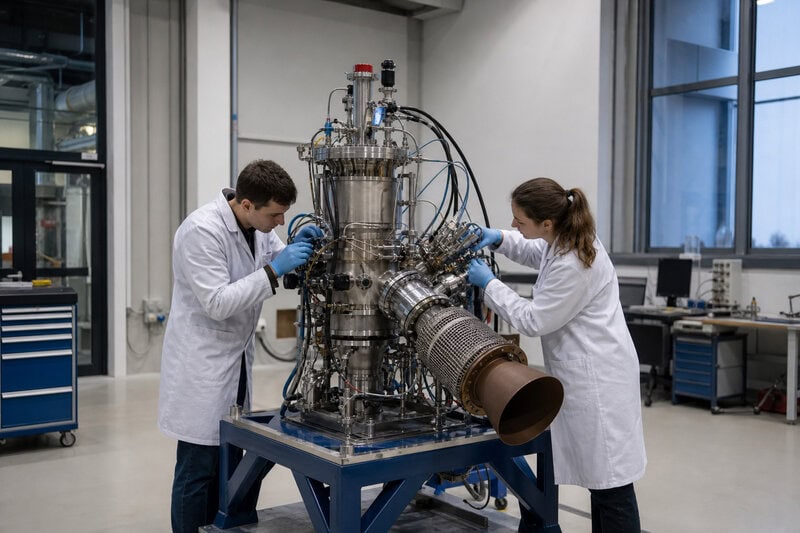
Commentary surrounding the funding has raised the question of whether Austria can punch above its weight in space — a phrase that acknowledges the country’s relatively modest size while noting its disproportionate technical talent and research output. Austria is home to several space-related research institutions and has contributed to European Space Agency missions, but is not typically ranked alongside dominant European space nations such as France, Germany, or Italy when industrial capacity and mission leadership are assessed.
GATE Space’s EIC Accelerator win is therefore being watched as a potential proof point that Vienna-based deep-tech ventures can compete for — and win — Europe’s most prestigious technology funding against rivals from larger member states. Whether the company meets its 2026 milestones will determine how convincingly that proof point holds.
The engineering challenge of moving spacecraft reliably and affordably in orbit is growing more urgent as congestion in low Earth orbit increases and constellation economics demand cheaper solutions. GATE Space’s €6.3 million EIC Accelerator award does not resolve that challenge, but it represents a carefully structured institutional bet — backed by academic rigor, patent protection, and blended public-private capital — that a credible answer may already exist in a Vienna laboratory. Follow GATE Space’s progress on their official X account.