
For the estimated 300 million people worldwide living with a rare disease, the path to diagnosis has historically been measured not in days but in years — an average of four to six years of inconclusive tests, misdiagnoses, and unanswered questions that clinicians call the “diagnostic odyssey.” Whole-genome sequencing (WGS) is now compressing that timeline to weeks in leading clinical research programmes, and the researchers helping to drive that shift are increasingly precise about what the technology can and cannot yet deliver at scale.
What Whole-Genome Sequencing Actually Does
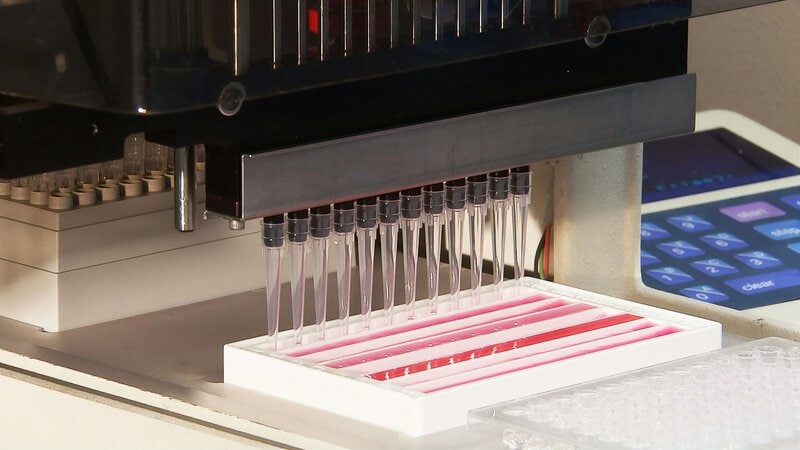
To understand what is at stake, it helps to understand what WGS does — and how it differs from what came before. Traditional genetic panel tests examine a pre-selected set of tens or hundreds of known disease-associated genes. That focused approach works well when a clinician already has a strong hypothesis about the underlying condition. Whole-genome sequencing, by contrast, reads all three billion base pairs of a person’s DNA in a single pass. That distinction matters enormously when the causative mutation lies in a gene not yet associated with any known disease, or involves a structural rearrangement that a targeted panel was never designed to detect.
In plain terms, next-generation sequencing machines fragment a DNA sample into millions of short segments, sequence each fragment multiple times for accuracy, and reassemble the results computationally against a reference genome. Software then flags positions where an individual’s sequence differs from that reference, producing a list of variants that analysts interpret against databases of known pathogenic mutations, population-level frequency data, and functional evidence accumulated across thousands of published studies.
It is a powerful process — and a deeply demanding one. A single human genome generates roughly 100 gigabytes of raw data and contains millions of positions that differ from the reference sequence. Identifying the one or two variants responsible for a patient’s condition requires curated databases, expert review, and a body of functional evidence that is still being built for thousands of genes. The sequencing itself is, in many respects, the simpler part of the problem.
Professor Emma Baple and the Exeter Approach to Rare Disease

Professor Emma Baple is a Consultant Clinical Geneticist and Professor of Genomic Medicine at the University of Exeter, where she leads the Rare Disease research group. Her principal academic focus is using new and emerging genomic technologies — including WGS — to identify the genetic causes of rare conditions. Her dual role as a practising clinician and an academic research lead gives her a grounded perspective on where the evidence for WGS is genuinely robust and where it remains preliminary.
Illumina drew on that perspective when it featured Baple in a video examining the benefits and challenges of WGS in clinical research. The video, published on the Illumina website and available on YouTube as ESHG insights: Emma Baple on bringing whole-genome sequencing into clinical research, frames a tension that runs through the entire field: the technology demonstrably works, but translating it into routine patient care is a different challenge entirely. Delivered in the context of the European Society of Human Genetics (ESHG) meeting, Baple’s reflections are representative of where many leading practitioners currently stand — cautiously optimistic, and precise about what still needs to be resolved.
The Exeter group’s work on identifying previously unknown gene-disease relationships illustrates why WGS is the appropriate tool for that task. Discovering that a particular gene, never before linked to human illness, underlies a patient’s undiagnosed condition requires data that encompasses the entire genome — not a panel designed around yesterday’s knowledge. Each newly confirmed gene-disease association feeds back into the databases that make future diagnoses more accurate, creating a virtuous cycle that depends on the completeness of WGS data to function.
Baple has spoken at major genomics forums including the Festival of Genomics and events hosted by Oxford Nanopore Technologies, where her work has been discussed alongside emerging long-read sequencing approaches that may complement or eventually extend what short-read WGS can achieve. Long-read sequencing produces much longer DNA fragments and handles certain structural variants and repeat expansions more reliably than short-read methods — but the clinical evidence base for long-read techniques remains considerably less mature.
The Lab-to-Clinic Gap Is Structural, Not Just Scientific
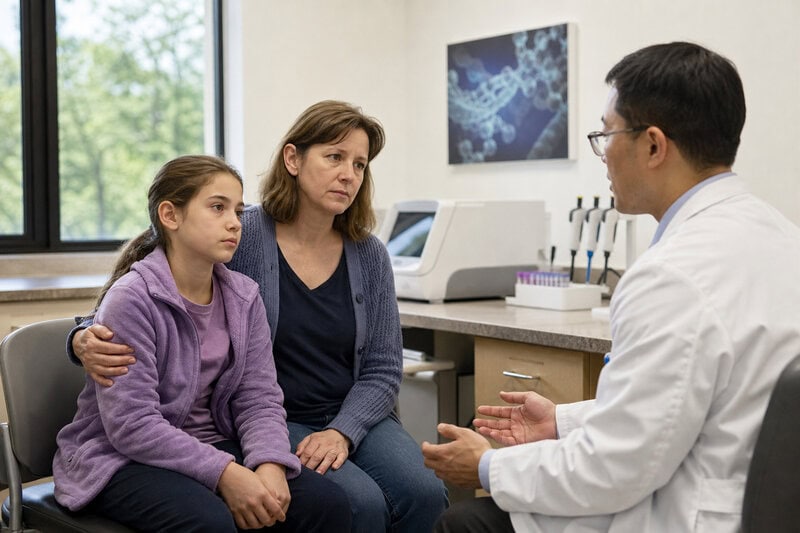
Rare diseases are defined by the European Union as conditions affecting fewer than 1 in 2,000 people, yet collectively they affect an estimated 300 million individuals worldwide, roughly 80 percent of whom have a condition with a genetic origin. That combination of individual rarity and collective scale makes rare disease the natural proving ground for WGS in clinical settings, and evidence from structured programmes has been encouraging.
The UK’s 100,000 Genomes Project, run by Genomics England, demonstrated that WGS could deliver new diagnoses in rare disease cohorts at scale, with published findings showing diagnostic yields that exceeded those of standard care in selected disease categories. For patients who have already exhausted standard diagnostic pathways, clinical guidelines from bodies including the European Society of Human Genetics increasingly support WGS as an appropriate next investigative step — a position that reflects genuine scientific convergence, not promotional enthusiasm.
Yet the gap between what WGS can do in a well-resourced research setting and what it can deliver in routine clinical practice remains substantial, and the reasons are structural as much as scientific.
Variant interpretation is the deepest challenge. Of the millions of differences a genome contains relative to the reference sequence, the vast majority are benign. Reliably separating a disease-causing mutation from background variation requires three things that are still unevenly distributed: curated, high-quality databases of known pathogenic variants; access to large, diverse reference populations that make rare variants easier to identify; and trained expert reviewers who can integrate all of that evidence into a clinical decision. The databases are improving — ClinVar, maintained by the US National Library of Medicine, and international initiatives coordinated through the Global Alliance for Genomics and Health are moving toward greater harmonisation — but the process is far from complete.
Workforce is a separate and equally pressing constraint. The number of trained clinical geneticists and genomic counsellors globally falls well short of what population-scale WGS programmes would require. Professional bodies including the American College of Medical Genetics and Genomics and their UK counterparts have publicly acknowledged this shortfall, and expanding training pipelines is a policy challenge at least as important as any advance in sequencing technology.
Equity is an underreported dimension of the same problem. Reference genome databases have historically been built predominantly from populations of European ancestry, which means WGS performs demonstrably less well at identifying pathogenic variants in patients from other ethnic backgrounds. This is an area of active research and ongoing policy debate — not a resolved problem — and it represents a genuine barrier to equitable implementation at population scale.
What the Cost Curve Does and Does Not Tell Us
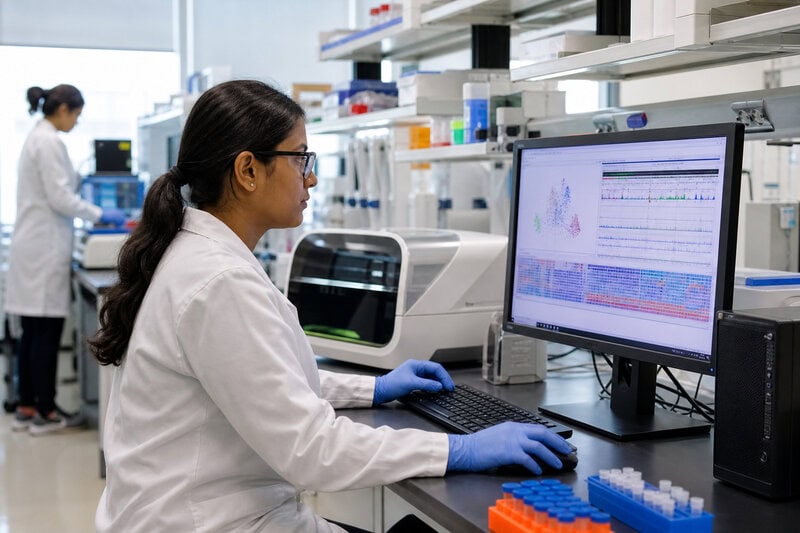
The headline statistic that WGS costs less than $1,000 per sample in research settings today — down from approximately $100 million when the first human genome was sequenced in 2001 — is accurate and genuinely significant. It is also routinely misread. Sequencing cost is a fraction of the total clinical cost of delivering a WGS-based diagnosis. Bioinformatics infrastructure, data storage, expert variant interpretation, clinical reporting, and genetic counselling for patients and families all add substantially to that figure. Most hospitals do not yet possess the infrastructure to manage the roughly 100 gigabytes of raw data a single genome generates, let alone thousands per year.
The cost question becomes still more complex when applied to proposed expansions of WGS beyond rare disease. Researchers are investigating applications in oncology, where tumour genomics is already entering clinical practice in some cancer types; in pharmacogenomics, where genomic data could guide drug selection and dosing; and in newborn screening, where the ambition is to identify treatable conditions before symptoms appear. Each application carries its own evidence base — ranging from moderately strong to highly preliminary — and conflating them overstates the overall clinical readiness of WGS as a single technology. Some health economists argue that universal newborn WGS would be cost-effective at current sequencing prices; others counter that the evidence base for acting on early-life genomic risk predictions remains too immature to justify population-scale rollout. That debate is live and unresolved.
Incidental Findings, Data Governance, and Patient Trust

One dimension of WGS that sits outside the purely technical is the question of incidental findings — medically significant variants discovered outside the original diagnostic question. A genome sequenced to investigate an undiagnosed neurological condition might reveal, incidentally, a pathogenic variant in a gene associated with elevated cancer risk. Whether, how, and when to disclose such findings to patients and their families raises ethical questions that no international body has fully standardised. The scope of obligatory disclosure, the right of patients to choose not to know, and the implications for biological relatives who share the same variants are all areas where clinical practice currently varies between institutions and jurisdictions.
Patient and public trust is also a non-trivial variable in the broader implementation picture. Large-scale WGS programmes depend on participants’ willingness to share genomic data, because it is the accumulation of diverse, well-annotated datasets that improves diagnostic accuracy over time. Surveys consistently show that willingness to share is contingent on clear governance frameworks, robust data security, and demonstrable benefit — none of which can be assumed, and all of which require sustained institutional investment to maintain.
An emerging possibility that researchers are investigating — though it remains far from consensus — is whether a single WGS dataset, collected once, could be reanalysed repeatedly as medical knowledge grows, potentially delivering new diagnoses years after the original test. The scientific case for periodic reanalysis is plausible: a variant classified as being of unknown significance today may be reclassified as pathogenic as evidence accumulates. Whether the data governance infrastructure, clinical workflows, and patient consent frameworks required to support systematic reanalysis can be built at scale is a separate and largely unresolved question.
The Realistic Trajectory
The honest picture that emerges from the work of researchers like Professor Baple at Exeter, and from broader programme evidence from Genomics England and equivalent initiatives, is one of genuine progress accompanied by genuine complexity. WGS is not a technology waiting for proof of concept — in rare disease diagnosis, for patients who have exhausted other options, it is already delivering results that earlier methods could not. The ESHG’s endorsement of WGS as an appropriate step in that context reflects real scientific convergence.
Routine clinical integration — WGS as a standard diagnostic tool available across healthcare systems rather than only at specialist centres — is more plausibly a decade-long project than an imminent transition. The principal bottlenecks are not the sequencing machines themselves. They lie in bioinformatics infrastructure, variant interpretation databases, a trained workforce, the equity of reference populations, ethical frameworks for incidental findings, and governance structures that make data sharing sustainable over time.
Closing those gaps is the practical work that researchers like Emma Baple and her Exeter group are doing — one rare disease characterised, one newly identified gene-disease relationship confirmed, one piece of accumulated evidence at a time. The technology has outpaced the systems built to deploy it responsibly. Bridging that distance is now the central challenge of clinical genomics.