
A rocket company that has never successfully placed a payload into Earth orbit has just been selected by NASA to send a spacecraft to Mars — roughly 225 million kilometers away — by 2028. That striking contrast sits at the heart of one of the most unconventional procurement decisions in the history of American planetary science.
A Company Without Orbital Flight Heritage Is Now Aiming for Mars
Relativity Space, founded in 2015 and backed by Eric Schmidt — the former CEO of Google and one of Silicon Valley’s most prominent technology investors — has been chosen by NASA to launch the Aeolus Mars orbiter on a 2028 mission. The selection, reported by TechCrunch, establishes a direct competitive dynamic with SpaceX, which has long-stated ambitions for Mars in approximately the same timeframe and substantially more demonstrated flight capability.
From contract selection to Mars orbital insertion in under four years, the timeline is extraordinarily compressed by any historical standard. Traditional NASA planetary missions have typically required seven to ten years from concept selection to launch. Relativity Space is being asked to complete the full journey in roughly half that time — without ever having demonstrated orbital flight capability. Whether that represents a bold acceleration of commercial spaceflight or an unrealistic overreach is the central question the 2028 window will definitively answer.
What Is the Aeolus Mission and Why Does 2028 Matter So Much?
The mission is named Aeolus, after the keeper of the winds in Greek mythology, and it is designed as a Mars orbiter rather than a surface lander or rover. That distinction carries real engineering significance: orbital science missions eliminate the treacherous entry, descent, and landing sequence that has destroyed multiple spacecraft over the decades. Reduced complexity relative to a surface mission does not mean low risk, however. Reaching Mars orbit requires a precise interplanetary trajectory, sustained propulsion performance across a roughly seven-month transit, and flawless execution of orbital insertion burns at the destination — each a potential single point of failure.
The 2028 launch date is not a preference — it is a hard constraint imposed by orbital mechanics. Earth and Mars align in a favorable launch geometry approximately every 26 months, a window determined by the planets’ relative positions in their orbits around the Sun. Missing the 2028 window means waiting until at least 2030, adding years to the mission timeline and compounding costs substantially. For a commercially contracted mission operating under budget discipline, that kind of delay is not merely inconvenient — it could be mission-ending.
NASA has framed the Aeolus contract within its broader commercial science strategy, which the agency has described as a mechanism to reduce costs and accelerate timelines for deep-space science by leveraging private-sector innovation. Aeolus represents a meaningful test of whether that strategy can extend beyond low-Earth orbit, where NASA’s commercial cargo and crew programs have already demonstrated measurable success.
Who Is Relativity Space — and What Has It Actually Built?
Relativity Space was founded in 2015 around a manufacturing philosophy that distinguishes it from legacy aerospace contractors. The company built its identity on additive manufacturing — industrial 3D printing — to produce rocket components at scale. The premise is that 3D printing can dramatically reduce the number of individual parts in a rocket, compress production timelines, and lower manufacturing costs by eliminating many of the tooling and assembly steps that make traditional aerospace fabrication expensive and slow.
What Relativity Space does not yet have, as of the NASA selection, is a demonstrated orbital launch record. The Mars contract therefore represents a significant leap in mission scope, complexity, and consequence. Eric Schmidt’s involvement — both as a financial backer and as a figure who lends commercial credibility in competitive government procurement contexts — drew considerable public attention, with many observers noting they were entirely unfamiliar with Schmidt’s aerospace investments prior to this announcement. His association with Relativity Space underscores that this mission is as much a commercial technology bet as it is a planetary science endeavor.
It is worth being precise about Relativity Space’s current vehicle development status. The company has publicly shifted its development focus from Terran 1 to a larger vehicle, Terran R, intended to be a reusable medium-to-heavy lift rocket. Which vehicle configuration underpins the Aeolus launch contract — and how far along that vehicle’s development stands — are details whose full picture will emerge as the hardware program advances toward 2028.
The Propulsion Gamble: What Technology Is Being Bet On?
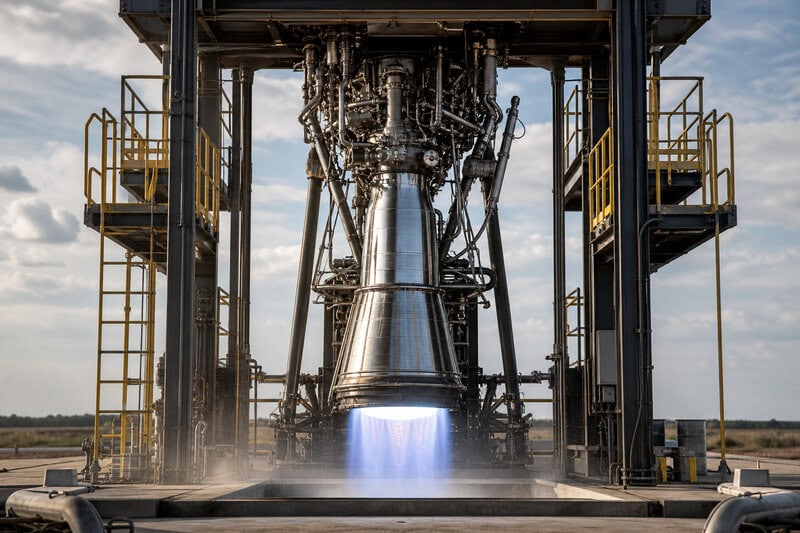
The core engineering challenge of any interplanetary mission is specific impulse — a measurement of propulsion efficiency that functions roughly like fuel economy for rocket engines. Higher specific impulse means a rocket can deliver more payload mass to a destination using less propellant, which is critical when the destination is tens of millions of kilometers away and every kilogram of fuel carried displaces a kilogram of scientific payload. Achieving the specific impulse required to escape Earth’s gravity well and reach a precise Mars transfer trajectory demands propulsion systems that perform reliably not just at launch, but across an extended deep-space cruise.
Relativity Space’s reliance on 3D-printed engine components is simultaneously its competitive differentiator and its most significant unproven variable at interplanetary scale. It is well-established that additive manufacturing can produce functional, flight-worthy rocket components — multiple companies have demonstrated this in orbital flight. What remains an open engineering question is whether 3D-printed propulsion systems can meet the reliability and material durability standards required for a seven-month deep-space cruise, where thermal cycling, vacuum exposure, and cumulative material fatigue behave very differently than during a short orbital burn lasting minutes.
The 2028 deadline intensifies this uncertainty by compressing the testing and qualification cycle that NASA missions have historically relied upon. In a conventional program, propulsion components are designed, tested, redesigned after failures, re-tested, and qualified through a sequential process that can span years. Relativity Space will need to conduct much of this work in parallel — designing, building, and qualifying hardware simultaneously — a methodology that increases development speed but also raises the probability that a late-stage failure requires costly backtracking through work already thought complete.
The Race With SpaceX and What NASA’s Choice Reveals
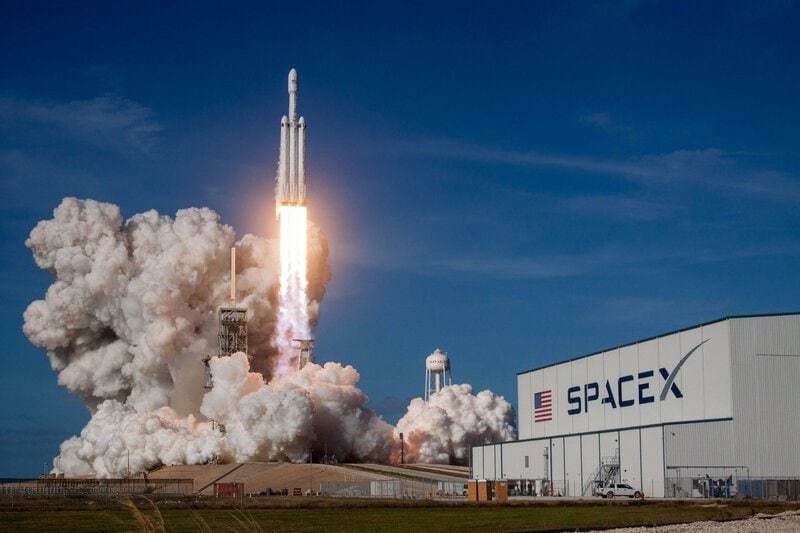
NASA’s selection of Relativity Space directly sets up a competitive dynamic with SpaceX, a contrast that industry observers have highlighted prominently. SpaceX possesses demonstrated orbital launch capability across multiple vehicle platforms, has publicly targeted Mars missions in approximately the same general timeframe, and developed the Starship architecture specifically with Mars-scale payloads in mind. The competitive framing is therefore asymmetric: SpaceX brings years of iterative flight data and a proven heavy-lift system; Relativity Space brings a novel manufacturing approach and a NASA contract that now functions as a powerful forcing function for rapid development.
The more strategically significant signal in NASA’s decision may be what it reveals about agency policy rather than the two companies’ relative capabilities. By awarding an interplanetary contract to a smaller competitor rather than consolidating Mars access with its most capable commercial partner, NASA appears to be deliberately cultivating a multi-vendor commercial Mars ecosystem. That mirrors the approach the agency took in low-Earth orbit — using competitive commercial crew and cargo contracts to drive innovation and prevent single-provider dependency — and suggests the agency intends to apply the same model to deep-space science. Coverage of the selection has emphasized this strategic dimension as much as the technical specifications of the Aeolus mission itself.
There is also a budget logic worth naming. Commercial contracts for planetary science have generally come in at lower headline costs than traditional cost-plus arrangements with legacy prime contractors. If Relativity Space can deliver a functional Mars orbiter at a fraction of what a mission built through conventional procurement would cost — even accounting for elevated schedule risk — NASA’s calculus may reflect a rational portfolio decision: accept higher individual mission risk in exchange for the ability to fund more missions overall.
How Tight Is the 2028 Timeline, Really?
To meet the 2028 launch window, Relativity Space must accomplish a sequence of milestones that would be ambitious for any aerospace company and is historically unprecedented for one without orbital flight heritage. Vehicle design must be finalized and manufactured, propulsion systems fully qualified for deep-space performance, the spacecraft integrated with the launch vehicle, a complete launch campaign conducted, and then the spacecraft must successfully execute a seven-month interplanetary transit — all within approximately four years of contract selection.
Two categories of schedule risk stand out as most consequential. First, propulsion qualification failures that require design iteration are the most likely source of significant delays, because propulsion is both the most technically demanding element and the area where Relativity Space has the least validated flight data at the performance levels an interplanetary mission demands. Second, supply-chain delays in specialized deep-space components — radiation-hardened electronics, precision attitude control systems, deep-space communication hardware — carry long lead times that are largely independent of a manufacturer’s production philosophy. A company that can 3D-print a rocket engine in weeks still depends on external suppliers for components that may require 18 to 24 months from order to delivery, and those timelines cannot be compressed through manufacturing innovation alone.
It is important to be precise about what is confirmed and what remains open. NASA has officially selected Relativity Space, and 2028 is the agency’s stated mission target. Whether the rocket and spacecraft will be ready to meet that window is a genuine engineering question that cannot be answered from a contract announcement — it will be answered by the hardware development program unfolding over the next several years.
What Success or Failure Would Mean for Commercial Space Science
A successful Aeolus mission in 2028 would represent a landmark validation of the commercial model for deep-space science. It would demonstrate that a privately developed, commercially manufactured spacecraft can reach Mars on an accelerated timeline and at competitive cost — an outcome that would almost certainly accelerate NASA’s use of private companies for planetary missions beyond Mars. The scientific returns from a Mars orbiter are also genuinely valuable independent of the commercial narrative: orbital platforms generate atmospheric, geological, and climate data that directly informs planning for future crewed missions, where accurate environmental modeling is essential to human life-support engineering.
A launch failure or missed window would carry different but not catastrophic consequences for the broader commercial space science program. The market and policy momentum behind commercial planetary science are too well-established for a single setback to reverse them. But a high-profile failure would meaningfully strengthen arguments within the aerospace policy community for requiring demonstrated orbital capability before awarding interplanetary contracts — potentially raising the entry barrier for emerging launch providers competing for future deep-space science missions and narrowing the field back toward the established players NASA is now trying to complement.
NASA’s selection of Relativity Space for the Aeolus Mars mission is, at its core, a calculated policy-driven wager on commercial innovation over proven heritage. The agency is betting that the speed and cost advantages of a manufacturing-innovative company outweigh the reliability advantages that come with established flight records. The orbital mechanics of the solar system will score that bet definitively — one way or another — in 2028.