
In just a few hours, the surface temperature of a distant gas giant surges by approximately 1,100 degrees Fahrenheit — one of the most violent thermal swings ever recorded on another world. That single measurement, captured by NASA’s James Webb Space Telescope, is now forcing astronomers to reckon with how much punishment a planet’s atmosphere can absorb before it begins to disappear.
A Planet on the Edge: Meet HD 80606 b
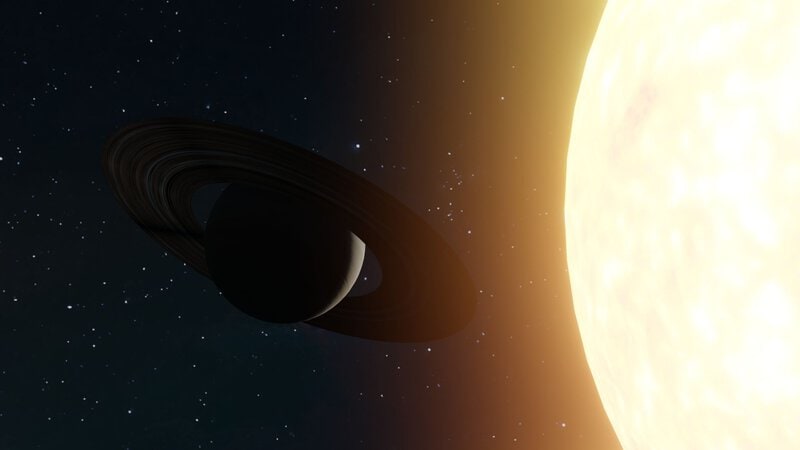
The planet in question is HD 80606 b, a gas giant with roughly four times the mass of Jupiter, orbiting a Sun-like star approximately 190 light-years from Earth in the constellation Ursa Major. It is not a typical world. While every planet in our own solar system follows a roughly circular path around the Sun, HD 80606 b traces a dramatically elongated ellipse — giving it the most eccentric orbit of any well-studied exoplanet known to science. That orbit swings the planet from a relatively temperate distance out to a scorching, dangerously close pass with its host star approximately every 111 days.
Astronomers classify such objects as eccentric hot Jupiters — gas giants whose stretched, oval orbits expose them to cyclical extremes of radiation and gravitational stress that planets on stable, circular orbits never experience. The category matters because it offers a natural laboratory: by watching what happens to an atmosphere under maximal stellar assault, scientists can test physical models that apply, in subtler form, to thousands of worlds across the galaxy.
Because HD 80606 b’s orbit had already been carefully characterized by earlier ground- and space-based observatories, researchers knew precisely when to point Webb’s instruments to catch the planet at its most exposed moment. That predictability made it an ideal target — and what Webb recorded exceeded expectations, according to findings reported by NASA’s official science communications team and the Space Telescope Science Institute (STScI), which manages Webb’s science operations.
How Webb Watched a Planet Get Cooked in Real Time
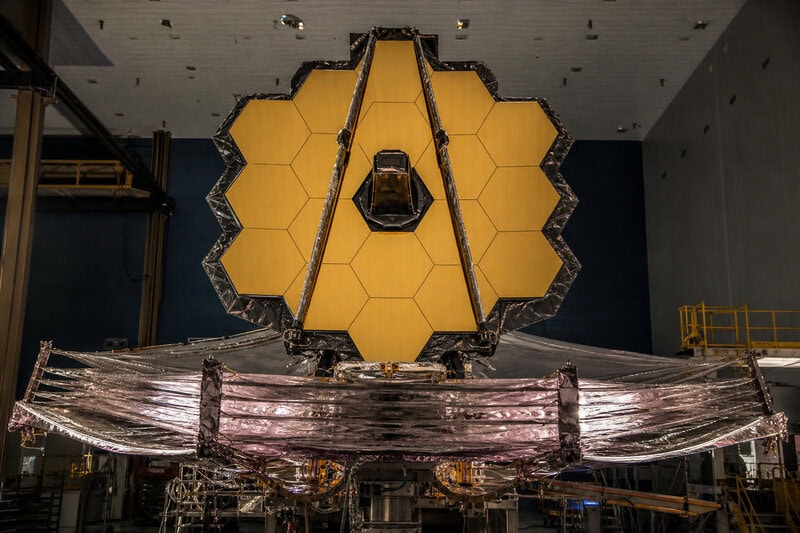
Webb’s Mid-Infrared Instrument, known as MIRI, is designed to detect heat radiation invisible to the human eye. As HD 80606 b swept through its closest approach to its star — a phase astronomers call periastron passage — MIRI tracked the infrared light the planet emitted at different points along its path. From those measurements, Webb’s team reconstructed a detailed picture of the planet’s thermal behavior as events unfolded.
The technique underlying this feat is called phase-curve photometry. Because no telescope can yet resolve HD 80606 b as a separate dot of light distinct from its star, scientists instead measure the combined brightness of the star-and-planet system over time. As the planet moves through different orbital phases, its contribution to that combined light changes — and by carefully modeling those changes, researchers can infer the planet’s temperature at different points in its orbit without ever imaging it directly.
What the data revealed was striking. The planet’s temperature rocketed upward by approximately 1,100 degrees Fahrenheit (around 600 degrees Celsius) over the course of just a few hours as it rounded periastron, according to observations highlighted by NASA and STScI. The speed of that rise was as significant as its magnitude. A gradual warming would suggest the atmosphere was redistributing heat efficiently, spreading the energy burden across the planet. A rapid spike, like the one Webb recorded, points to the opposite conclusion: HD 80606 b’s atmosphere cannot move heat fast enough, leaving one face of the planet catastrophically overheated while regions elsewhere remain comparatively cooler.
As reporting on the discovery noted, the scale of the temperature change places HD 80606 b among the most thermally extreme exoplanets ever studied in this level of detail.
The Mechanism: Radiation, Tides, and a Shrinking Atmosphere
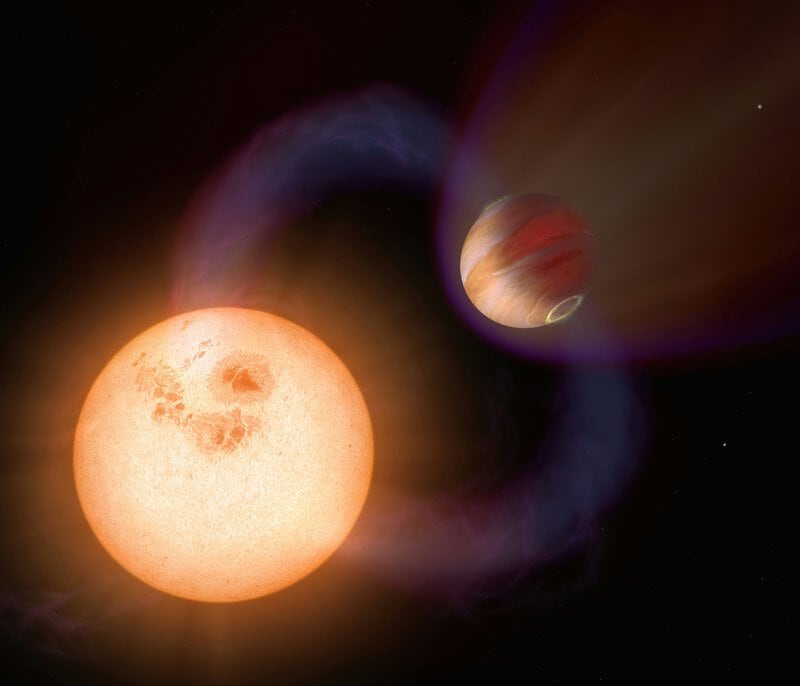
Two physical processes work in concert to punish HD 80606 b during each close pass with its star. The first is direct stellar irradiation. As the planet plunges inward, it receives a blast of radiation orders of magnitude more intense than what Earth receives from the Sun — energetic enough to superheat the upper atmospheric layers and accelerate gas molecules toward escape velocities. This process, known as atmospheric photoevaporation, essentially causes starlight to boil away the outermost atmospheric layers and drive them into space.
The second mechanism is tidal heating. Just as Jupiter’s gravitational grip keeps its moon Io in a state of perpetual volcanic activity by flexing and squeezing its interior, HD 80606 b’s host star exerts powerful tidal forces on the planet as it swings through periastron. Those forces distort the planet’s shape and generate internal heat, compounding the energy load already imposed by radiation from above.
Together, according to physical models cited in NASA’s science communications, these processes create conditions in which the planet’s outer atmospheric layers are being stripped away — at least to some degree — with each orbital pass. Whether that loss accumulates quickly enough to matter on planetary-evolution timescales remains an open and actively debated question. Webb’s observations are supplying the data needed to test competing theoretical models, but researchers are careful to distinguish what the current evidence confirms from what it merely suggests.
What a Vanishing Atmosphere Can Teach Us

The scientific value of these observations extends well beyond the temperature figure itself. Molecules such as water vapor, methane, and carbon dioxide each absorb and re-emit infrared light in characteristic spectral patterns — fingerprints that Webb’s instruments are sensitive enough to detect. If follow-up spectroscopic analysis of the periastron data reveals that lighter atmospheric gases are escaping while heavier molecules remain, it would constitute direct observational evidence for mass-selective atmospheric escape: a theoretically well-developed process that has proven difficult to catch in action on a giant planet under such extreme conditions.
The data also speaks to a long-standing debate about the ultimate fate of eccentric hot Jupiters. One school of thought holds that tidal forces gradually circularize an eccentric planet’s orbit over millions of years, eventually transforming it into a conventional close-in hot Jupiter on a stable, nearly circular path. An alternative possibility is that some planets lose their atmospheres entirely before that circularization can complete — effectively being evaporated down to bare cores. Webb’s observations of HD 80606 b are beginning to supply the empirical grounding needed to assess which outcome is more likely, and under what conditions.
There are also broader statistical implications. Astronomers have long noted a curious gap in the known exoplanet population: medium-sized planets with close-in orbits — a region sometimes called the hot Neptune desert — are surprisingly rare compared to what straightforward planet-formation models would predict. One leading explanation is that intense stellar irradiation strips the atmospheres of such worlds before they can be catalogued. Understanding how HD 80606 b responds to extreme irradiation helps calibrate the models used to explain that population-level absence.
A Decisive Leap Beyond Hubble and Spitzer
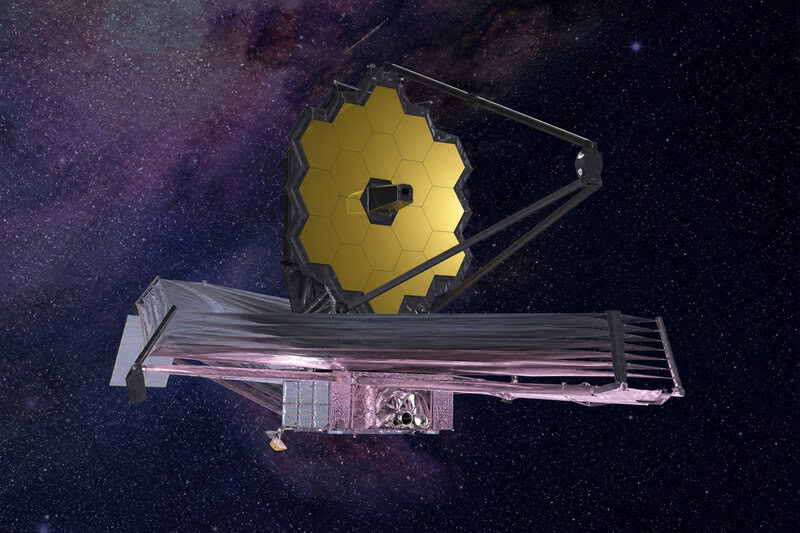
Webb’s ability to capture rapid thermal changes playing out over just a few hours represents a qualitative advancement over its predecessors. The Hubble Space Telescope and the now-retired Spitzer Space Telescope contributed enormously to exoplanet science, but neither possessed the infrared sensitivity required to resolve temperature spikes of this speed and magnitude on a world 190 light-years away. Webb’s MIRI instrument operates in a wavelength range and at a precision level that makes observations like the HD 80606 b phase curve not merely possible, but highly informative.
The Space Telescope Science Institute has identified observations of irradiated exoplanets as a priority science case for Webb’s ongoing mission, signaling that results like these are part of a deliberate and expanding research program rather than a one-time event. More eccentric hot Jupiters identified by NASA’s TESS mission — the Transiting Exoplanet Survey Satellite — are already candidates for similar treatment, and comparative studies across multiple such worlds could establish whether HD 80606 b is representative of its class or an unusual extreme.
What Comes Next

The immediate next step for the research team is detailed spectroscopic analysis of the Webb data collected during periastron passage, searching for molecular signatures that could confirm whether specific gases are being preferentially lost from HD 80606 b’s atmosphere. Such a result would represent some of the most direct evidence yet obtained for atmospheric stripping on a giant exoplanet.
Beyond that, additional phase-curve observations across multiple orbits would allow scientists to determine whether the temperature spike is consistent from pass to pass or whether the atmosphere is gradually evolving — a multi-year project that Webb’s expected operational lifetime makes genuinely feasible. Researchers are careful to note that the current findings, compelling as they are, represent an early chapter in a longer investigation. Distinguishing ongoing atmospheric loss from the ordinary dynamics of a turbulent atmosphere requires independent verification and additional data collected over time.
For now, HD 80606 b stands as the clearest window yet into one of planetary science’s most fundamental questions: how much stellar punishment can a planet absorb before its atmosphere ceases to exist — and what kind of world, if anything, is left behind? Webb is watching, and for the first time, astronomers have the tools to find out.