More than 300 million people worldwide live with a rare disease, yet the average patient spends six years searching for a diagnosis — six years in which the science that might help them often remains entirely out of reach. A growing movement is changing that equation, as affected families move from the waiting room to the research table, helping to co-design the science that could one day treat them.
The Six-Year Diagnostic Gap and What It Actually Costs Patients

The road to a rare disease diagnosis averages six years — a span that typically includes repeated inconclusive tests, mounting medical debt, misdiagnoses, and profound isolation. That timeline is not merely an inconvenience. It is a compounding medical harm, because access to clinical trials, disease-specific funding programs, and specialist networks all depend on having a confirmed, named condition. Without a diagnosis, patients are effectively invisible to the systems built to help them.
The human stakes are concrete in the story of a patient named Evan, whose 15-year diagnostic journey finally ended through an Undiagnosed Rare Disease Clinic in April 2022. That single confirmed answer made him eligible for financial assistance programs for the very first time — programs that had been inaccessible for a decade and a half simply because his condition lacked a name. His case illustrates that the six-year average, painful as it is, can be dramatically exceeded, and that each additional year carries real, measurable consequences.
One Family, One Ultra-Rare Mutation, and a Research Community Built From Scratch
When their daughter was diagnosed with GNAO1 — an ultra-rare genetic disorder affecting a protein critical to brain cell communication — the Bell family did not wait for the scientific establishment to catch up. Instead, they became what researchers now call architects of family-driven rare disease discovery: family members who actively shape the scientific agenda rather than simply enrolling in studies designed by others.
The Bells helped build a global research community dedicated to advancing scientific discoveries in GNAO1, demonstrating that affected families can function as organizers, funders, and strategic partners — not merely as sources of biological samples. Their trajectory has become a model examined by patient advocacy researchers and rare disease clinicians working in conditions where the patient population is too small to attract significant commercial investment.
How a Tripartite Model — Family, Foundation, and Medical School — Accelerates Orphan Disease Research

The Bell family formalized their advocacy by partnering with the BOW Foundation and the University of Miami Miller School of Medicine to channel resources directly into GNAO1 research. This structure — family, nonprofit foundation, and academic medical center working in defined roles — has become a recognized approach for advancing science in therapeutic areas where pharmaceutical industry interest is limited by market size alone.
The arrangement works because each partner contributes what the others cannot easily replicate. The family supplies urgency, community knowledge, and the credibility that comes from lived experience. The foundation coordinates funding and bridges the gap between individual donors and institutional grant cycles. The university provides scientific infrastructure, peer-review credibility, and laboratory capacity. Rather than duplicating effort, the three parties create a division of labor that neither could sustain independently — a model worth examining for other ultra-rare conditions in the same position.
A Diagnosis Is Not Only Medical Information — It Is a Legal and Financial Key

Evan’s case, documented by Indiana University’s rare disease program, makes a point that extends well beyond one patient’s experience. A confirmed diagnosis unlocks access to insurance classifications, financial assistance programs, condition-specific clinical trials, and patient communities that often hold the most practical knowledge about managing a given disease day to day. Fifteen years without a name for his condition meant fifteen years of being structurally excluded from each of those resources — not because they did not exist, but because the administrative and eligibility systems governing them require a documented diagnosis as a precondition for entry.
That structural reality is one reason undiagnosed disease clinics carry significance that goes beyond medical curiosity. Resolving a diagnostic mystery does not simply satisfy a scientific question. It opens doors that patients and families often did not know were closed to them.
Why No Single Hospital Can Diagnose an Ultra-Rare Disease Alone
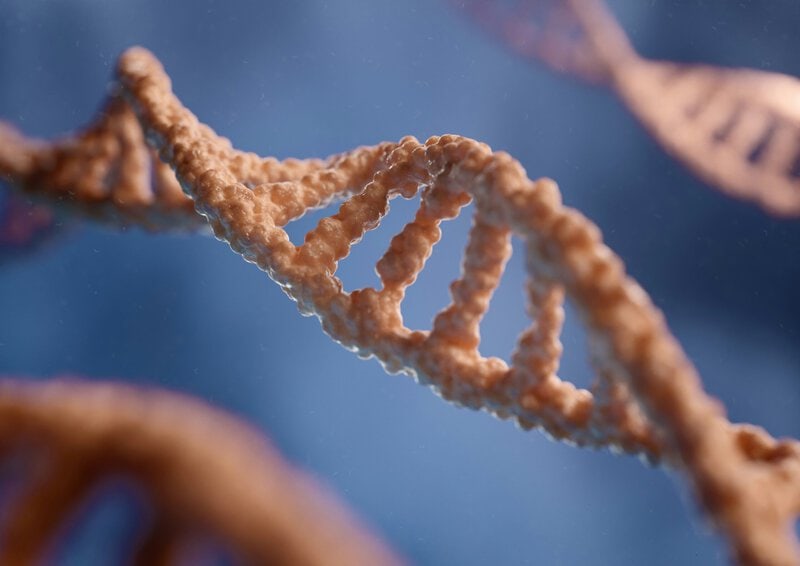
Clinicians at Stanford’s Undiagnosed Diseases Network use genetic sequencing and shared symptom databases spanning multiple clinical sites to identify conditions that have stumped local physicians. The networked approach is not merely a logistical convenience — it is a statistical necessity. An ultra-rare disease may produce only a handful of documented cases globally, and no single institution is likely to encounter enough patients to recognize a novel syndrome independently. Pooling data across sites raises the statistical power needed to distinguish a genuine clinical pattern from coincidence.
As Stanford Medicine has reported on the Undiagnosed Diseases Network, families who participate contribute information that may benefit not only their own child but every future patient with the same unrecognized condition. This model reframes what family participation in research actually means: rather than being passive subjects, participating families become contributors to a shared scientific record that outlasts their own immediate case.
New Genetic Tools Have Produced the First Targeted Therapies — for a Small Fraction of Rare Diseases
Advances in genetic sequencing and data analysis have produced the first genuinely targeted therapies for a subset of rare diseases — treatments that address the underlying molecular defect rather than managing symptoms alone. That distinction matters. For most of rare disease history, clinical management meant treating complications while the root cause continued unchecked. Targeted therapy changes the therapeutic ambition entirely.
A peer-reviewed analysis published in PubMed Central examining the pathway from genetic discovery to rare disease treatment documents both the progress and its limits. New data and genetics technologies have resulted in the first transformational new treatments for a handful of rare diseases. Of the estimated 7,000 known rare diseases, the vast majority still have no approved therapy of any kind. That gap explains why the infrastructure-building work done by families like the Bells is not supplementary to pharmaceutical progress. For many conditions, it is the necessary precondition for any progress at all.
Isolation Is Not a Side Effect — It Is a Documented Barrier to Scientific Progress
Families navigating rare disease diagnoses consistently report profound social isolation alongside their medical challenges, and researchers recognize this as an obstacle to the community-building that accelerates science. When families cannot find one another, they cannot pool clinical observations, compare symptom timelines, or collectively advocate for research funding. Those functions — modest as they sound — are precisely what patient communities in better-connected rare disease spaces have used to shift research agendas and attract institutional attention.
The Bell family’s community-building work around GNAO1 addresses this barrier directly. By connecting geographically dispersed families into a networked population, they created a group whose shared data and coordinated advocacy carry real scientific weight — the kind of weight that can persuade a university laboratory to commit sustained resources to a condition affecting only a few hundred known patients worldwide. In rare disease research, reducing isolation is not only a welfare goal. It is a research strategy, and one with a measurable return.
Patient Communities Are Now Co-Designers of the Science, Not Just Its Subjects
The shift underway in rare disease research is structural. Families affected by conditions like GNAO1 are moving from passive participants in externally designed studies to active co-designers of research questions, funding priorities, and data-sharing frameworks. This model — variously described as patient-led research or community-partnered science — is still maturing and varies in methodological rigor across different disease communities. But academic medical centers are increasingly formalizing these partnerships rather than treating them as exceptions.
The Bell family’s collaboration with the University of Miami Miller School of Medicine is one documented example of this structural shift, in which a family’s lived experience directly shaped the scientific program pursued inside a research institution. That represents a meaningful departure from the traditional model, in which patients waited for science to eventually reach them. For families dealing with ultra-rare diseases, waiting was never a viable option — and the research community is increasingly treating their urgency as a scientific asset rather than an emotional complication.
What the rare disease field is learning, often from families who had no choice but to teach it, is that the people closest to a disease frequently have the clearest view of what science needs to do next. As genetic tools grow more powerful and collaborative models more formally established, the distance between a family’s kitchen table and a university research program is shorter than it has ever been — and the science moving across that distance is becoming more consequential with each year.