
In an eight-week randomized controlled trial, adults with chronic insomnia who took reishi mushroom extract saw their Insomnia Severity Index scores drop significantly more than those who took melatonin — a result that quietly challenges one of the supplement aisle’s most automatic purchases and opens a serious scientific conversation about fungal extracts as sleep medicine.
What the Study Actually Measured

The Wang & Wang (2022) randomized controlled trial enrolled 60 adults who had been clinically diagnosed with chronic insomnia, defined as difficulty falling or staying asleep at least three nights per week for three or more months. That distinction matters. Many supplement studies recruit healthy volunteers with mild, occasional sleep complaints; this trial selected a harder-to-treat population where the stakes, and the threshold for meaningful benefit, are considerably higher.
Participants were assigned to either a reishi mushroom extract intervention or a melatonin comparator for eight weeks. The primary outcome was change in Insomnia Severity Index (ISI) score — a validated seven-question clinical scale used widely by sleep researchers that measures how severely insomnia disrupts a person’s life. Its seven domains cover difficulty falling asleep, difficulty staying asleep, early morning waking, sleep satisfaction, interference with daily functioning, how noticeable the problem is to others, and personal distress. Scores range from 0 to 28; a clinically meaningful reduction signals real-world relief, not just self-reported optimism. By that measure, the reishi group outperformed the melatonin group.
A parallel body of research indexed on PubMed Central examined the anti-fatigue and sleep-aiding effects of multiple Ganoderma lucidum formulations, lending broader biological context to the specific extract tested in the Wang & Wang trial. The two bodies of work together suggest a signal worth taking seriously — while stopping well short of proof sufficient to change clinical practice.
The Mechanism: How Reishi May Influence Sleep Biology
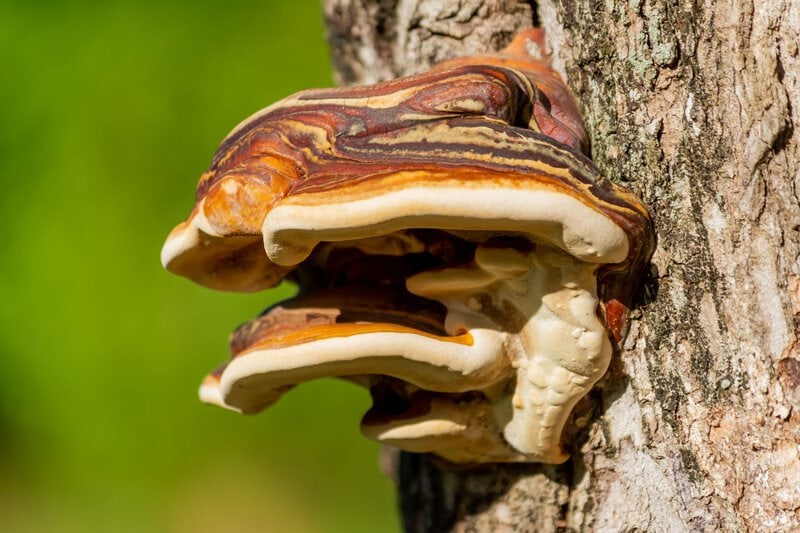
Ganoderma lucidum — the scientific name for reishi mushroom — is not a single compound but a complex matrix of bioactive molecules. The two most studied classes are triterpenoids and beta-glucans. Triterpenoids are thought to modulate the nervous system by interacting with GABA receptors — the same inhibitory pathway targeted by many prescription sleep and anxiety medications. When GABA receptor activity increases, neural excitability decreases, which is broadly consistent with a calming, sleep-promoting effect.
Reishi extracts have also demonstrated anti-inflammatory and antioxidant activity in laboratory settings. This matters because chronic low-grade inflammation is increasingly recognized in sleep medicine as a disruptor of sleep architecture — the structured cycling between light sleep, deep slow-wave sleep, and REM sleep that determines whether rest is genuinely restorative. If reishi compounds dampen inflammatory signaling, they may help restore more normal sleep cycling rather than simply inducing sedation.
That mechanistic profile is what makes the reishi-versus-melatonin comparison scientifically interesting. Melatonin is a hormone the pineal gland naturally produces at dusk to signal sleep onset; supplemental melatonin primarily addresses circadian timing — the body’s internal clock — and is most effective for circadian rhythm disorders such as jet lag or shift-work disruption. The American Academy of Sleep Medicine has rated clinical evidence for melatonin’s efficacy in chronic insomnia as weak to moderate, precisely because chronic insomnia is often driven by hyperarousal and inflammatory processes rather than a mistimed clock. Reishi’s proposed mechanisms, acting more broadly on anxiety-like neural activity and inflammatory load, may be a better biological match for that specific population — which is exactly the one the Wang & Wang trial tested.
Researchers consistently caution, however, that most mechanistic data come from animal models and cell studies. Confirming these pathways in humans requires larger neuroimaging and polysomnography trials — overnight sleep-lab recordings of brain waves, eye movements, and muscle activity — that measure what is actually happening in a sleeping brain rather than relying on self-reported scales alone.
What the Comparison With Melatonin Actually Means
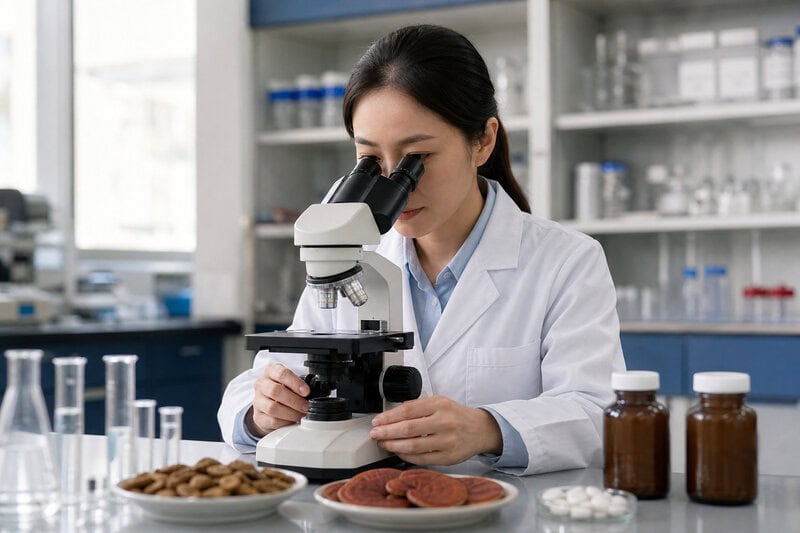
Head-to-head supplement comparisons are relatively rare in sleep research, and the Wang & Wang design is noteworthy precisely because it avoided a placebo-only control. Testing reishi against an active, widely used comparator raises the evidentiary bar: it is harder to outperform an established product than an inert sugar pill, and a positive result carries more practical meaning for the many people already using that comparator.
Because the trial used ISI score reduction as its primary endpoint, the advantage attributed to reishi reflects a comprehensive picture — all seven domains of insomnia severity — rather than a single metric like time to fall asleep. That breadth strengthens the interpretation that participants experienced meaningful relief across multiple dimensions of their sleep problem.
What the study does not establish is that reishi is a universally superior sleep aid. It demonstrates that in this specific 60-person sample, over eight weeks, one extract formulation outperformed one comparator on one validated scale. That is a meaningful but carefully bounded finding. Patient Care Online’s clinical coverage of the study captures this distinction clearly, noting the result as promising without overstating its scope.
Where the Research Falls Short — and Why That Matters
The strengths of the Wang & Wang trial are real: its randomized design, use of a validated outcome measure, clinically relevant population, and eight-week duration — long enough to observe sustained rather than novelty-driven effects — place it a meaningful step above many supplement studies. But its limitations are equally real and deserve plain statement.
- Sample size: Sixty participants is a small cohort for drawing broad conclusions about a condition affecting an estimated 10 to 15 percent of adults globally. Effects observed in small trials frequently shrink or disappear when tested in larger, more diverse populations.
- Independent replication: The trial has not yet been independently replicated by separate research groups — the standard by which scientific findings earn wider acceptance. A single trial, however well-designed, represents a hypothesis-generating result, not a settled fact.
- No polysomnography: Relying on a self-report scale, even a validated one, means the study cannot confirm changes in objective sleep architecture. Future trials using overnight sleep-lab recordings would substantially strengthen the evidence base.
- Dosage standardization: Commercial reishi products vary widely in potency, purity, and the ratio of active triterpenoids to beta-glucans. The extract concentration used in a research setting may bear little resemblance to what is inside a retail capsule.
- Long-term safety: Published data on sustained use beyond eight weeks remain limited, leaving open questions about effects with prolonged consumption.
- Blinding integrity: The published record does not fully detail how participant blinding was maintained between an herbal extract and a well-known hormone supplement — a methodological gap that could introduce expectation effects in a self-reported outcome measure.
The broader PubMed Central literature on Ganoderma lucidum formulations adds corroborating evidence on anti-fatigue effects but does not directly confirm the sleep-specific findings of the Wang & Wang trial. This illustrates how scientific consensus builds slowly — through accumulating, converging lines of evidence from multiple independent groups, not from a single encouraging result.
Practical Guidance for Anyone Considering Reishi
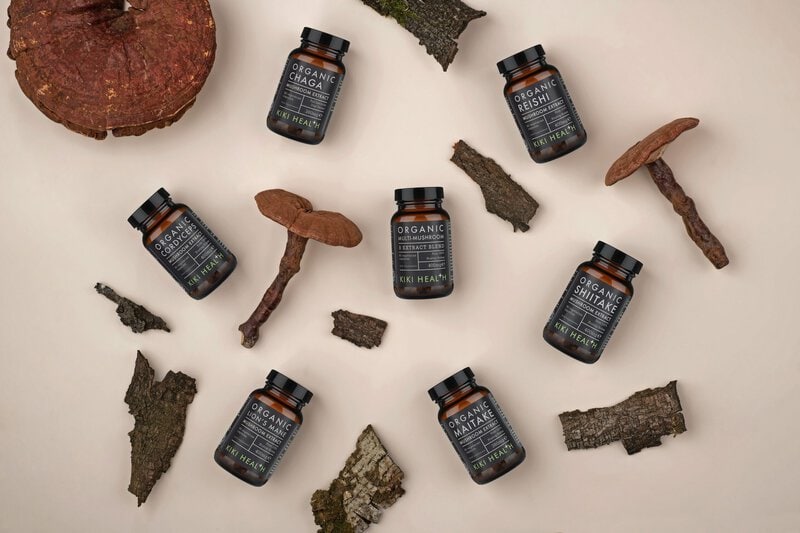
Reishi mushroom extract is sold as a dietary supplement and is not approved by the U.S. Food and Drug Administration to treat, cure, or prevent insomnia. Any product making clinical treatment claims is asserting something that exceeds current regulatory approval and the available evidence.
Supplement quality is a genuine and underappreciated concern. Because reishi is not subject to pharmaceutical manufacturing standards, potency, purity, and active-compound ratios vary substantially between brands. Consumers seeking products closer to research-grade formulations should look for third-party testing certificates — from organizations such as NSF International or USP — and labels that specify extract concentration and the ratio of key bioactive compounds.
Ganoderma lucidum has demonstrated immune-modulating and mild anticoagulant effects in research settings. People taking immunosuppressants, blood thinners, or other prescription medications should consult a physician before adding reishi to their routine. This is not a theoretical caution; it reflects documented pharmacological activity that carries real interaction risk.
Most importantly: chronic insomnia with a known clinical driver — an anxiety disorder, obstructive sleep apnea, restless legs syndrome, or another underlying condition — requires targeted, evidence-based treatment. A promising supplement study is not a substitute for evaluation by a sleep medicine physician. Cognitive behavioral therapy for insomnia (CBT-I) remains the intervention with the strongest and most consistent evidence base for chronic insomnia, endorsed by the American Academy of Sleep Medicine as the first-line treatment ahead of any pharmacological or supplement approach.
Where Natural Sleep Aid Research Is Heading
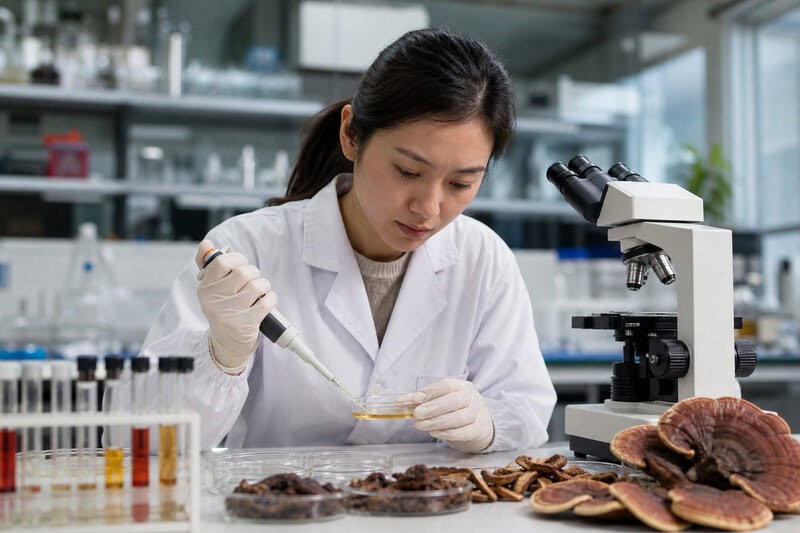
The Wang & Wang trial sits within a broader scientific trend. Researchers studying botanical compounds for sleep are increasingly applying rigorous randomized controlled trial designs rather than relying on observational or anecdotal data — a methodological upgrade that makes results more interpretable and more comparable across studies. Growing interest in functional mushrooms for sleep reflects wider institutional curiosity about which compounds, at what doses, might address the specific neurobiology of chronic insomnia rather than simply sedating the nervous system indiscriminately.
Ganoderma lucidum insomnia research remains an early-stage field. The existing evidence — including the Wang & Wang finding and the broader literature on anti-fatigue and sleep-aiding formulations — is promising enough to justify continued funding and larger, more rigorous trials. It is not yet at the evidence threshold that would support clinical guideline recommendations from bodies like the American Academy of Sleep Medicine, which require multiple independent replications across diverse populations before endorsing any intervention.
The honest and scientifically accurate way to read the Wang & Wang 2022 result is as a credible hypothesis-generating finding. It gives sleep researchers a specific, testable question to pursue with larger and more mechanistically detailed studies. It gives clinicians a data point worth knowing. And it gives curious, evidence-minded readers a scientifically grounded reason to watch this space — without abandoning the healthy skepticism that separates promising early research from proven medicine.