
On Tuesday 16 June 2026, a Glasgow-based quantum hardware company called Quantcore walked onto the stage at the Economist’s Commercialising Quantum event and collected the Institute of Physics qBIG prize — one of the most closely watched technical honours in the UK quantum sector. The win was not for an algorithm, a software platform, or a theoretical model. It was for the physical hardware that quantum computers are actually built from: the components that sit inside dilution refrigerators, cooled to temperatures colder than outer space, doing the unglamorous but essential work that makes quantum computation physically possible.
What Quantcore Actually Builds
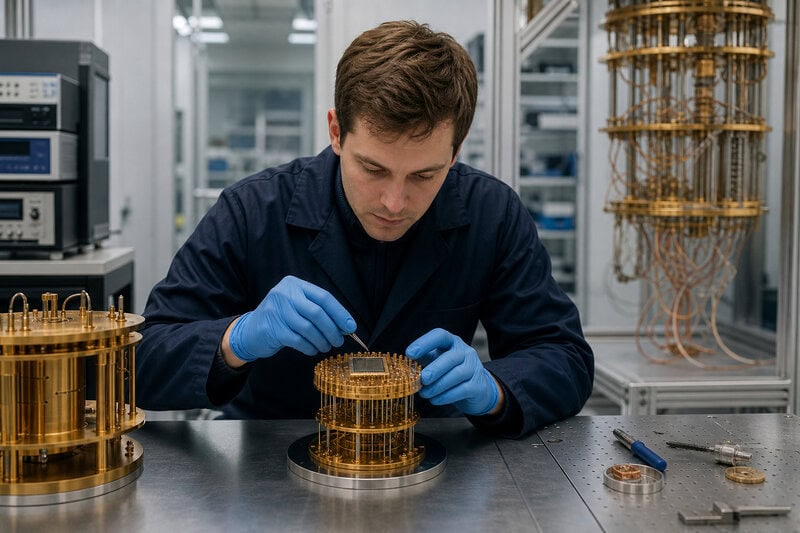
Quantcore is not a typical entrant in the crowded field of UK quantum computing startups. Where many ventures chase software layers or cloud-access services, Quantcore manufactures foundational physical components: superconducting processors, resonators, and sensors. The IOP’s decision to recognise a hardware manufacturer — rather than a systems vendor or algorithm developer — signals something meaningful about where serious technical credibility now sits in the UK quantum ecosystem.
Quantcore is a spinout from the University of Glasgow, one of Scotland’s oldest and most research-intensive institutions. Glasgow’s physics and engineering departments carry decades of specialisation in precision measurement and low-temperature device fabrication. That heritage is not incidental to what Quantcore builds — it is the foundation on which the company’s materials expertise rests, and it bears directly on the fabrication challenges that determine whether superconducting quantum hardware performs as designed or falls short.
What the IOP qBIG Prize Actually Measures
The Institute of Physics created the qBIG prize to celebrate genuine, peer-assessable innovation in quantum technology — not commercial momentum, media coverage, or fundraising success. In a field where hype has historically outrun hardware, an award judged on technical merit by one of the UK’s most respected scientific institutions carries a different kind of weight than a venture capital accolade or an industry association commendation.
According to the Institute of Physics announcement, the award recognised Quantcore’s work specifically in superconducting quantum hardware. The prize was presented at the Economist’s Commercialising Quantum 2026 event, a venue that deliberately bridges the academic research community and the investment world. That cross-sector visibility means Quantcore’s recognition landed in front of an audience that included both physicists capable of evaluating the underlying science and fund managers and procurement officers capable of acting on that evaluation.
For a spinout still establishing its commercial track record, the IOP’s institutional endorsement functions as independent verification that the underlying physics is sound. That distinction matters enormously to potential partners, procurement bodies, and government programmes that must distinguish credible hardware builders from speculative ventures before committing resources.
Superconducting Qubits: The Core Technology
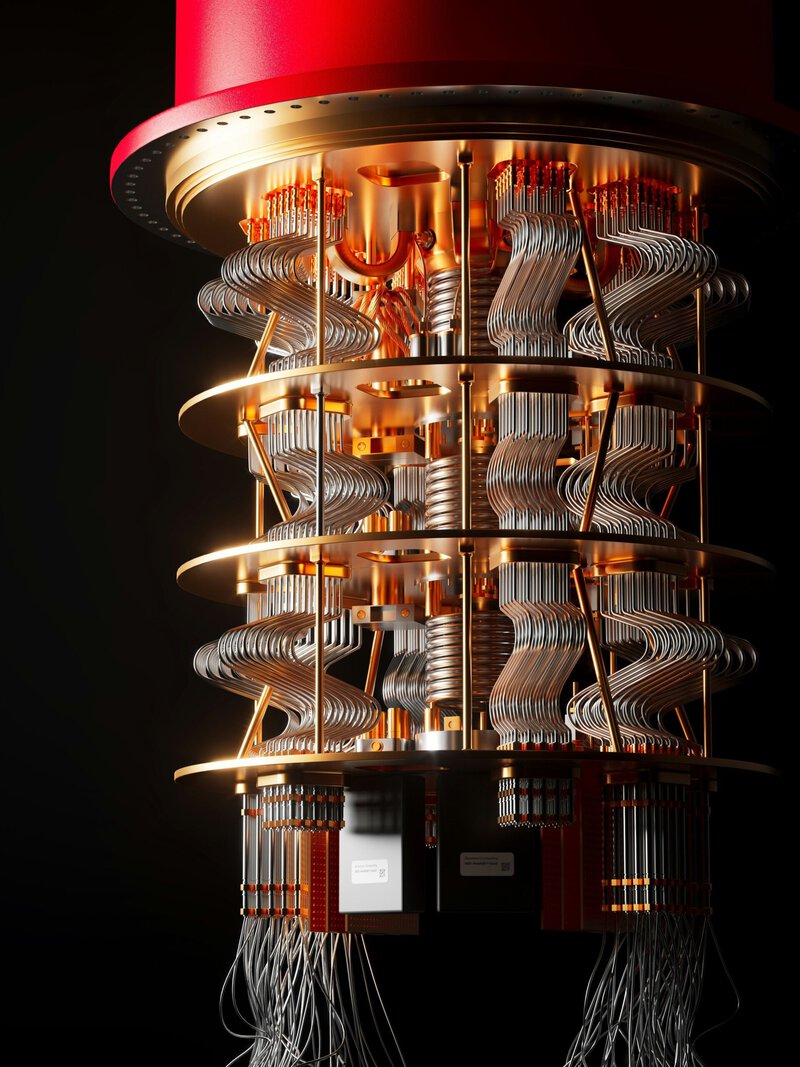
A qubit — short for quantum bit — is the fundamental unit of quantum computing. Unlike a classical bit, which is fixed at either 0 or 1, a qubit can exist in a superposition of both states simultaneously. This property, combined with entanglement between qubits, enables certain classes of calculation to scale in ways that no conventional processor can match. The practical challenge is that quantum states are extraordinarily fragile: the slightest environmental disturbance collapses them.
Superconducting qubits — the approach used by Quantcore, IBM, and Google, among others — address this challenge through extreme cold. These are tiny electrical circuits cooled to temperatures near absolute zero, around minus 273 degrees Celsius, at which point a material’s electrical resistance vanishes entirely and quantum effects become macroscopically controllable. At those temperatures, engineers can manipulate qubit states using precisely calibrated microwave pulses. The approach offers a meaningful scalability advantage over some rival technologies because it draws on fabrication techniques adapted from conventional semiconductor manufacturing, though each modality carries its own engineering trade-offs.
Resonators deserve particular attention because they represent one of Quantcore’s core product lines and one of the field’s hardest unsolved engineering problems. A resonator is a microwave cavity used to read out the state of a qubit without collapsing it prematurely. The resonator must couple to the qubit strongly enough to extract information, but not so strongly that it introduces noise that destroys the quantum state. In many real systems, resonator performance is the bottleneck that limits overall processor fidelity. Building better resonators is not a footnote to quantum hardware development; it is often the central problem.
Why Niobium? The Materials Science Behind Quantcore’s Approach
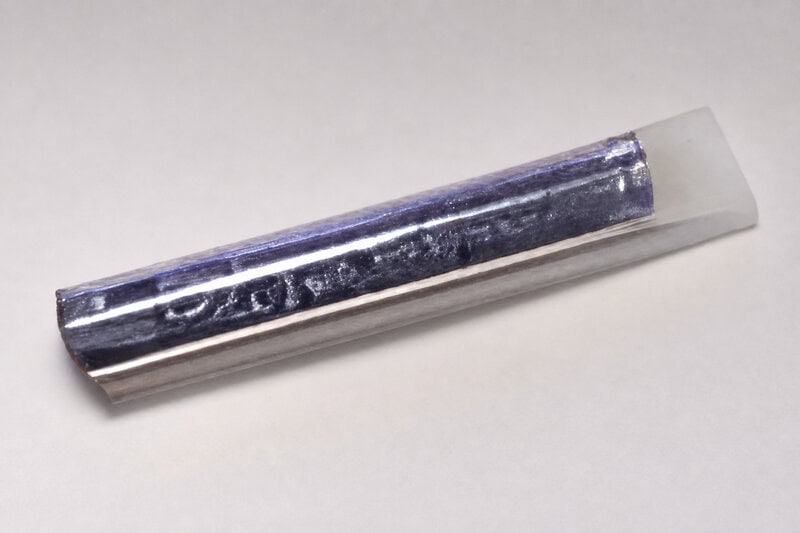
Quantcore’s processors are built on niobium, a silvery transition metal with a superconducting critical temperature of 9.2 Kelvin. That figure is significantly higher than aluminium, which becomes superconducting at around 1.2 Kelvin and is used in many competing superconducting qubit designs. A higher critical temperature does not eliminate the need for deep cryogenic cooling — qubits still operate far below niobium’s critical temperature for other physical reasons — but it provides meaningful engineering headroom in certain component and packaging contexts.
Niobium’s larger superconducting energy gap also means it can tolerate a broader range of microwave frequencies before quasiparticle poisoning becomes a serious problem. Quasiparticle poisoning is the phenomenon by which stray thermal energy breaks apart Cooper pairs — the paired electrons that carry current without resistance in a superconductor. When those pairs break, the resulting quasiparticles scatter through the circuit and corrupt qubit coherence. A material more resistant to this effect can, in principle, support longer coherence times and more reliable qubit operation.
The choice of niobium is not without trade-offs, and it is important to state this clearly. Niobium’s surface oxide layer is harder to control than aluminium’s, and surface quality is directly linked to qubit coherence times. Interface defects — microscopic imperfections at the boundary between the superconductor and its substrate or oxide — are among the dominant sources of noise in superconducting qubit systems. Quantcore’s University of Glasgow origins give it access to fabrication expertise developed over decades of superconducting device research, which is directly relevant to managing this challenge.
Performance comparisons between niobium and aluminium-based systems depend heavily on fabrication quality, qubit geometry, operating frequency, and measurement methodology. The scientific community has not declared a definitive winning material for superconducting quantum hardware. Physics World’s coverage of the Quantcore prize places the company’s work explicitly within this active and unsettled research context, which is the appropriate framing.
Scotland’s Quantum Ecosystem: More Than a Founding Story

The University of Glasgow’s contribution to Quantcore is more than a founding narrative. Scotland’s quantum startup ecosystem is increasingly visible at the national policy level. The UK National Quantum Strategy, published in 2023, explicitly identified university spinouts as a primary mechanism for commercialising academic quantum research — a framework that directly benefits companies at Quantcore’s stage of development.
Glasgow’s geographic and institutional position also offers advantages distinct from the London-Cambridge corridor that dominates much of UK deep-tech discourse. Access to Scottish Enterprise funding mechanisms, proximity to UK defence and space sector clients in Scotland, and established links to European research networks create a different but potentially complementary set of commercial pathways. Hardware-layer quantum companies spun from research universities tend to demonstrate longer development timelines than pure-software ventures, but they often build more defensible intellectual property positions as a result — a trade-off that the qBIG prize implicitly validates.
Where Quantcore Sits in the Global Quantum Hardware Race
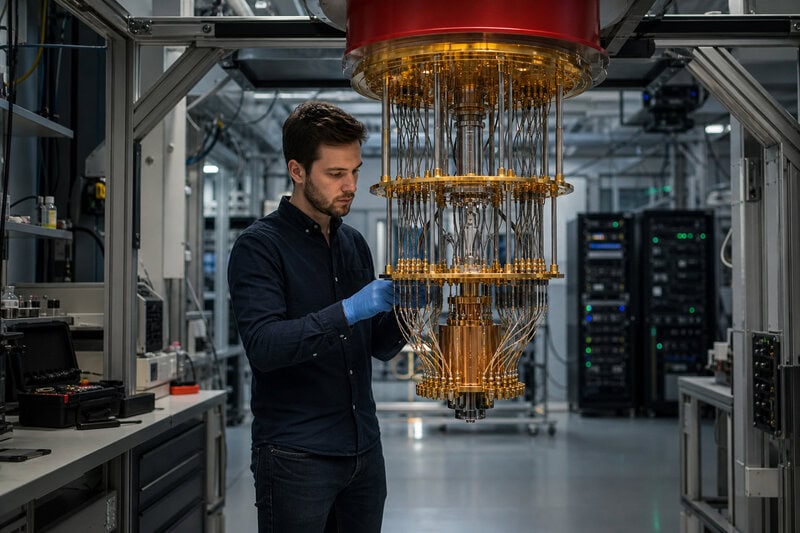
The global quantum computing hardware landscape is genuinely contested. Superconducting circuits, trapped ions, photonic systems, and neutral atom platforms are all being actively developed by well-resourced organisations. IBM and Google pursue superconducting approaches at large scale. IonQ and Quantinuum have demonstrated strong results with trapped ions. PsiQuantum is building toward photonic fault-tolerant systems. Pasqal works with neutral atoms. No single modality has yet demonstrated clear supremacy at fault-tolerant scale — this is the current scientific consensus, and it is an important one to hold onto when evaluating any individual company’s prospects.
Quantcore’s focus on manufacturing processors, resonators, and sensors — rather than building a complete end-to-end quantum computer — positions it as a potential component supplier to the broader ecosystem. This hardware-as-component model is structurally analogous to how semiconductor foundries supply chips to systems integrators. If the quantum computing stack matures in a way that separates hardware manufacturing from systems integration, companies with deep fabrication expertise could occupy a strategically valuable and difficult-to-replicate position.
UK quantum computing startups face the structural challenge of competing against US and Chinese programmes that benefit from significantly larger public and private investment bases. The IOP qBIG prize does not directly address that funding gap, but it raises international profile at a stage when visibility can open partnership discussions that capital alone cannot. The Quantum Crier’s coverage of the award situates Quantcore within this competitive international context and notes the significance of independent technical validation for a company at this stage.
The quantum hardware breakthrough that would most dramatically reshape the competitive landscape — demonstrated fault-tolerant logical qubits operating reliably at commercially useful scale — has not yet been achieved by any organisation. Quantcore, like every other player in this field, is working toward that threshold rather than having crossed it. That is not a criticism of Quantcore specifically; it is an accurate description of where the entire field currently stands.
What Comes Next for Quantcore and UK Quantum
The qBIG prize arrives at a moment when UK government investment in quantum technologies — through the National Quantum Computing Centre and related programmes — is scheduled to accelerate through 2026 to 2030. That trajectory creates a procurement environment in which domestic hardware manufacturers with independently verified technical credibility are better positioned to participate in government and defence programmes. The IOP award provides exactly that kind of verification.
The near-term milestone that researchers and investors are most closely watching is the demonstration of practical quantum advantage: a real-world computation performed faster or more accurately on quantum hardware than on the best available classical supercomputer, for a problem that is commercially or scientifically relevant rather than artificially constructed. That bar remains unambiguously uncleared for the problem classes that would matter most to industry. Quantcore’s hardware-layer specialisation means its commercial prospects depend not only on its own execution but on the pace at which the broader ecosystem — algorithm developers, systems integrators, and end users — matures around it.
The prize, as the wider coverage of the award makes clear, is a credibility marker, not a finish line. The deeper question of whether niobium-based superconducting technology from Glasgow can compete at global scale will be answered not in award citations but in peer-reviewed performance benchmarks and commercial contracts over the years ahead. What the qBIG prize does, concretely, is ensure that story is being watched by the people with the standing and the resources to help shape it.