
A 20-year-old space telescope is slowly falling out of orbit, and the plan to save it begins with attaching a rocket to the belly of a jet. Engineers at NASA’s Wallops Flight Facility in Virginia have already mated a Northrop Grumman Pegasus XL rocket to the company’s Stargazer carrier aircraft — the first concrete step in a mission that doubles as a live demonstration of two technologies that could reshape how humanity maintains its presence in space.
A Rocket Rides a Plane to Save a Dying Observatory
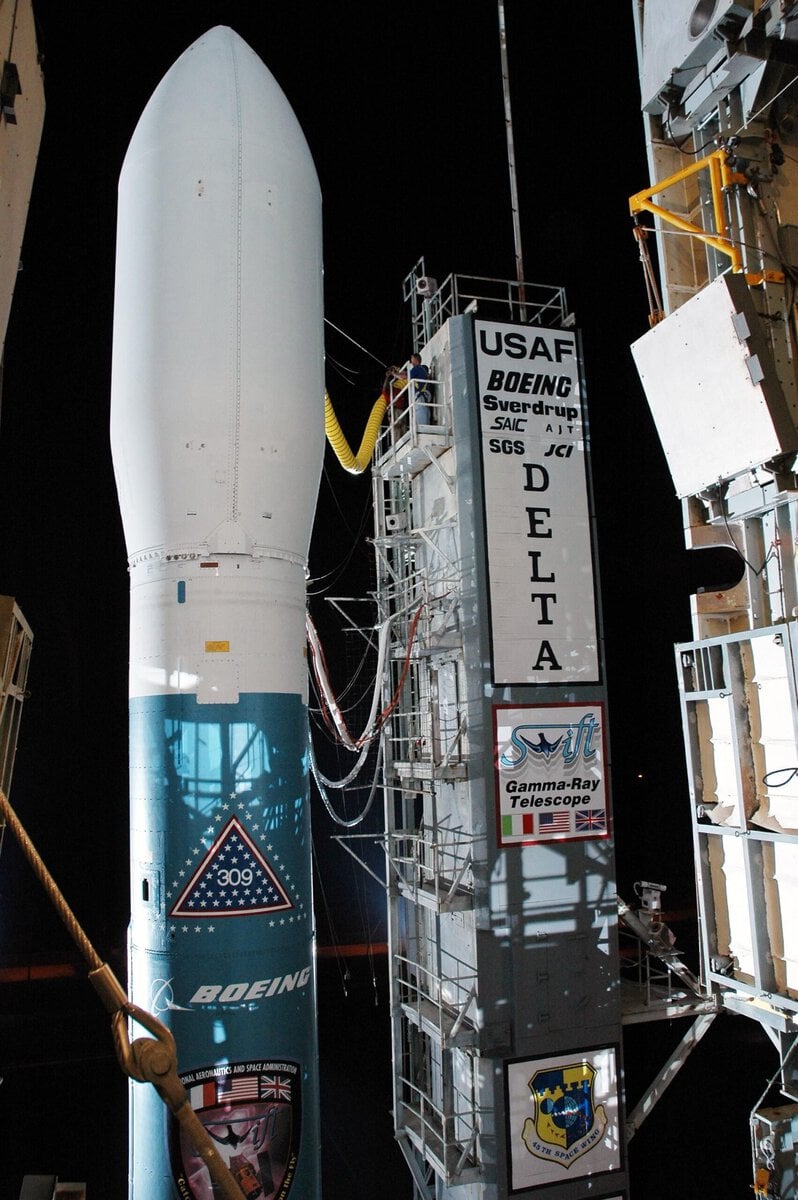
NASA’s Neil Gehrels Swift Observatory, launched in November 2004, has detected more gamma-ray bursts than any other instrument in history. For two decades it has orbited at roughly 600 kilometers altitude, scanning the sky for the universe’s most energetic explosions. But even at that height, Earth’s atmosphere — though extraordinarily thin — exerts enough drag to cause measurable orbital decay over a 20-year mission lifetime, according to NASA’s Swift mission blog. Left uncorrected, that slow gravitational slide will eventually end Swift’s science operations entirely.
The spacecraft designed to reverse that decay is called LINK — a robotic servicing vehicle built by Katalyst Space Technologies. LINK’s job is to dock autonomously with Swift and fire its own propulsion system to raise the observatory’s orbit, buying the telescope years of additional scientific life. The mission is approaching its launch window, with June 27, 2026 cited as the planned target date at the time of reporting, according to SpaceNews.
The launch vehicle carrying LINK is the Pegasus XL — and critically, it will not lift off from a conventional launchpad. It will be dropped from the Stargazer aircraft over the open Pacific Ocean near the Ronald Reagan Ballistic Missile Defense Test Site in the Marshall Islands, ignite its motors in midair, and climb to orbital velocity entirely above the densest portion of Earth’s atmosphere. That method is called air-launch-to-orbit, and understanding why engineers chose it for this mission requires understanding how the approach actually works.
What Air-Launch-to-Orbit Actually Means
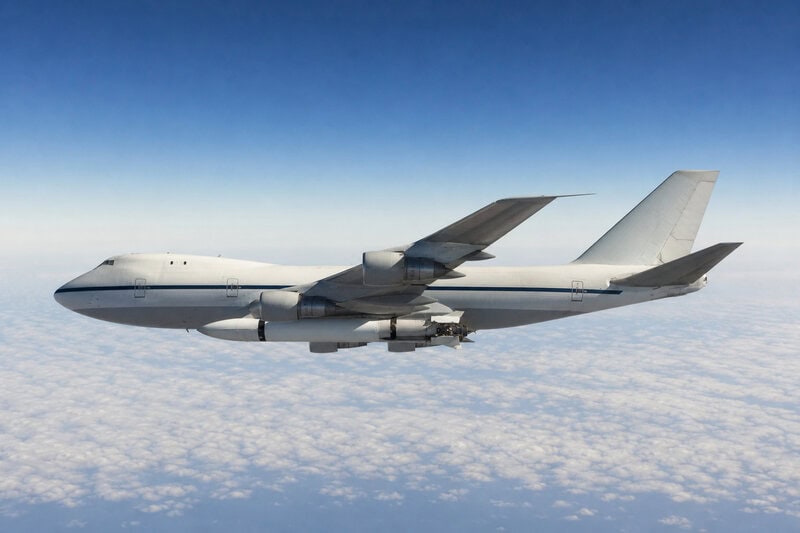
Air-launch-to-orbit is a delivery method in which a carrier aircraft lifts a rocket to altitude — typically between 35,000 and 40,000 feet — before releasing it into free fall. The rocket then ignites its own motors and climbs to orbital velocity, having already bypassed the densest, most drag-heavy portion of Earth’s atmosphere. According to Northrop Grumman’s published vehicle specifications, the Pegasus XL begins its powered flight already moving at roughly 500 miles per hour and above approximately 95 percent of Earth’s atmospheric mass by weight.
That head start matters in two distinct ways. First, it reduces aerodynamic drag during the rocket’s powered ascent, which lowers the structural loads the vehicle must be built to withstand and reduces the propellant mass required to reach orbital velocity. Second, and more important for the Swift mission, the carrier aircraft — not a fixed launchpad — determines the release point. That geographic flexibility allows mission planners to choose launch trajectories that would be geometrically impossible or prohibitively expensive from a continental ground site.
For the Swift reboost mission specifically, the Marshall Islands drop point was selected because its near-equatorial location allows the Stargazer to fly a release trajectory that places LINK into an orbital plane closely matching Swift’s existing orbit. Reaching that same orbital inclination from a U.S. mainland launch site would require a large and propellant-expensive maneuver called a dogleg — or would simply be impossible within the constraints of range safety corridors over populated land. The air-launch approach here is primarily a trajectory choice, not merely a cost-saving measure.
How the Pegasus XL and Stargazer Hardware Works
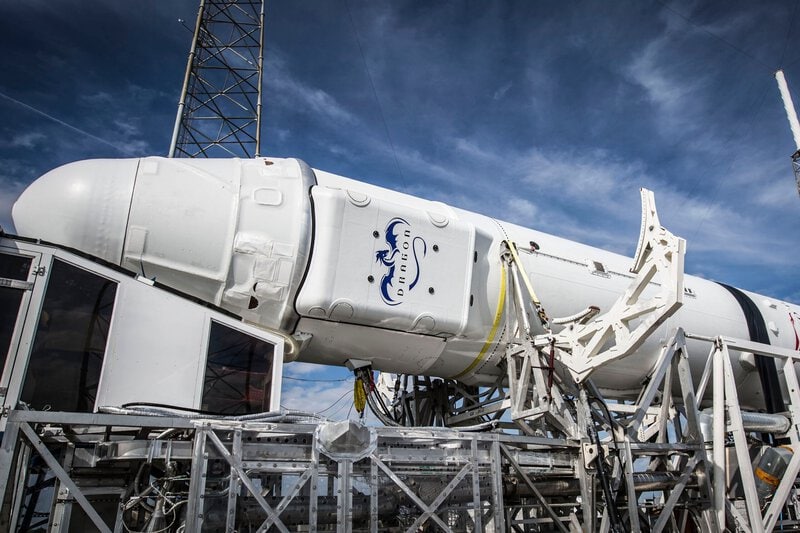
The Pegasus XL is a three-stage, solid-fueled rocket roughly the size of a school bus. It is carried horizontally under the fuselage of the Stargazer, a modified Lockheed L-1011 widebody jet, secured until a pneumatic release mechanism drops it into free fall beneath the aircraft. After a roughly five-second free-fall separation — long enough to clear the carrier aircraft’s wake turbulence — the rocket’s first-stage solid motor ignites, according to Northrop Grumman’s payload user guide.
One of the Pegasus XL’s most distinctive design features is a delta wing mounted on its first stage. This wing generates aerodynamic lift during the early powered phase, allowing the vehicle to trade altitude for velocity more efficiently than a purely ballistic trajectory would permit. It is a design characteristic unique among operational orbital rockets, and it contributes meaningfully to the vehicle’s efficiency in the 300-to-450 kilogram payload range where Pegasus XL operates.
The Stargazer aircraft itself requires no expendable hardware and lands conventionally after the release. The only hardware consumed per mission is the rocket and its payload fairing — a cost and logistics structure quite different from ground-launched expendable boosters that require dedicated launch infrastructure at fixed geographic locations. The Pegasus XL mated to the Stargazer and the full mission sequence are documented in this mission preview video from NASA and Northrop Grumman.
The Mission: Robotic Reboost as an Emerging Technology
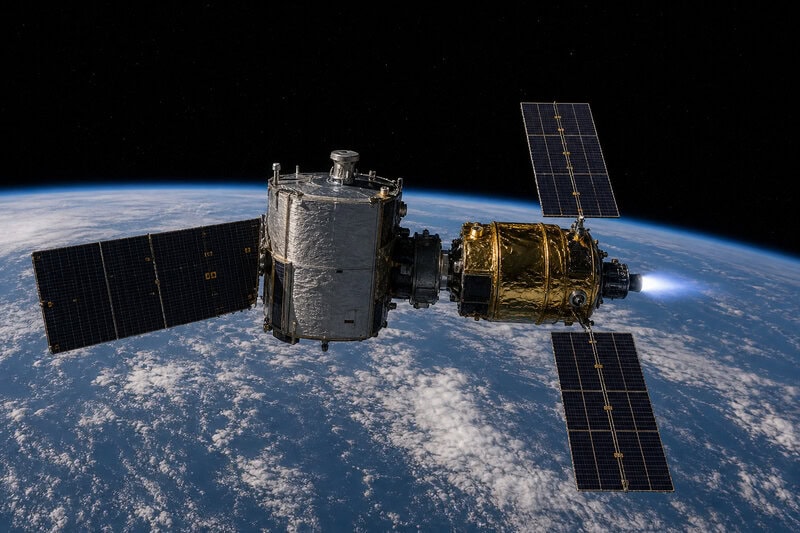
If LINK successfully docks with Swift and executes its reboost burn, it will represent one of the first operational uses of robotic on-orbit servicing to extend the life of a functioning government science spacecraft. On-orbit servicing — the broad category that includes refueling, reboosting, and repairing satellites — has been described by NASA’s Space Technology Mission Directorate as a strategic priority for reducing the long-term cost of science missions, though the agency has also acknowledged that autonomous docking with legacy spacecraft presents significant technical challenges.
The LINK mission differs from most previous servicing demonstrations in a critical respect: Swift was not designed to be serviced. It has no dedicated docking port or cooperative capture hardware intended for a visiting vehicle. Achieving autonomous rendezvous and docking under those conditions is technically demanding, and the outcome will not be known until after orbital insertion. That uncertainty is part of what makes the mission scientifically and industrially significant — it will generate the first real-world performance data on air-launched robotic servicing at orbital altitude, information that is currently absent from published literature.
Katalyst Space Technologies is part of a growing commercial ecosystem betting that satellite operators will pay for life extension rather than replacement. Northrop Grumman’s Mission Extension Vehicle program and DARPA’s Robotic Servicing of Geosynchronous Satellites initiative represent parallel efforts in the same space. Northern Sky Research estimated in 2022 that the on-orbit servicing market could reach several billion dollars annually by the 2030s, though that figure represents an industry projection rather than a confirmed market outcome. Additional technical and commercial context on the Swift mission is available from Aerospace America’s reporting on the mission.
Air Launch vs. Ground Launch: A Realistic Comparison
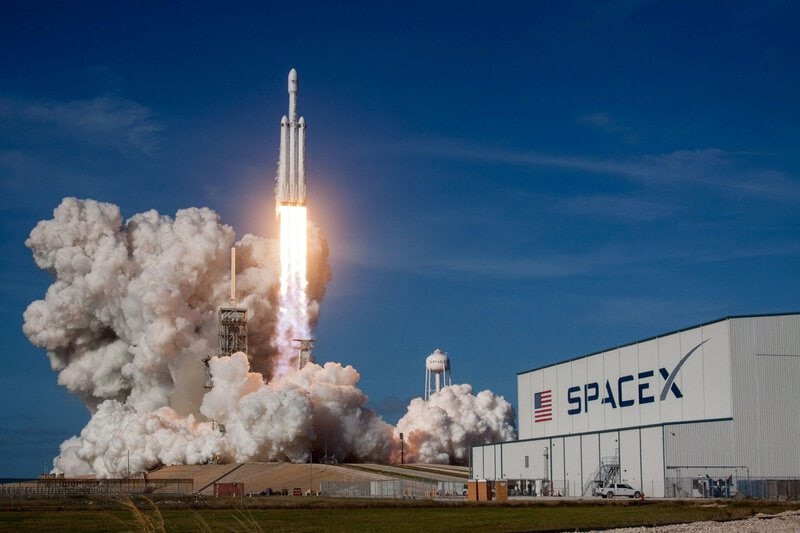
Air-launch systems are not superior to ground launch in any absolute sense — they occupy a specific and relatively narrow performance niche. Ground-launched rockets benefit from mature infrastructure, decades of operational data, and the ability to scale to very large payload masses. SpaceX’s Falcon 9 can deliver roughly 22,800 kilograms to low Earth orbit, a capability no air-launch system currently approaches, according to SpaceX’s published payload guide. For large constellations, crewed missions, or heavy science payloads, ground launch remains the dominant and appropriate choice.
What air-launch systems like Pegasus XL offer instead is flexibility. The absence of a fixed launchpad means no range scheduling conflicts, the ability to launch from international waters, and access to a wider variety of orbital inclinations without costly trajectory corrections. Stratolaunch — the company operating the world’s largest carrier aircraft by wingspan — has argued publicly that air launch also improves launch-on-demand responsiveness for small satellites, though the commercial appetite for that premium remains actively debated among industry analysts.
For payloads in the sub-500-kilogram range that require access to specific orbital planes from non-standard geographic locations, air launch offers genuine advantages that ground-launch alternatives cannot easily replicate. The Swift mission sits precisely in that category, which is why Pegasus XL — despite being a relatively mature and infrequently flown vehicle — is the right tool for this particular job. Full mission and launch vehicle details are available at Next Spaceflight’s mission profile for the Swift Boost mission.
What Comes Next and What Remains Uncertain
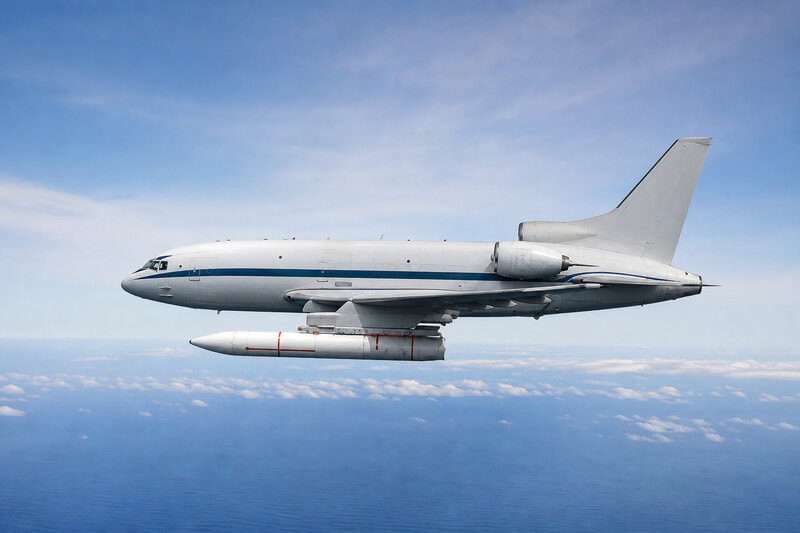
With the Pegasus XL already mated to the Stargazer at Wallops Flight Facility, the immediate next steps involve integrated systems testing, a ferry flight to the Marshall Islands launch site, and final range safety approval — a sequence Northrop Grumman has executed on previous Pegasus missions. Air-launch campaigns are sensitive to upper-atmosphere wind conditions at release altitude, and standard practice allows for multiple launch windows within a campaign period, meaning the published target date carries schedule contingency.
The deeper uncertainty lies after launch. LINK must achieve orbital insertion, execute autonomous rendezvous with Swift, complete a docking maneuver on a spacecraft never designed to receive a visiting vehicle, and then fire its propulsion system with sufficient precision to meaningfully raise Swift’s orbit. Each of those steps carries independent technical risk, and the mission’s success cannot be assessed until all of them are complete.
If LINK achieves its objectives, Katalyst Space Technologies has indicated it intends to pursue follow-on servicing contracts with both government and commercial satellite operators, positioning the Swift mission as a commercial proof-of-concept as much as a NASA science support operation. Whether it succeeds fully, partially, or encounters technical obstacles, it will produce information — about autonomous docking, air-launched small spacecraft, and the practical limits of on-orbit reboost — that mission planners, insurers, and regulators do not currently have. That, independent of Swift’s ultimate fate, is a meaningful contribution to the emerging science of keeping satellites alive. Further perspective on the mission’s commercial and technical significance is available at this industry commentary from on-orbit servicing specialist Gordon Roesler.