
A single gene, long studied for its role in driving lethal prostate cancer, turns out to regulate digestion as well — a finding that is quietly reframing how researchers think about inherited disease risk and the boundaries between seemingly unrelated conditions. That discovery, anchored in one of the largest genomic studies ever conducted, is now pushing scientists to ask whether the biological roots of cancer aggression and gut physiology run deeper than anyone anticipated.
A Single Gene, Two Surprising Consequences
At the center of this emerging picture is a gene called HSD3B1 — shorthand for 3β-hydroxysteroid dehydrogenase type 1, an enzyme-encoding gene that has occupied researchers in prostate cancer biology for more than a decade. Dr. Nima Sharifi, a physician-scientist at Cleveland Clinic’s Lerner Research Institute, was instrumental in identifying HSD3B1 as a meaningful player in prostate cancer outcomes. What his team and collaborators have now uncovered goes further: the same inherited variation in HSD3B1 that can accelerate a man’s death from prostate cancer also appears to influence how the gut processes certain compounds — a shared genetic root that few in either oncology or gastroenterology had suspected.
Understanding this dual role requires following the gene’s biology through two organ systems that medicine has historically treated as separate domains. By the time that picture comes into focus, the implications — for treatment, for screening, and for how scientists design future studies — become difficult to ignore.
What the New Study Actually Found
The findings at the core of this story were published in JAMA Network Open, one of the American Medical Association’s peer-reviewed open-access journals. The study examined the so-called adrenal-permissive HSD3B1 genotype in relation to prostate cancer outcomes — “adrenal-permissive” referring to a variant of the gene that allows the adrenal glands to keep supplying tumors with androgen, the male sex hormone that fuels most prostate cancers, even after standard hormone-blocking treatment has been applied. In other words, this variant effectively keeps the cancer’s fuel line open when clinicians believe they have shut it off.
The data source gave the analysis unusual credibility: the Million Veterans Program (MVP), a U.S. Department of Veterans Affairs initiative that links the genetic information of hundreds of thousands of American veterans to their long-term health records. That scale — one of the world’s largest research studies designed to link genetics with health and disease — provides the statistical power necessary to distinguish genuine biological signals from random noise, particularly when studying inherited variants and survival outcomes that play out over years or decades.
The study’s central conclusion, as characterized by its authors and by independent commentators, is that it provides a new level of evidence that an inherited variation in HSD3B1 functions as a physiologic driver of prostate cancer mortality — not merely a statistical association observed in a single cohort, but a replicable, biologically grounded finding with potential treatment implications. Alongside the cancer findings, the research also surfaced evidence touching on HSD3B1’s role in digestion, an emerging and still-developing line of inquiry that the authors and the broader scientific community treat as hypothesis-generating rather than settled consensus.
The Biology Behind HSD3B1: A Plain-Language Explainer
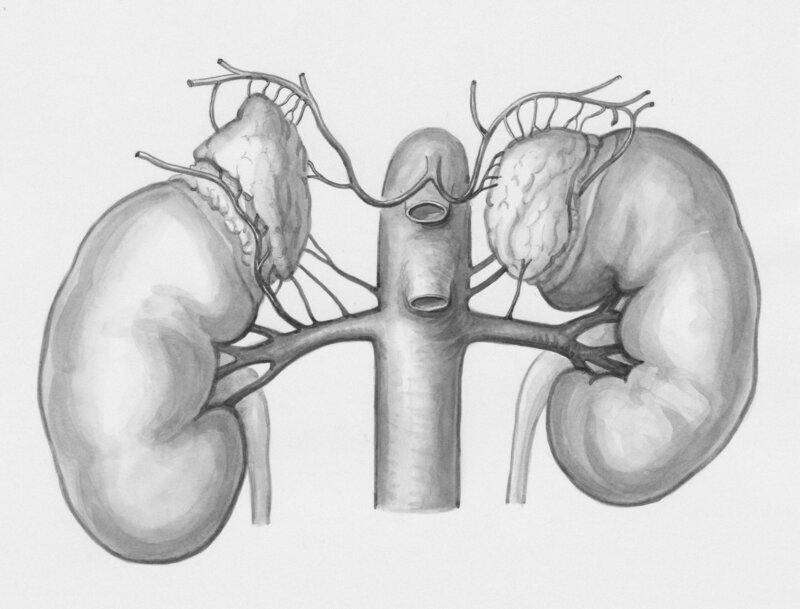
To understand why one gene could plausibly influence both cancer death and digestion, it helps to know what the enzyme it encodes actually does. HSD3B1 converts weak precursor hormones — including those manufactured by the adrenal glands, which sit atop the kidneys and operate independently of the testes — into potent androgens, most notably dihydrotestosterone (DHT). DHT is the primary molecular fuel that drives the growth and survival of most prostate cancer cells.
The gene comes in two common inherited forms. The adrenal-restrictive variant limits that conversion process, effectively slowing the adrenal glands’ ability to feed tumors with androgens. The adrenal-permissive variant accelerates it, meaning that even when standard androgen-deprivation therapy (ADT) — treatment designed to cut off the testosterone supply — is applied, tumors in men with this variant retain access to adrenal-derived androgens and continue to grow. That mechanism explains why men carrying the adrenal-permissive version face a harder clinical road.
The digestive dimension of HSD3B1’s biology rests on a separate but related fact: the gene is expressed not only in the prostate and adrenal tissue but also in intestinal cells, where the enzyme participates in steroid and bile acid metabolism. Bile acids are compounds the liver produces to help the gut break down dietary fats; their regulation is also deeply intertwined with inflammation. Because HSD3B1 sits at a metabolic crossroads between steroid hormones and bile acid pathways, its activity in intestinal tissue could, in principle, influence both local gut physiology and the broader hormonal environment of the body. Researchers are careful to note, however, that the cancer connection is supported by multiple independent studies and carries the weight of established evidence, while the digestive role — though biologically plausible and now identified in research — remains an area of active investigation rather than clinical guidance.
Why Shared Genetics Between Cancer and Digestion Matters
The phenomenon scientists use to describe one gene influencing multiple apparently unrelated traits is called pleiotropy, and HSD3B1 is emerging as a compelling example of it. When a single inherited variant simultaneously shapes cancer aggression in one tissue and metabolic activity in another, it challenges the assumption — embedded in how medical specialties are organized — that diseases of different organ systems arise from largely separate biological programs.
The broader implication is significant: if HSD3B1 variants can influence both cancer mortality and gut physiology through shared enzymatic activity, it raises the possibility that disease categories medicine has long treated as distinct may share deeper molecular roots. Researchers studying the epidemiology of digestive conditions — particularly those involving steroid and bile acid pathways — have long observed elevated rates of certain gut disorders in some of the same populations that bear disproportionately high rates of lethal prostate cancer. That overlap has been noted, but causation has not been established, and attributing the correlation to a single shared gene would require dedicated prospective research.
Independent commentators have characterized HSD3B1’s emerging dual role as a hypothesis-generating finding — one that creates a scientific rationale for designing studies that look across organ systems rather than within them, but not yet a proven causal chain that should change clinical practice. The distinction between “warrants investigation” and “has been proven” is one researchers in this area are deliberate about maintaining.
The Million Veterans Program: Why This Study Carries Unusual Weight

Most genetic association studies in cancer are constrained by sample size. Rare variants, survival endpoints, and the long time scales over which cancer mortality unfolds demand enormous cohorts to produce reliable results. The Million Veterans Program was designed from the outset to meet that challenge, linking genetic data with lifetime health records across hundreds of thousands of participants — a scale that dwarfs the vast majority of academic research cohorts in this field.
Equally important is the cohort’s diversity. The MVP includes veterans across racial and ethnic backgrounds, a feature that allows researchers to test whether findings like the HSD3B1 association hold across groups that have historically been underrepresented in cancer genetics research. That matters particularly for prostate cancer, a disease that disproportionately affects Black men in the United States both in incidence and in mortality — a disparity whose genetic underpinnings remain incompletely understood. By testing the HSD3B1 association within a diverse veteran population, the study moves the field meaningfully closer to findings that generalize beyond the narrow demographic profiles that have historically dominated cancer genomics research.
The contribution of the JAMA Network Open study, as its authors and independent commentators have framed it, is to elevate HSD3B1 from a promising candidate gene — interesting but not yet firmly established — to an evidence-backed inherited driver of prostate cancer mortality with plausible treatment implications. That elevation in evidentiary status is meaningful in a field where the gap between an intriguing finding and an actionable one can span many years and many failed replications.
What This Could Mean for Treatment and Screening
The most immediate clinical implication concerns treatment selection. Men who inherit the adrenal-permissive HSD3B1 variant may not respond adequately to standard androgen-deprivation therapy alone, because that treatment does not fully suppress the adrenal pathway that their variant keeps active. The JAMA Network Open findings lend support to the hypothesis that such men could benefit from more aggressive combination regimens — therapies that target multiple androgen sources simultaneously — rather than a uniform standard approach applied regardless of genotype.
A related implication involves risk stratification at the point of diagnosis. If HSD3B1 genotyping can reliably identify men at elevated risk of dying from their cancer before treatment begins, clinicians could theoretically calibrate therapy intensity earlier, intervening more aggressively before treatment failure rather than after. That kind of genotype-guided decision-making would represent a meaningful shift toward precision oncology in prostate cancer — though it remains a research goal rather than current standard practice. No clinical guidelines currently recommend routine HSD3B1 genotyping for prostate cancer management, and translating a research finding into a standard-of-care test requires regulatory review, independent replication, and cost-effectiveness analysis that have not yet occurred.
The digestive dimension opens a longer-range and more speculative research frontier. If gut-expressed HSD3B1 influences the hormonal environment systemically — not just locally in intestinal tissue — then dietary patterns, the gut microbiome, or drugs that modify bile acid metabolism could, in principle, interact with a man’s HSD3B1 genotype to modify his cancer risk. Experts in the field are careful to characterize this as a scientifically motivated hypothesis rather than an actionable clinical insight.
Dr. Sharifi’s Broader Research Program
Dr. Nima Sharifi’s broader research mission at Cleveland Clinic’s Lerner Research Institute centers on decoding how inherited variation in androgen metabolism genes determines who dies from prostate cancer and who does not — a question with profound implications given that prostate cancer remains one of the leading causes of cancer death among men in the United States. His laboratory’s work has increasingly implicated steroid-metabolizing genes, including those governing glucocorticoids, in shaping cancer biology in ways that standard treatment models do not fully account for.
The open scientific questions now before his team and others in the field include prospective clinical trials to test whether genotype-guided therapy — assigning more intensive treatment to men with the adrenal-permissive variant — actually improves survival outcomes compared to standard care. Alongside those trials, mechanistic studies are needed to map precisely how HSD3B1 operates in intestinal tissue: which specific bile acid and steroid conversions it governs, how those conversions respond to diet or microbiome composition, and whether modifying that activity has measurable effects on systemic hormone levels.
If the intestinal role of HSD3B1 proves meaningful at a systemic level, it could open a genuine cancer-prevention research strategy — one grounded in understanding a man’s inherited metabolic profile and adjusting environmental inputs, whether dietary, pharmaceutical, or microbial, to shift the pathway in a protective direction. Researchers are appropriately cautious: that line of inquiry is scientifically motivated but remains far from clinical translation.
A Window Into How Deeply Connected Biology Really Is
What this study represents, at its core, is a significant step in the long journey from genetic discovery to clinical medicine. The finding that a single inherited variant can shape both the trajectory of a lethal cancer and the workings of the digestive system is not merely a curiosity — it is an invitation to reconsider how deeply connected the body’s systems are at the molecular level, and how medical disciplines organized around individual organs may be missing biological signals that cross those boundaries.
For patients, the practical takeaway is appropriately measured: HSD3B1 genotyping is not yet part of standard care, and men with prostate cancer should continue to make treatment decisions in close consultation with their oncologists based on currently established guidelines. For researchers, however, this study marks a meaningful advance — one that strengthens the evidentiary foundation for genotype-guided treatment trials and opens a scientifically grounded new avenue of inquiry into the shared molecular roots of cancer and gut physiology. Whether acting on HSD3B1 status ultimately saves lives is a question only the next generation of carefully designed trials can answer.