
A person who has survived cancer turns out to carry an unexpected biological advantage: a measurably lower risk of developing Alzheimer’s disease. That counterintuitive finding has sent researchers deep into the shared machinery of two of medicine’s most feared conditions — and what they are finding is reshaping the way scientists think about both.
Cancer survivors are measurably less likely to develop Alzheimer’s disease

Multiple independent epidemiological studies have found that people with a history of cancer show a statistically lower incidence of Alzheimer’s disease compared with cancer-free populations. The University of Kentucky’s research program is among the institutions that have examined this pattern, and its analysis underscores how consistently the association appears across large, diverse cohorts — making it one of the more robustly replicated observations in neurodegenerative disease research.
Researchers are careful to emphasize that this is a correlation, not proof of biological protection. Nevertheless, the consistency of the cancer-Alzheimer’s link across independent datasets has made it scientifically impossible to dismiss as coincidence, and it has driven a serious hunt for a mechanistic explanation.
The inverse relationship runs in both directions — Alzheimer’s patients are also less likely to get cancer

The epidemiological signal is not a one-way street. Individuals diagnosed with Alzheimer’s disease also show lower rates of subsequent cancer development, indicating that the inverse relationship is genuinely bidirectional. Scientists describe this as a “see-saw” dynamic: biological conditions that favor one disease appear to suppress the other.
This bidirectionality meaningfully strengthens the case for a shared underlying biology. If the pattern were driven purely by a detection or survival artifact — for instance, cancer patients simply being monitored more closely — one would not expect the association to run equally well in the opposite direction. The symmetry points toward real, reciprocal cellular mechanisms rather than a statistical quirk.
Cancer-like mutations hiding inside brain immune cells were found in Alzheimer’s patients
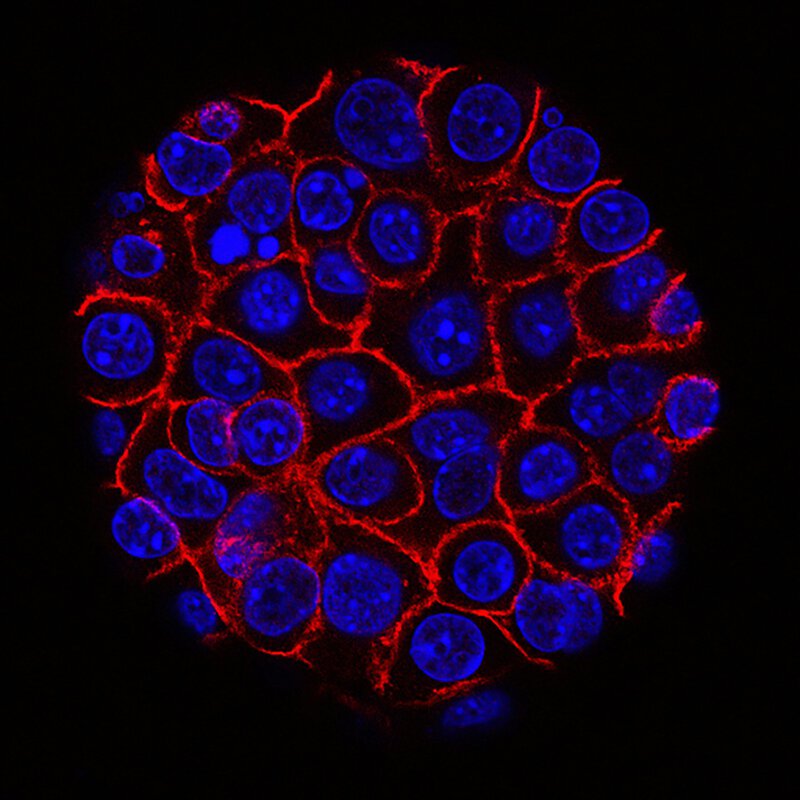
An NIH-funded study identified somatic mutations — the kind typically associated with blood cancers — accumulating inside microglia, the brain’s frontline immune cells. Microglia normally prune synapses and clear cellular debris; when their DNA acquires cancer-like mutations over a lifetime, their behavior changes in ways that appear harmful to surrounding neurons. Scientists reporting on this discovery described the microglial mutations as a surprising new pathway connecting cancer biology to Alzheimer’s disease.
Critically, these mutations were not inherited. They accumulated gradually with age, meaning that the passage of time itself is a driver of this newly identified risk pathway — placing aging, already Alzheimer’s greatest risk factor, at the center of the cancer-neurodegeneration story in a newly concrete, molecular way.
Mutant microglia become overactive inflammatory agents that may fuel Alzheimer’s pathology

Microglia carrying cancer-associated mutations do not simply malfunction quietly. Researchers found that these cells shift into a chronically inflamed state, releasing chemical signals that damage the brain tissue they were originally designed to protect. Neuroinflammation — prolonged immune activation in the brain — is already recognized as a key accelerant of Alzheimer’s progression, and mutant microglia appear to amplify that process significantly.
The finding draws a direct conceptual line between cancer biology and neurodegeneration through a shared mechanism: runaway cellular activity that turns a protective system into a destructive one. Reporting on the curious link between Alzheimer’s disease and cancer has noted that this convergence is pushing two previously separate fields of medicine into productive dialogue about shared biology and potential shared solutions.
The mutations belong to the same class seen in clonal hematopoiesis, a recognized blood-cancer precursor
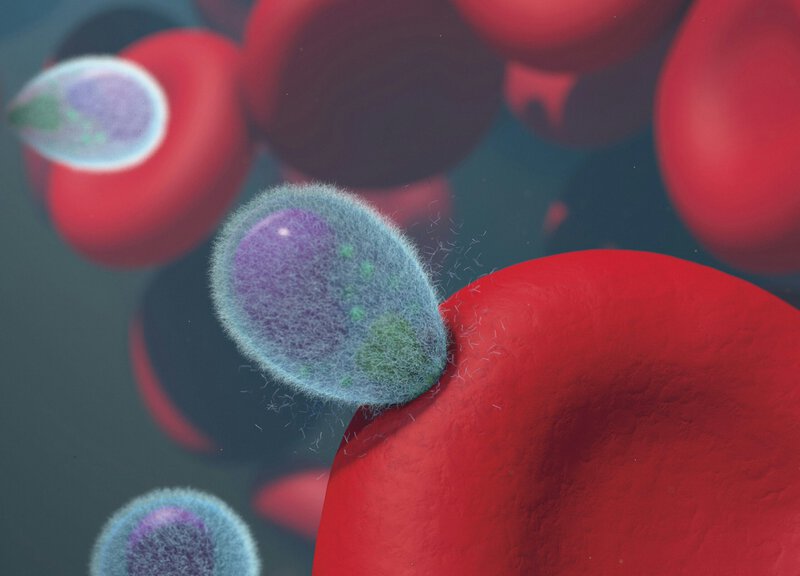
Clonal hematopoiesis is a well-studied condition in which a single blood-stem-cell mutation expands into a large population of genetically identical cells — a recognized precursor to certain blood cancers. Scientists have now found that analogous clonal expansions appear to occur within microglia, suggesting that the brain’s immune system undergoes its own version of this cancer-adjacent process entirely independently of what happens in the bloodstream.
This parallel matters because clonal hematopoiesis already has a substantial body of oncology research behind it, including identified molecular targets. The shared biology means oncologists and neurologists may now find themselves working from a common molecular map — a convergence that neither field anticipated a decade ago.
The UK Biobank is investigating whether the cancer-Alzheimer’s link is causal or a statistical illusion
Not every researcher is convinced the inverse relationship reflects true biological causation. The UK Biobank has a dedicated project examining the inverse link between cancer and Alzheimer’s disease, specifically designed to distinguish genuine biological causation from spurious statistical explanations. One leading alternative explanation is that cancer patients die at elevated rates before reaching the age at which Alzheimer’s risk peaks, making them appear protected when they are simply not surviving long enough to develop the disease.
Disentangling these competing explanations is not merely an academic exercise. A survival artifact would be a scientific dead end; a confirmed causal mechanism could open entirely new therapeutic doors. The UK Biobank’s scale and longitudinal design make it well positioned to provide a more definitive answer than any single study could.
Overlapping biological pathways suggest existing cancer drugs could be worth testing against Alzheimer’s

The microglial mutation findings reveal that cancer and Alzheimer’s share molecular circuitry — particularly in pathways governing cell proliferation, inflammation, and programmed cell death, the orderly process by which damaged cells are normally eliminated. Because cancer therapies have already been developed to target mutant immune-cell clones in blood cancers, scientists note that some of these agents could, in principle, be tested for their effect on neuroinflammation driven by similar mutations in the brain.
Researchers are emphatic that drug repurposing for Alzheimer’s remains speculative and that no such treatment is ready for clinical use. However, the shared biology makes this a scientifically credible avenue rather than a long-shot hypothesis, and it gives drug developers a concrete molecular starting point. Coverage of the original research highlights how these overlapping pathways are already prompting calls for collaborative trials between the oncology and neurology communities.
Mutant microglia represent a newly identified therapeutic target for Alzheimer’s disease

Before these findings emerged, cancer-like mutations in microglia did not appear on any mainstream list of Alzheimer’s drug targets. The field’s attention had been concentrated overwhelmingly on amyloid plaques — protein deposits that accumulate between neurons — and tau tangles, the abnormal protein structures that form inside them. The researchers explicitly flagged the cancer-like microglial mutations as a “surprising new therapeutic target,” a characterization that signals a meaningful expansion of the treatment landscape.
Importantly, targeting mutant microglia would not require abandoning existing research directions. Scientists envision such an approach as complementary to amyloid- and tau-focused therapies — a combination strategy analogous to how oncologists treat cancer with multiple agents acting on different vulnerabilities simultaneously. That layered logic is well established in cancer medicine and could translate naturally to Alzheimer’s care.
The discovery reframes Alzheimer’s partly as a disorder of rogue immune cells, not just neurons

For decades, the dominant cellular model of Alzheimer’s disease centered on neurons: the accumulation of toxic proteins that impair and ultimately kill the brain’s signaling cells. The microglial mutation finding shifts meaningful scientific attention to the brain’s immune compartment, broadening the definition of what Alzheimer’s disease actually is at the cellular level. By demonstrating that immune cells can acquire cancer-like mutations and independently drive neurodegeneration, researchers are presenting a more complex — and potentially more actionable — picture of the disease.
This conceptual shift echoes a transformation already seen in cancer biology over the past two decades, during which immunology moved from the periphery of the field to its center, producing breakthrough therapies along the way. The emerging view of Alzheimer’s as partly a disorder of rogue immune cells carries that same potential: a new vantage point that could, over time, yield treatments that were simply invisible from the old one.
The inverse relationship between cancer and Alzheimer’s disease — once a puzzling statistical footnote — has become a window into shared cellular mechanisms that neither field fully understood before. Significant questions remain, particularly around causation and clinical translation. But the scientific case for pursuing this convergence has never been stronger, and researchers on both sides of the divide are now paying close attention.