
In rice paddies across Thailand, scientists recently collected spider webs — ordinary, abandoned silken traps — and cultured living fungi from them in the laboratory. Among the species they recovered were several that appear to be entirely new to science: organisms that had never been formally described, catalogued, or named.
A Sticky Net Full of Surprises
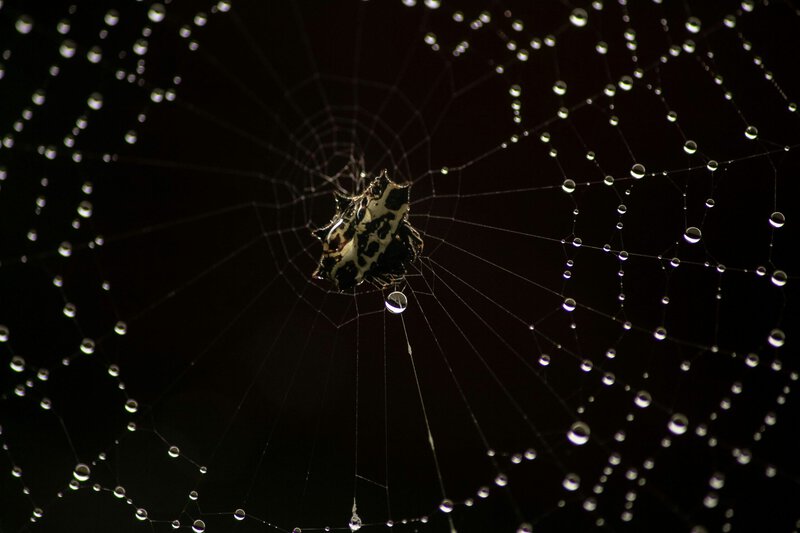
Spiders spin webs to intercept insects, not fungi. Yet the adhesive silk snagged airborne fungal spores drifting through paddy fields just as efficiently as any purpose-built laboratory sampler — at zero cost, with no equipment left in the field and no habitat disturbed. That accidental efficiency is what has mycologists paying attention.
The stakes are considerable. Peer-reviewed estimates suggest that fewer than 10 percent of Earth’s fungal species have been formally described, leaving somewhere between two and four million species unknown to science. Spider webs occur on every continent except Antarctica, are rebuilt by their makers within hours of being harvested, and cost nothing to deploy. The new study, discussed in detail by its publishers at Pensoft, frames webs as natural, non-destructive collectors of fungal material in agricultural ecosystems. If that characterisation holds up under broader testing, it could quietly reshape how field mycologists work.
This article explains how spider silk traps fungal material, why conventional methods for finding new fungi are so difficult and expensive, what the Thai rice-field study actually showed, and what remains genuinely uncertain about this emerging approach.
Why Finding New Fungi Is So Difficult
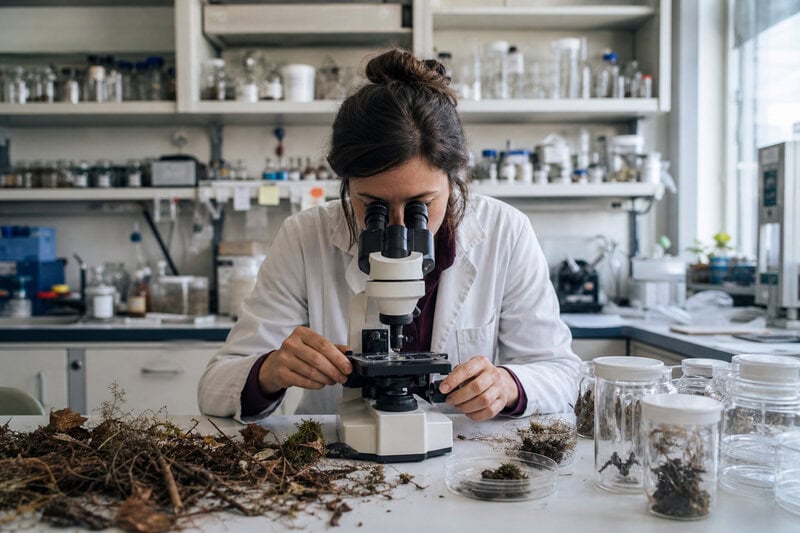
Most fungi spend the majority of their lives invisible. The bulk of a fungal organism consists of hyphae — microscopic branching threads that ramify through soil, leaf litter, rotting wood, or the tissue of a host plant or animal. These structures are far too small to see without magnification and are thoroughly entangled with their substrate. Fungi announce themselves visibly only when they produce fruiting bodies — mushrooms, brackets, or crusts — and that phase is brief, seasonal, and often unpredictable. A species can be abundant in a habitat for years without ever being noticed by a passing researcher.
Conventional field research techniques have evolved to work around this problem, but none is fully satisfying. Soil coring — removing a cylinder of earth for laboratory analysis — is physically disruptive, labour-intensive, and captures only what is present at that precise location at that precise moment. Baiting substrates, such as placing hemp seeds or hair in soil to attract specific fungal groups, is selective by design and misses everything that does not respond to the bait. Hirst-type volumetric air samplers, the standard instrument for airborne spore surveys, use a motorised mechanism to draw air across an adhesive surface at a calibrated rate. They require a power source, cost thousands of dollars per unit, and — critically — kill the spores they collect, yielding material suitable only for microscopy rather than for growing living cultures.
Environmental DNA sampling, or eDNA, has added significant power to the field in recent years. The technique extracts genetic material that organisms shed passively into their surroundings — into water, soil, or air — and uses DNA sequencing to identify which species were present. It is highly sensitive and does not require finding an intact organism. But eDNA sampling still demands careful collection of a physical substrate and, depending on the sequencing approach chosen, can be expensive and analytically complex. It also typically identifies species by their genetic signatures rather than yielding living material that can be studied physiologically or biochemically.
How Spider Silk Becomes an Accidental Biosensor
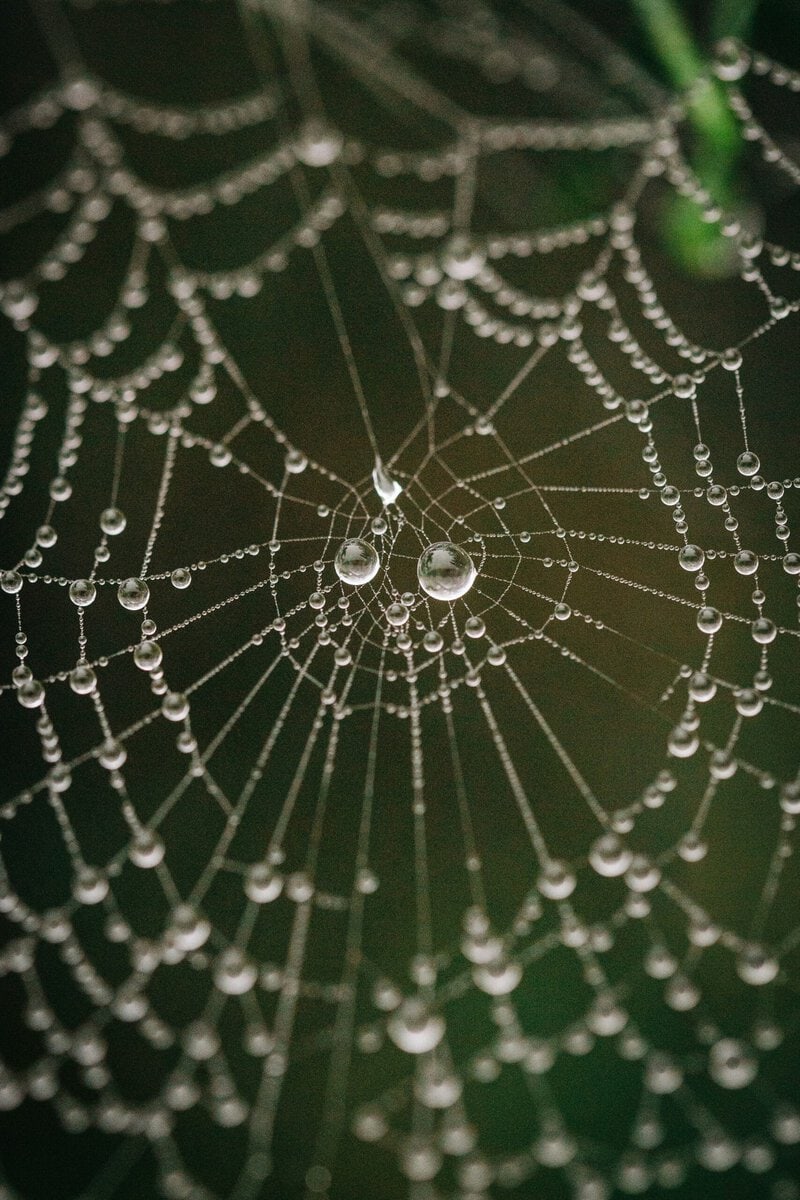
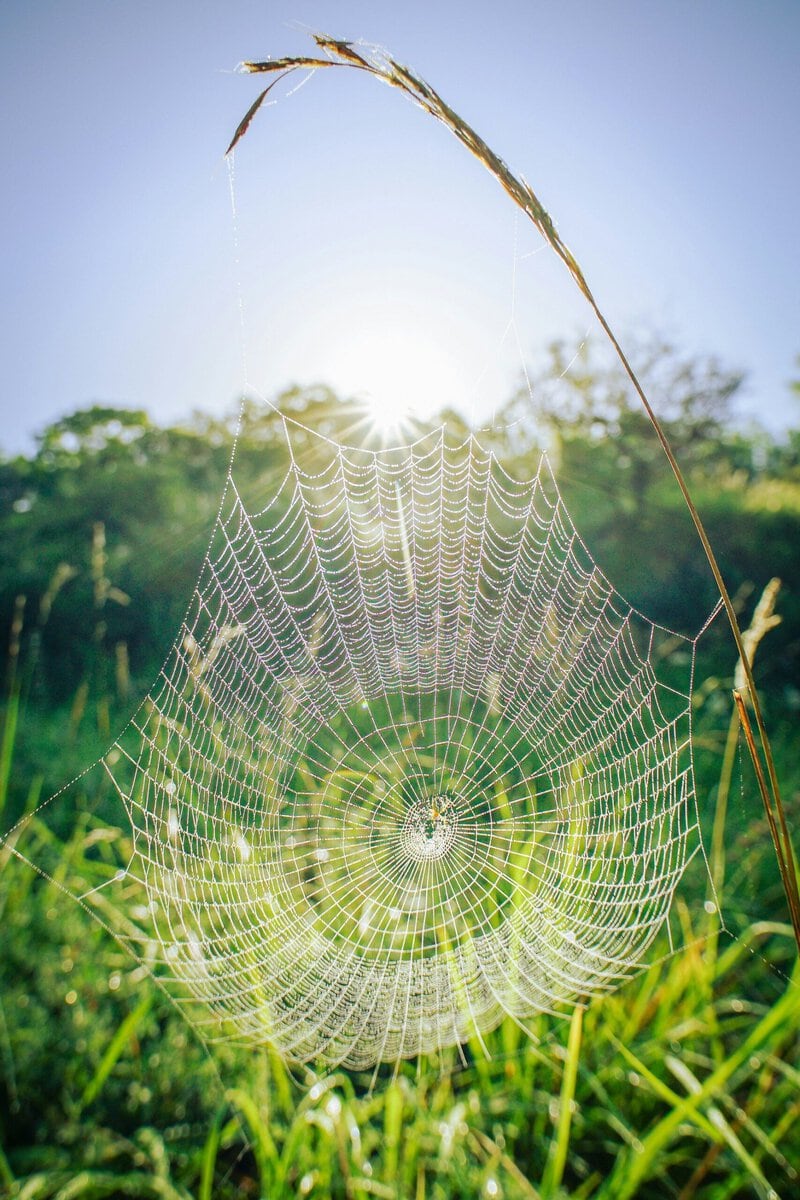
Spider capture silk — the spiral threads of an orb-web, as distinct from the structural frame threads — is coated with hygroscopic glycoprotein droplets. Hygroscopic means these droplets absorb moisture from the surrounding air, keeping them persistently liquid and persistently adhesive. Anything that drifts into the web and contacts those droplets tends to stick: insect legs, plant pollen, dust particles, and, as this study demonstrates, fungal spores and hyphal fragments.
Over the days or weeks that a web remains in place, it accumulates a diverse matrix of environmental material. That matrix — incorporating not just spores but also the organic debris that fungi can colonise — appears to preserve biological material well enough for laboratory culture and DNA extraction. Researchers describe webs as functioning, in effect, as passive environmental samplers that operate continuously without any human intervention after the spider builds them.
It is important, however, to distinguish what is established from what is still being tested. That spider silk is adhesive and physically traps airborne particles is well-documented, basic arachnology. That webs can therefore serve as reliable, repeatable biosamplers for fungi — producing results quantitatively comparable to established methods across different ecosystems and seasons — is an emerging claim that requires substantially more validation before it can be treated as settled.
Inside the Thai Rice-Field Study
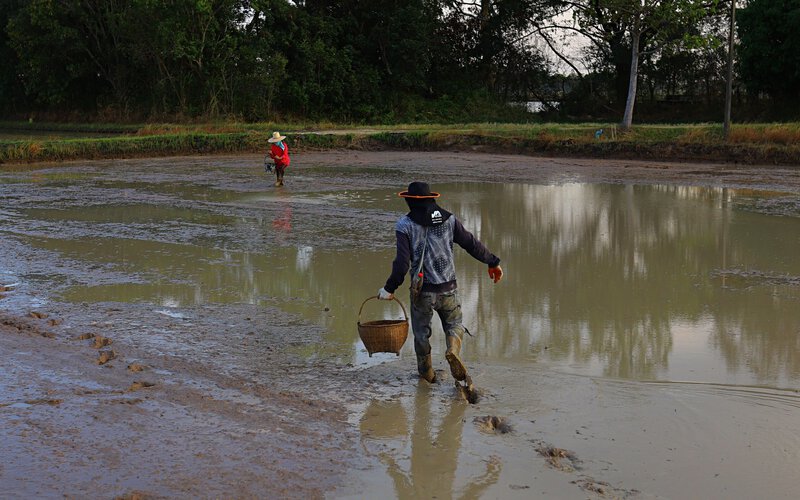
The fieldwork was conducted in Thai rice paddies, a setting chosen for sound scientific reasons. Agricultural rice ecosystems support high ambient fungal loads: decomposing plant matter, wet soils, and the biological activity associated with cultivated fields all generate large quantities of airborne spores. The region also sits within a zone of high agricultural biodiversity, making it a plausible location for encountering fungal species not previously catalogued.
According to EurekAlert’s coverage of the research, the team collected spider webs from these paddies and transported them to the laboratory, where samples were placed onto fungal growth media and cultured under controlled conditions. As colonies developed, researchers identified them through two complementary methods: morphological examination — comparing the physical appearance of spores, structures, and growth patterns against known species descriptions — and DNA barcoding using the ITS region, which stands for internal transcribed spacer. The ITS region is a stretch of fungal DNA that varies enough between species to serve as a reliable molecular identifier and is the standard marker gene used in fungal taxonomy.
The headline result is that several fungal species recovered from the webs do not match any previously described species in reference databases. The finding has drawn wider attention as a demonstration of spider webs’ potential as fungal collection tools. It is essential to note, though, that formally designating a species as new to science requires a detailed published taxonomic description of its characteristics and its distinction from related species, followed by peer review. That process has not yet been completed for the candidate species found in the Thai webs. They are promising unknowns — not yet officially named.
One methodological advantage deserves emphasis: the webs were collecting fungal material passively across the days or weeks they remained in place before researchers harvested them. This means samples represent a time-integrated snapshot of local fungal diversity rather than a single-moment grab. No equipment was deployed in the field, no power source was needed, and no habitat was disturbed during the collection period.
What Makes This Method Potentially Valuable
The contrast with conventional air-spore traps is instructive. Hirst-type volumetric samplers are effective instruments for their intended purpose — quantifying airborne spore concentrations — but they produce dead material. A spore drawn through a mechanical sampler and pressed onto an adhesive surface cannot be cultured. Researchers can identify it morphologically if it is large and distinctive enough, or extract its DNA, but they cannot grow it, study its metabolism, test its susceptibility to antifungal compounds, or investigate its ecological behaviour. Spider webs, by contrast, can yield living cultures. For a new species, a living culture is scientifically far richer than a DNA sequence alone.
The non-destructive dimension of web harvesting also matters in practice. Soil coring removes substrate and can measurably disturb the microbial communities researchers are trying to study. Collecting a spider web removes only the web. Spiders of most species rebuild within hours, meaning the same individual and the same location can, in principle, be sampled repeatedly over time without meaningful ecological impact.
The scalability argument is perhaps the most ambitious aspect of this line of thinking. Spider webs exist in habitats ranging from tropical rainforest canopy to temperate urban gardens to semi-arid scrubland. If the method proves robust, it could in principle be applied anywhere those habitats exist, without the specialised equipment and infrastructure that currently make rigorous fungal surveys expensive and logistically demanding. This would be particularly significant for biodiversity research in low-resource settings, where professional survey capacity is limited.
A critical caveat must accompany all of this. The fungal community recovered from a web reflects not only what was airborne in the surrounding environment but potentially also what the spider itself introduced — from its body surface, from prey it consumed, or from its silk glands. Separating the environmental signal from potential spider-associated contamination requires rigorous controls, replication across multiple webs and sites, and comparison against paired samples collected by established methods at the same locations. None of that validation work has yet been published.
Broader Implications for Mycology and Conservation
The spider-web biosensor concept sits within a small but growing body of research that uses biological structures as passive environmental monitors. Bee pollen loads have been analysed to detect plant diversity and pesticide exposure across foraging ranges. Moth wing scales have been examined as collectors of airborne particles. The underlying logic — that organisms interacting with their environment inevitably accumulate material from it — applies broadly, and mycologists are increasingly alert to its possibilities.
The conservation implications of faster fungal species discovery are not trivial. Undescribed fungal species include potential decomposers that drive nutrient cycling, plant pathogens with unknown agricultural impact, and mycorrhizal partners whose symbiotic relationships with trees and crops remain entirely unstudied. Identifying these organisms is a prerequisite for understanding their ecological roles, and understanding their roles is a prerequisite for managing the ecosystems they inhabit. A method that could accelerate discovery — particularly in agricultural landscapes where fungal diversity intersects directly with food security — has practical value beyond pure taxonomy.
Mycologists increasingly rely on eDNA sampling and citizen-science networks to extend the reach of professional surveys. Spider-web collection is physically simple enough that trained volunteers could plausibly perform it, mailing harvested webs to centralised sequencing facilities in the manner already used by some plant and insect monitoring programmes. Whether the method is robust enough to support that kind of distributed, lower-precision data collection is a question the research community has not yet answered.
What Comes Next
The immediate scientific priorities are straightforward to describe, if not to execute. The candidate new species recovered from the Thai paddies need formal taxonomic treatment: detailed morphological documentation, phylogenetic analysis placing them within the fungal tree of life, and publication in a peer-reviewed taxonomic journal. Until that work is done, they remain informally characterised organisms rather than named members of the scientific record.
The web-sampling protocol itself needs rigorous methodological development. Researchers will need standardised procedures for how webs are collected, stored, and processed — variables that can substantially affect which fungi survive to culture. Controls for spider-associated contamination must be designed and validated. The method must also be tested against paired soil cores and air-trap data from the same sites to determine whether web-derived diversity data are meaningfully comparable to what established techniques capture.
Replication across contrasting ecosystems is equally important. Rice paddies in Thailand are a specific and distinctive environment. Whether spider webs in boreal forest, coastal dune systems, or urban greenspace yield similarly useful fungal samples — and whether those results are comparably interpretable — is genuinely unknown. Generalisability cannot be assumed from a single study conducted in a single habitat type.
Spider webs will not replace established mycological field methods. Soil coring, substrate baiting, volumetric air sampling, and eDNA analysis each capture aspects of fungal diversity that webs cannot. But the Thai rice-field study raises a genuinely novel possibility: that one of nature’s oldest and most common traps may also be one of science’s newest and most accessible discovery tools — waiting in millions of corners, fields, and forest edges for researchers to start paying closer attention to what those threads have already caught.