7. Exoplanets in Habitable Zones
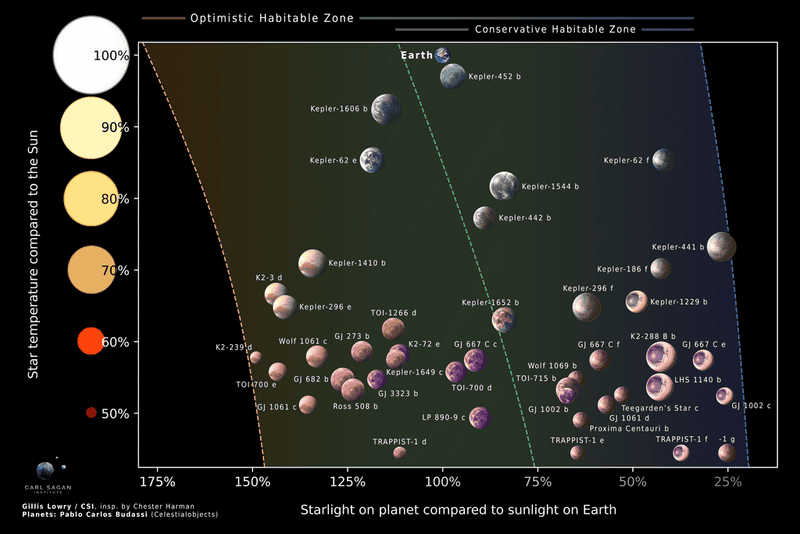
Telescopes like Kepler and TESS have uncovered thousands of exoplanets, with dozens located in their star’s habitable zone—the region where liquid water could exist. Some exoplanets have Earth-like sizes and conditions, making them prime targets for future life detection. For instance, Kepler-22b, discovered by Kepler, is about 2.4 times the radius of Earth and orbits in the habitable zone of a star similar to our sun. (jpl.nasa.gov) Similarly, TESS identified TOI-700 e, an Earth-sized planet in the habitable zone of its star. (jpl.nasa.gov) These findings suggest that Earth-like planets may be common, increasing the likelihood of discovering extraterrestrial life.