9. Myrmeconema neotropicum
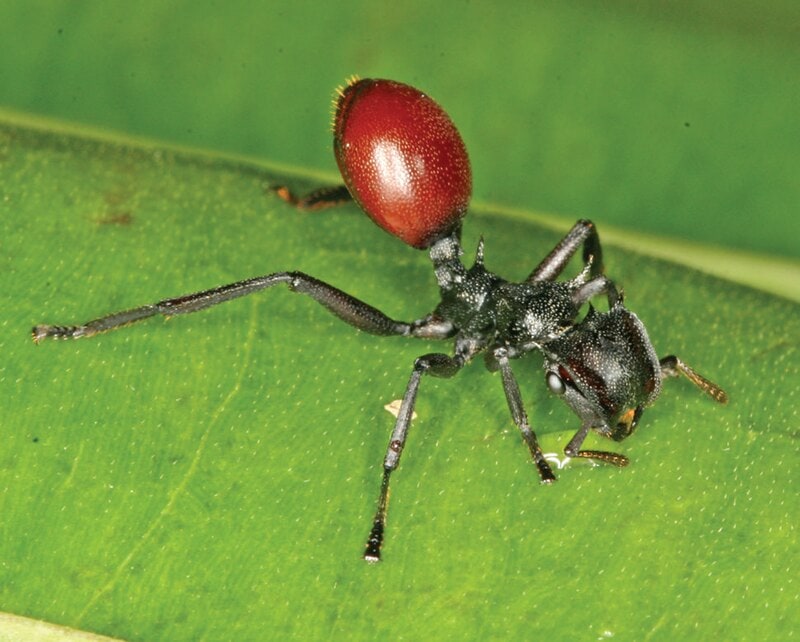
The nematode parasite Myrmeconema neotropicum infects the tropical ant Cephalotes atratus, inducing a striking transformation. Upon infection, the ant’s normally black abdomen, or gaster, becomes bright red, resembling a small berry. Infected ants exhibit altered behaviors, such as reduced aggression and a tendency to hold their gaster elevated, making them more conspicuous. This mimicry attracts frugivorous birds, which consume the infected ants, facilitating the parasite’s transmission through the bird’s digestive system. The cycle completes when ants collect the parasite eggs from bird feces and feed them to their brood. This phenomenon represents a rare instance of parasite-induced fruit mimicry in an animal host. (nationalgeographic.com)