
The human brain contains roughly 86 billion neurons, each forming thousands of connections — a web of staggering complexity that has resisted scientific understanding for centuries. Now, a team at Stanford University is attempting something that once belonged firmly in science fiction: building a working digital model of it. What would it mean if they succeeded?
The Most Complex Object in the Universe Is Getting a Digital Twin
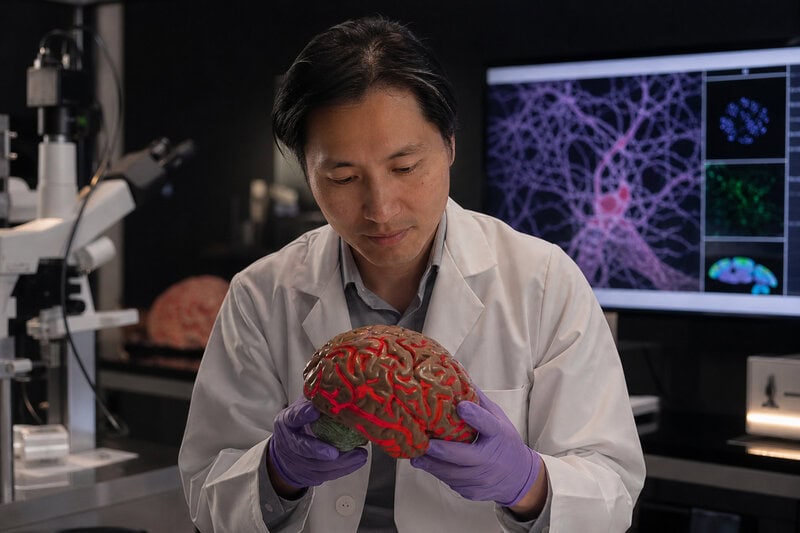
We have mapped the surface of Mars, split the atom, and decoded the human genome. Yet the three pounds of tissue sitting inside the human skull remains, in many fundamental ways, a mystery. Scientists can observe the brain, stimulate it, and measure its electrical activity — but a true predictive understanding of how it generates thought, emotion, memory, and disease has remained out of reach.
That is the gap the Stanford Digital Brain Project is trying to close. Launched by Wu Tsai Neuro at Stanford, it ranks among the most ambitious scientific undertakings of this era: an effort to build computational models of human brain function so accurate and so detailed that the simulation begins to behave like the real thing. The driving question behind the project is a profound one — what happens when scientists finally construct a working model that predicts, reacts, and mirrors the activity of a living human brain?
What the Stanford Digital Brain Project Actually Is — and Isn’t
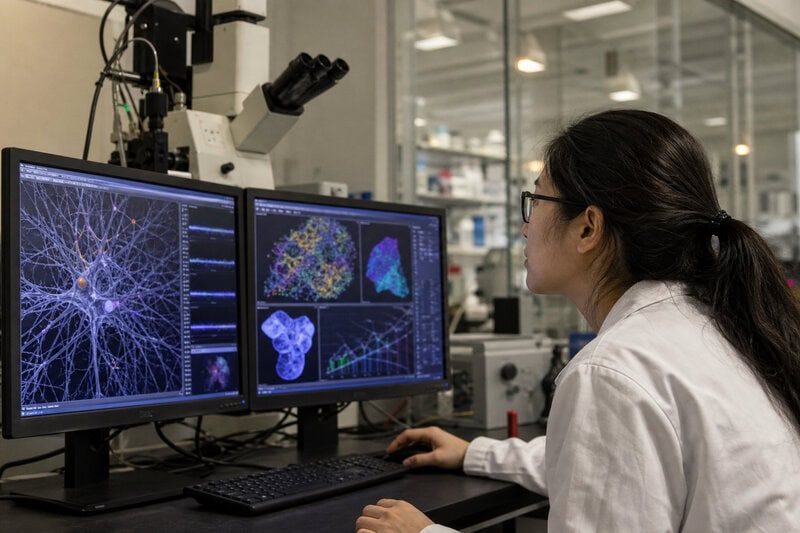
Before imaginations race toward science-fiction scenarios of uploading consciousness, it is worth being precise about what this project actually is. The Stanford Digital Brain Project is not an attempt to digitize a person’s mind or create artificial sentience. It is a rigorous scientific initiative aimed at building predictive computational models of human brain function — tools that can forecast how neural circuits respond to stimuli, how they break down in disease, and how they might be repaired.
Central to the project’s technical vision is the concept of a “large brain model.” The idea draws a deliberate analogy to large language models in artificial intelligence: just as systems like ChatGPT were trained on vast quantities of text to learn the structure of language, a large brain model would be trained on diverse brain imaging data to learn the structure of cognition. The result would be a foundation model — a broad, pre-trained system that can then be fine-tuned for specific tasks, whether studying memory formation, mapping the neural fingerprint of depression, or predicting seizure onset in epilepsy.
The project carries a dual mission. On one side is fundamental neuroscience — advancing the basic understanding of how the brain works. On the other is clinical translation — using that understanding to accelerate new treatments for brain disorders including Alzheimer’s disease, depression, and epilepsy. Wu Tsai Neuro at Stanford serves as the institutional engine driving and coordinating the initiative, bringing together neuroscientists, engineers, and computational researchers under one roof. The full scope of the project is outlined in Wu Tsai Neuro’s announcement.
The Sensor That Makes It Possible: OPM-MEG Explained
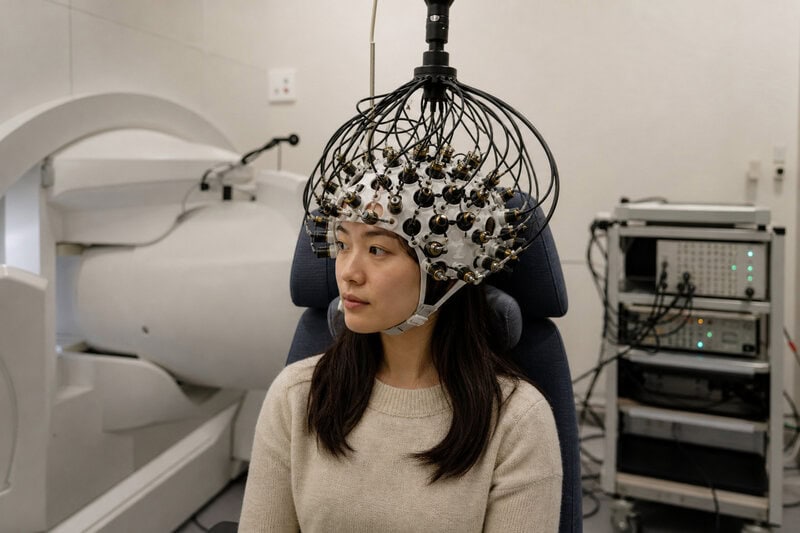
Every ambitious model is only as good as the data feeding it. For the Stanford Digital Brain Project, the primary data-collection technology is optically pumped magnetometer magnetoencephalography — OPM-MEG for short. Understanding why this matters requires a brief contrast with older brain-scanning methods.
Traditional brain imaging tools come with significant trade-offs. Functional MRI offers excellent spatial detail but is sluggish, capturing brain activity across seconds rather than milliseconds — far too slow to track the rapid firing of neural circuits in real time. Conventional MEG systems capture the magnetic fields produced by neural activity with impressive speed, but they require participants to sit perfectly still inside bulky, fixed hardware. Those conditions are far removed from how brains actually operate in daily life.
OPM-MEG changes that equation in two important ways. First, the sensors are lightweight and wearable, allowing participants to move naturally during recordings — sitting, gesturing, or interacting — rather than lying motionless in a scanner. Second, they capture the faint magnetic fields generated by neural firing with high temporal and spatial resolution, producing a richer and more naturalistic picture of brain activity than conventional MEG can achieve.
That naturalness matters enormously for the quality of the resulting data. A brain sitting rigidly still in a clinical machine is not behaving the way it does when a person is having a conversation, solving a problem, or experiencing an emotion. The more faithfully the data reflects real-world brain dynamics, the more accurate the computational model built from it will be. The logic is straightforward: you can only build a faithful digital brain if you first listen to a real one with extraordinary precision.
How Scientists Are Mapping the Human Brain, Layer by Layer
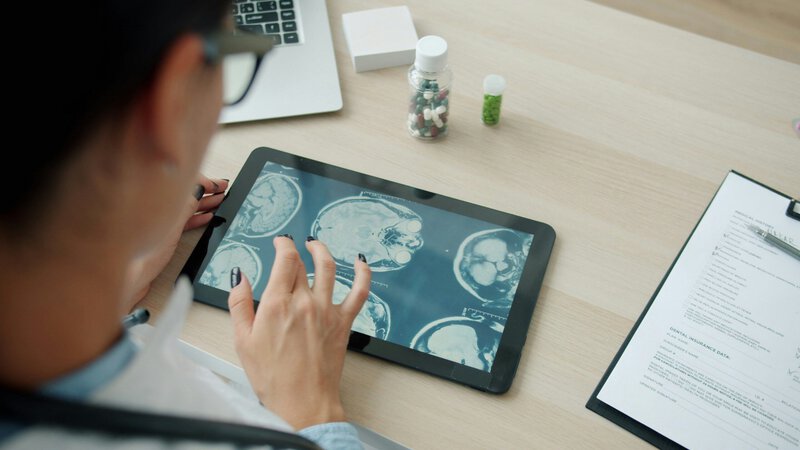
The data pipeline the project envisions works in stages. OPM-MEG recordings are collected from a diverse range of participants — varying in age, background, and neurological profile — and fed into machine-learning frameworks designed to detect patterns of brain activity that hold across individuals. The goal is not to model any single brain, but to learn the shared computational principles that underlie human cognition broadly.
The foundation model approach gives the project its scalability. A model pre-trained on broad brain data can be fine-tuned to study specific cognitive states or disease conditions, much the way a large language model trained on general text can be adapted to answer medical questions or analyze legal documents. Just as those systems learned language by processing millions of examples, the digital brain would learn cognition by processing the recorded activity of thousands of real human brains.
Diversity in data collection is not merely a scientific nicety here — it is a prerequisite for the model’s usefulness. A model built primarily on data from a narrow demographic would reflect only that group’s neural patterns, limiting its clinical and scientific applicability. The project’s emphasis on collecting data across ages, backgrounds, and neurological profiles is precisely what separates a genuinely universal tool from a scientific curiosity with limited reach.
When the Simulation Starts Behaving Like the Real Thing
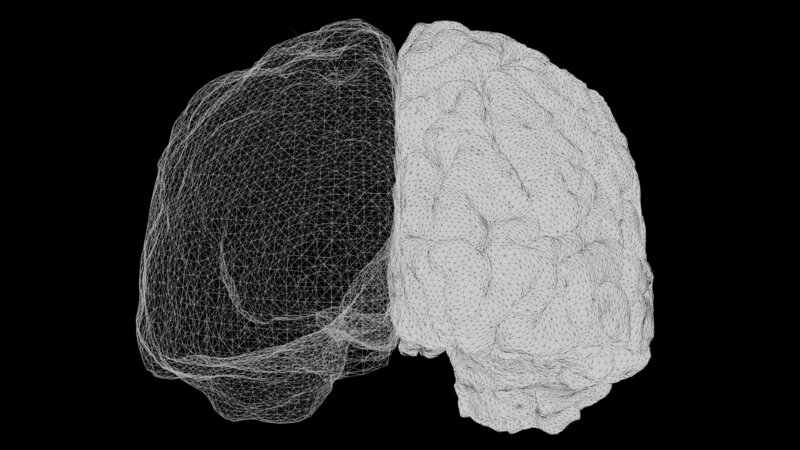
What does it actually mean for a brain simulation to “behave like” a real brain? In scientific terms, it means the model generates predictions about neural responses that, when tested against actual measured brain activity, converge rather than diverge. Researchers present the model with a stimulus — a sound, a visual pattern, a cognitive task — and compare the activity it predicts against what real brains show under the same conditions. The closer the match, the more confident researchers can be that the model is capturing genuine brain dynamics rather than artifacts of its training data.
One of the more striking possibilities in this kind of work is the emergence of behaviors researchers did not explicitly program. When a simulation reproduces patterns that mirror established findings in neuroscience — without being instructed to do so — it suggests the model has learned something real about how the brain organizes itself. These emergent properties are among the most compelling indicators that a simulation is moving from mere approximation toward genuine predictive power.
It is equally important to be direct about what the model is not. It is not conscious. It is not sentient. It does not experience anything. It is a predictive scientific instrument — powerful and potentially transformative, but a tool rather than a mind. Conflating the two would misrepresent both the science and its limitations.
Why This Could Transform Treatment for Brain Disorders
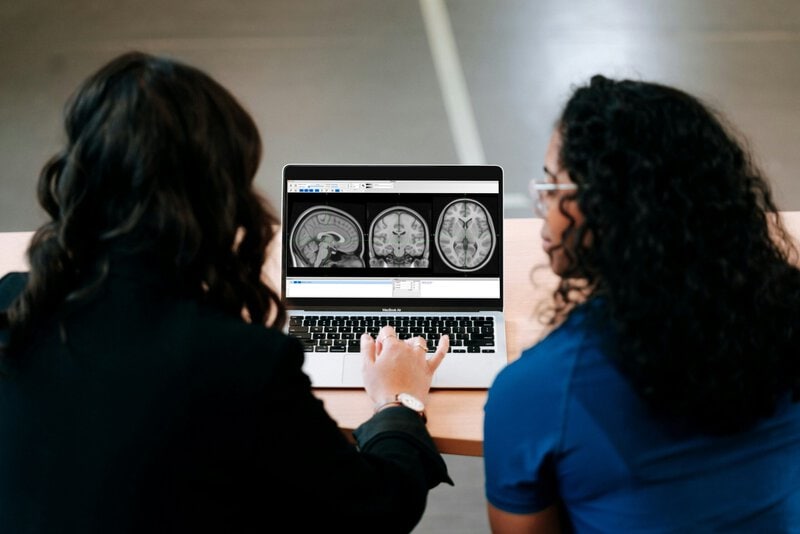
The clinical implications of a reliable computational model of the human brain are significant and concrete. Drug development for neurological and psychiatric conditions is notoriously slow, expensive, and prone to failure, in part because researchers currently have no reliable way to test how a compound will alter neural circuit activity before committing to costly human trials. A validated brain simulation could change that calculus — allowing researchers to model, virtually, how a new antidepressant reshapes activity in circuits linked to mood regulation, or how a proposed intervention might suppress the abnormal firing patterns that precede a seizure.
The longer-term vision extends into personalized medicine. A model calibrated to an individual patient’s brain data could help clinicians identify the right treatment, at the right dose, at the right time — moving psychiatry and neurology closer to the kind of precision that oncology has begun to achieve through genomic profiling. Patients with treatment-resistant depression, for example, might one day benefit from simulations that predict which of several therapies is most likely to produce a response before any drug is administered.
For a detailed walkthrough of the scientific vision behind the project, the recorded conversation with Stanford researchers Dan Yamins and Russ Poldrack covers the thinking behind both the modeling approach and the clinical ambitions in depth.
The Hard Questions This Project Still Has to Answer
Honesty about timelines and limitations is essential. A full, validated, predictive model of human brain function is years away — quite possibly decades. The Stanford Digital Brain Project is foundation-laying work, not an imminent product. The science of how much biological detail a simulation must capture to be genuinely predictive remains actively debated. There is a real risk that increasing model complexity becomes unmanageable: a model of everything may paradoxically explain nothing, collapsing under its own dimensionality rather than illuminating the principles researchers are after.
There are also ethical dimensions the project will need to confront directly and early. Brain recordings are among the most intimate forms of personal data imaginable, encoding information about cognitive states, emotional responses, and potentially clinical vulnerabilities. Questions of informed consent, data privacy, secondary use, and long-term security are not peripheral concerns — they are central to whether this science can be conducted in a way that earns and sustains public trust. As models grow more sophisticated, philosophical questions about what it means to simulate a mind will also move from the margins of academic debate toward the center of public conversation, and the scientific community should be prepared to engage them seriously rather than dismiss them as premature.
None of this diminishes what is being attempted. Every great scientific program — the Human Genome Project, the Hubble Space Telescope, the Large Hadron Collider — once appeared impossibly ambitious to skeptical contemporaries and delivered results that reshaped entire fields. The Stanford Digital Brain Project is still in its earliest chapters. But the question it is asking — can we build a model of the brain that genuinely predicts how the brain works — may be one of the most consequential scientific questions of this century. And for the first time, the tools to seriously pursue it are within reach.