
Inside a research park nestled in the heart of Silicon Valley, a pilot straps into a simulator cab and begins a descent — not toward a runway, but toward a virtual lunar surface. This is how NASA prepares for what could be the most consequential landing since December 1972, and it is happening right now in Mountain View, California.
The First Crewed Moon Landing in Over 50 Years
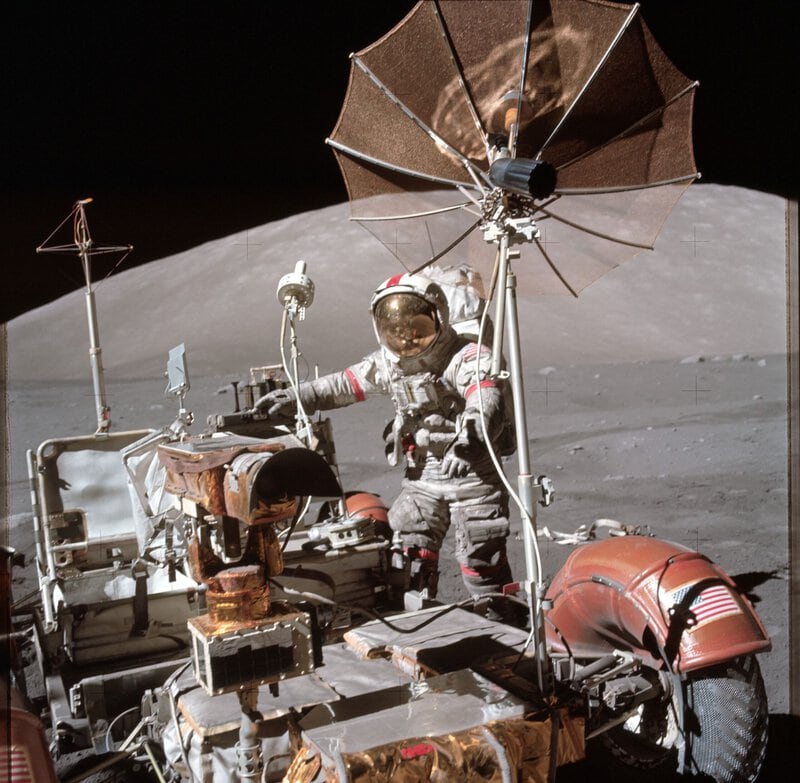
The last time human boots touched the Moon, the world was watching Apollo 17. No astronaut currently active in NASA’s corps has ever stood on the lunar surface. That is about to change. NASA’s Artemis program is targeting a crewed Moon landing in 2028, and the weight of that milestone is difficult to overstate — more than half a century of waiting, compressed into a mission where the margin for error is essentially zero.
Artemis is not a replay of Apollo. The mission targets the lunar south pole, a region of extreme terrain, permanently shadowed craters, and environmental conditions that no crewed spacecraft has ever navigated. The mission profile adds further complexity: after launching aboard NASA’s Space Launch System rocket, the Artemis crew will travel aboard the Orion spacecraft before transferring to a dedicated lunar lander — developed by SpaceX as the Human Landing System — for the final descent to the surface. That handoff between spacecraft creates a distinct and demanding operational phase, one that requires intensive preparation long before any rocket leaves the launchpad.
That preparation is well underway, and much of it is rooted in Mountain View.
NASA Ames Research Center: The Simulation Hub Driving Artemis Readiness
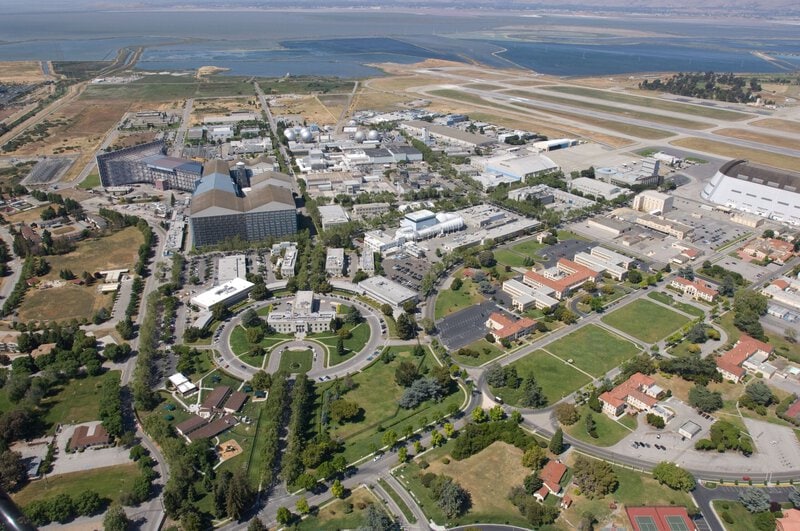
NASA Ames Research Center has anchored the agency’s work in aeronautics, human factors, and simulation science since 1939. Its location in Silicon Valley is not incidental — the center benefits from proximity to some of the world’s most advanced aerospace and technology partners, whose contributions sharpen the fidelity of every simulation run. But what makes Ames uniquely indispensable to Artemis mission preparation is a machine unlike almost anything else on Earth.
The Vertical Motion Simulator at NASA Ames is among the largest and most capable flight simulators in the world. Driven by powerful motors and hydraulic systems, it moves a simulator cab through multiple axes of motion — vertically, laterally, and longitudinally — generating the kind of physical feedback that trains instinct alongside knowledge. Fixed simulators can teach procedures; the Vertical Motion Simulator can make a pilot’s body believe it is actually decelerating under Moon gravity, roughly one-sixth of what we experience on Earth. That distinction is critical when rehearsing a landing that offers no second approach and no rescue mission waiting in orbit.
What Astronauts Are Actually Practicing Inside the Simulator
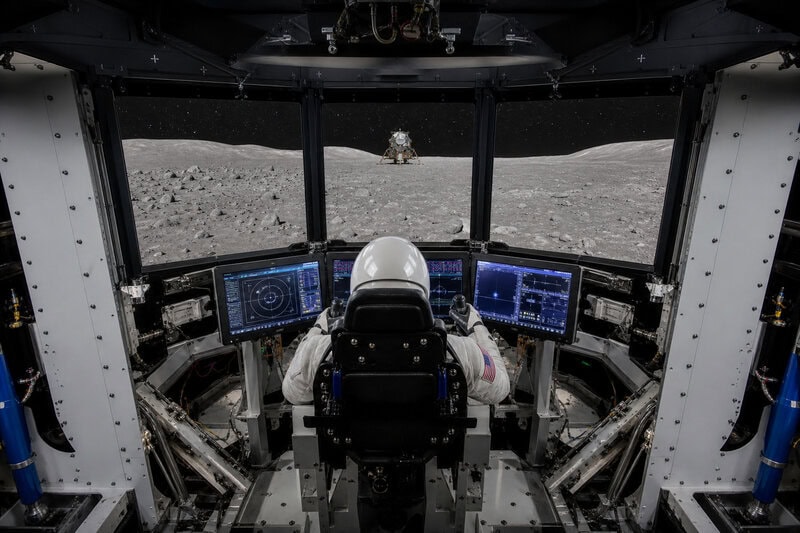
Each session inside the Vertical Motion Simulator places pilots and astronauts inside a lunar landing scenario built from real mission parameters. They manage the final descent phase — a stage of the mission where the roughly 1.3-second one-way communication delay between the Moon and Earth makes real-time guidance from the ground effectively impossible for rapid corrective decisions. Those calls have to be made in the cab, in the moment, by the crew.
Astronauts rehearse correcting off-nominal approaches, practicing the judgment calls that determine whether to continue a descent or abort it cleanly. The simulator also helps crews mentally and physically rehearse the transition from Orion to the lunar lander — a mission phase with no direct historical precedent in crewed spaceflight. Every run generates performance data. Engineers use that data to refine cockpit interface designs, adjust automated assist systems, and recalibrate where software support should end and human judgment must take over.
As reporting on NASA Ames’ lunar landing simulator work has detailed, the simulator is not a training tool in isolation — it is a direct input into the engineering decisions shaping the lander itself. Findings from simulator runs have already fed back into interface design choices, influencing how information is presented to the crew during the critical final minutes of descent.
The Problems Being Solved Right Now
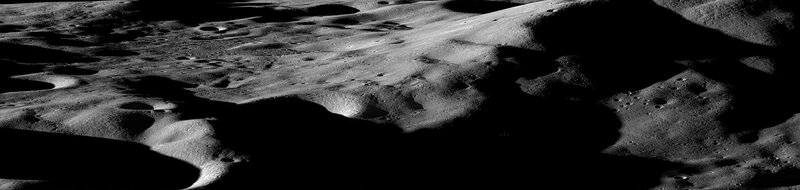
Simulation work at Ames is actively addressing several challenges specific to a crewed lunar south pole landing — challenges that simply did not exist for the Apollo missions of the 1960s and 1970s, all of which targeted equatorial sites under far more forgiving lighting and terrain conditions.
- Dust behavior during descent: The Moon’s surface material, called regolith, behaves in ways that have no earthly equivalent. A lander’s descent engines will kick up blinding plumes of fine particles during the final approach, potentially obscuring the surface entirely. Simulations help define how pilots should respond when visual reference disappears in the seconds before touchdown.
- Extreme lighting at the south pole: Sunlight at the lunar south pole strikes at a low, raking angle year-round, casting long shadows that fundamentally distort depth perception and make terrain features difficult to read. Simulator sessions are helping astronauts learn to interpret surface cues under those unusual lighting conditions before they encounter them for real.
- Autonomous landing assistance: Engineers are using simulator runs to test and validate the algorithms designed to assist with autonomous landing — identifying precisely where software should support the crew, and equally important, where human judgment must remain unambiguously in the loop.
- Failure mode rehearsal: Every scenario that fails safely inside a simulator in Mountain View is a failure mode that will not catch the crew off guard 239,000 miles from home. The breadth of failure scenarios being rehearsed is significantly wider than anything attempted during Apollo-era training.
The human factors dimension of this work is equally significant. Ames researchers study not just whether astronauts can land the spacecraft under controlled conditions, but whether they can do so reliably under the compounding pressures of fatigue, physical stress from the transit, and compressed decision timelines. Coverage of NASA Ames’ moon landing simulator preparation underscores how seriously the center takes that human reliability question as the 2028 target approaches.
A Legacy of Shaping Real Missions

The Vertical Motion Simulator at NASA Ames has a documented record of influencing real vehicles and real missions. It contributed to Space Shuttle approach and landing testing in the 1970s and 1980s. It has informed the development of modern commercial transport aircraft, including work on handling qualities that eventually shaped certification standards. The institutional knowledge embedded in Ames — in its researchers, its engineers, and its simulation infrastructure — represents decades of rigorous study of how human beings interact with complex machines under demanding and novel conditions.
Artemis is the next chapter in that history, and by most measures the most demanding one yet. The lunar south pole presents terrain complexity and environmental variability that exceed anything previously tested in the facility. But the methodology remains the same: simulate exhaustively, identify every failure mode, feed findings back into design and training, and repeat until the crew has mentally lived through hundreds of versions of each critical moment before it arrives for real.
What Success Looks Like — and What Comes After
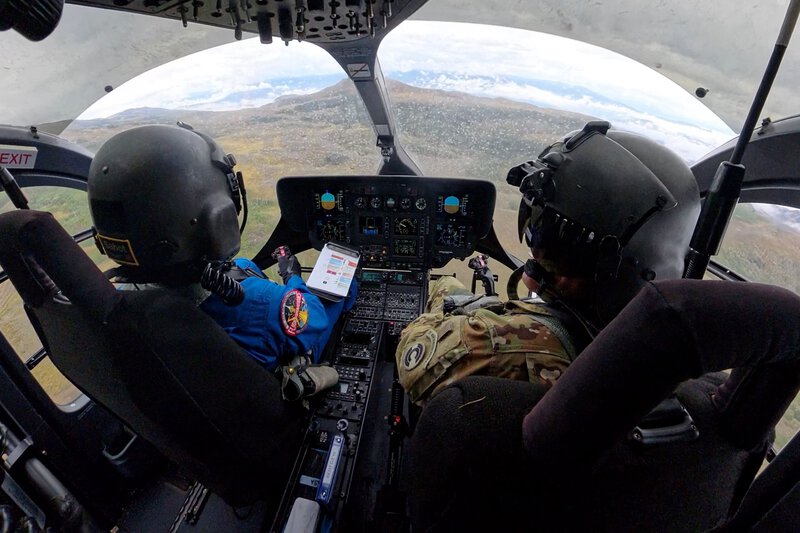
When the Artemis lunar lander begins its final descent in 2028, the crew inside it will not be encountering those seconds for the first time. They will have rehearsed them, failed through them safely in Mountain View, and refined their responses across hundreds of simulator sessions grounded in real engineering data. The goal of this work is not confidence in the abstract — it is preparation that is specific, physical, and directly connected to the systems the crew will actually operate.
The implications extend well beyond a single mission. Artemis is explicitly designed as a proving ground for the human systems and technologies intended to eventually support crewed missions to Mars. The communication delays, extreme terrain, and autonomous decision-making demands of a lunar south pole landing are, in many respects, a rehearsal for challenges that will be even more severe on an interplanetary mission. Every lesson learned about landing humans safely on an alien surface will apply, in some form, to every deep-space mission that follows.
The most technically complex crewed lunar landing in history will succeed or fail in moments measured in seconds. Right now, in a simulator cab in Mountain View, California, NASA is making sure every one of those seconds has already been lived.