
In 1999, a working-age adult living in rural America was roughly 6% more likely to die from natural causes than a peer in a city — a modest gap that barely registered in public-health circles. By 2019, that same figure had climbed to 43%, representing a nearly sevenfold widening of the rural-urban mortality gap in just two decades, a pace that has startled even veteran epidemiologists tracking the trend.
A Widening Gap With Structural Roots
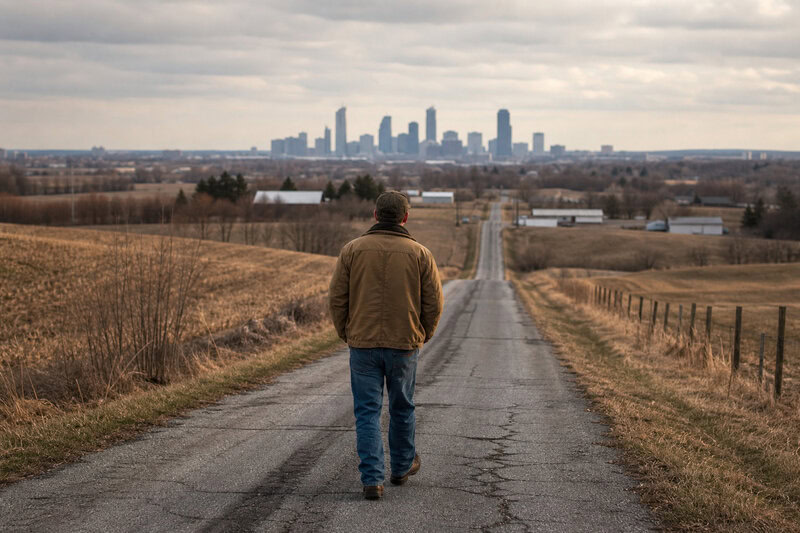
New research covered by Newswise examined natural-cause deaths among Americans aged 25 to 54 — prime working years when mortality from non-accidental causes should, in a well-functioning health system, be relatively low. The fact that rural adults in this age bracket are dying at rates so dramatically elevated compared to urban counterparts is not a statistical blip. It is a generational shift, one that has redrawn the map of American health inequality in ways policymakers are only beginning to reckon with.
The study’s central argument cuts against familiar explanations. Researchers do not pin the divergence on genetics, personal lifestyle choices, or rural culture in isolation. Instead, they identify two structural forces as the primary drivers: chronic psychosocial stress — the relentless, low-grade activation of the body’s threat-response systems — and the deterioration of physical infrastructure, including hospitals, schools, broadband networks, and the economic institutions that sustain community life. Understanding why rural Americans die younger requires grappling with both forces and the ways they reinforce each other.
What Is Actually Killing Rural Americans

The causes of death driving the gap are not mysterious. The largest urban-rural differences in cause-specific mortality cluster around heart disease, cancer, and chronic lower respiratory disease — conditions with well-documented ties to prolonged physiological stress, delayed diagnosis, and limited access to specialty care. These are diseases that medicine knows how to slow and sometimes prevent. The tragedy is that rural Americans are not receiving interventions that make that possible at anything close to the rate their urban counterparts are.
Suicide rates tell a parallel and equally troubling story. Rural areas recorded 28.69 deaths per 100,000 residents compared to 20.20 in urban areas — a statistically significant difference that points directly to failures in both mental-health infrastructure and the social conditions that sustain psychological resilience. Research on rural-urban suicide mortality disparities identifies this gap as one of the starkest expressions of unequal access to psychiatric care in the United States. The West registers the highest rural suicide mortality rates among U.S. regions, a finding that reflects how geography compounds isolation: sparse population density translates into longer distances to any care provider, making help structurally harder to reach even when a person actively seeks it.
A gradient effect adds additional weight to the infrastructure hypothesis. The more rural a county, the steeper the rise in prime working-age natural-cause mortality over time. This dose-dependent relationship — more remoteness, more mortality — suggests that geographic isolation functions as a risk factor in its own right, not merely a proxy for poverty or demographics. It is a pattern consistent with what researchers describe as a deepening crisis in rural health disparities.
The Biology of Being Left Behind: How Chronic Stress Becomes Disease
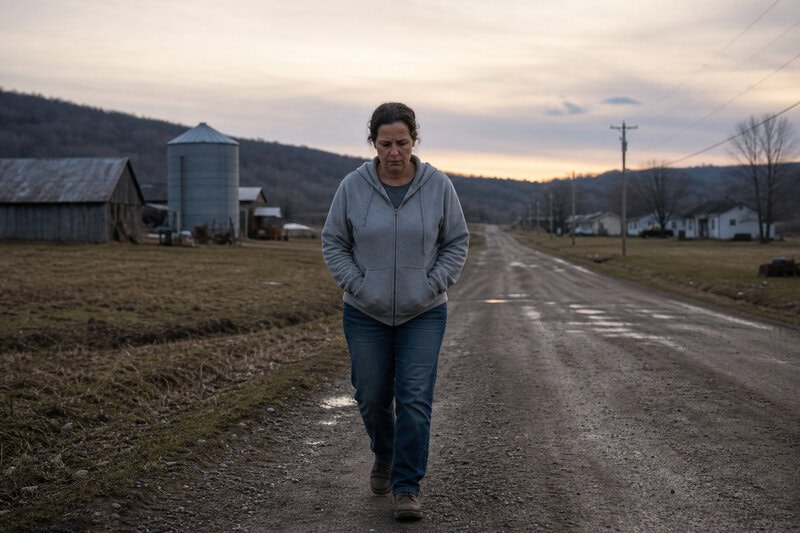
To understand the mechanism linking structural disadvantage to early death, researchers draw on the concept of allostatic load — the cumulative wear and tear on the body from repeated or chronic activation of its stress-response systems. The term emerged from the MacArthur Network on Socioeconomic Status and Health and has since become a cornerstone framework in social epidemiology. High allostatic load is not a metaphor for feeling stressed; it is a measurable physiological state associated with elevated risk of cardiovascular disease, immune dysfunction, and accelerated cellular aging.
The biological pathway runs through the hypothalamic-pituitary-adrenal (HPA) axis, the hormonal cascade that governs the body’s response to perceived threats. When the HPA axis is chronically activated — as it is under conditions of persistent economic uncertainty, social isolation, or a felt sense of lacking control over one’s circumstances — it sustains elevated cortisol and related stress hormones in the bloodstream. Over months and years, that hormonal environment accelerates arterial inflammation, suppresses the immune system’s capacity to detect early-stage tumor cells, and damages lung tissue. This maps directly onto the top killers appearing on rural death certificates: heart disease, cancer, and chronic lower respiratory disease.
Economic precarity, social isolation, and perceived powerlessness — conditions disproportionately common in post-industrial rural counties that have lost manufacturing, mining, or agricultural employment — are each independently associated with sustained HPA activation. That said, intellectual honesty requires a distinction here: the link between chronic stress and cardiovascular disease is consensus-level science, replicated across dozens of longitudinal studies. The direct causal chain from specific rural infrastructure deficits to measurable allostatic load in this population is a newer and still-accumulating body of evidence — compelling in its direction but not yet definitive in its magnitude.
Infrastructure as a Health Variable: The Roads, Clinics, and Schools That Are Not There

Rural communities face documented disparities across core social determinants of health — education access and stable housing — compounded by low or declining local tax bases that limit governments’ capacity to fund remediation. These are not abstract policy concerns. They translate into concrete, measurable delays in care.
Hospital closures serve as perhaps the most visible proxy for infrastructure collapse. More than 140 rural hospitals have closed since 2010, according to the Chartis Center for Rural Health. A cardiac emergency that is survivable in a city with a hospital twelve minutes away can become fatal when the nearest emergency room is 60 miles down a two-lane road in winter. Cancer screenings that catch disease at Stage I in well-served communities are simply not available on a routine basis to many rural residents, pushing diagnoses to later and less treatable stages.
Education deficits matter biologically as well as economically. Lower educational attainment is independently associated with higher allostatic load, shorter telomeres — a cellular marker of biological aging — and reduced health literacy that delays symptom recognition. A person without adequate health education is less likely to seek care before a warning sign becomes a fatal event.
These dynamics create a self-reinforcing cycle that is difficult to interrupt. Population loss reduces municipal tax revenue, which degrades public services, which accelerates the out-migration of younger and healthier residents who have options elsewhere, which further concentrates morbidity and mortality among those who remain. Analysis from the USDA Economic Research Service on the rural-urban mortality gap underscores this compounding dynamic as central to understanding why the divergence has widened so rapidly.
Suicide and the Mental-Health Infrastructure Desert

The rural suicide rate of 28.69 per 100,000 represents not merely a measure of individual despair but a systems failure with a documented structural cause. The Health Resources and Services Administration estimates that more than 60% of rural Americans live in federally designated mental-health professional shortage areas — regions where the ratio of psychiatrists, psychologists, and licensed counselors to population falls far below recommended thresholds. When a person in crisis has no accessible provider within a reasonable distance, the outcome of that crisis is determined in part by geography.
Researchers are careful to flag that infrastructure investment alone cannot fully close this gap. Stigma around mental illness in close-knit rural communities creates an additional barrier — one that is real, documented, and resistant to purely logistical solutions. Acknowledging this complexity is not a reason for inaction; it is a reason to design interventions that address both the availability of services and the community conditions that determine whether people actually use them.
Telehealth expanded rural mental-health access during the COVID-19 pandemic, and early data suggest measurable uptake in rural mental-health consultations via digital platforms. However, broadband deserts — areas without reliable high-speed internet — limit the reach of these solutions in precisely the communities where need is highest. The elevated Western regional suicide rates likely reflect compounding factors: extreme geographic isolation, economic dependence on volatile extractive industries such as mining and timber, and means-availability considerations that suicide researchers identify as significant in high-firearm-ownership regions.
What the Evidence Says About Solutions — and What It Does Not

Place-based federal investment targeting rural broadband, critical-access hospital funding, and rural workforce education incentives has strong theoretical support from social-determinants research. Solutions for persistent rural public-health challenges outlined by the CDC emphasize that such investments address root causes rather than symptoms. Rigorous longitudinal outcome data demonstrating measurable mortality reduction from these specific programs remain limited, however, and that limitation should not be obscured by policy enthusiasm.
Community health worker models, in which trained local residents extend clinical reach into underserved areas, have shown statistically significant reductions in cardiovascular risk markers in rural pilot programs. Sample sizes in these studies are typically small, which constrains how confidently findings can be generalized, though the directional evidence is encouraging and warrants larger trials.
Treating stress reduction as a population-level policy target is newer and more contested territory. Some public-health economists argue that economic stability programs — rural small-business incentives, broadband-enabled job creation, agricultural support structures — may reduce allostatic load at population scale by addressing the underlying conditions that sustain chronic HPA activation. This is an intellectually serious hypothesis, but it awaits the controlled study designs needed to test it rigorously.
Researchers across the field are consistent on one point: the rural versus urban life expectancy divergence reflects decades of disinvestment and structural change. No single intervention will reverse in years a trend that widened over two decades. Policymakers and journalists alike should be skeptical of single-cause narratives and of proposed quick fixes that do not engage with the complexity the evidence reveals.
Why This Matters Beyond Rural ZIP Codes
Approximately 46 million Americans — roughly 14% of the total population, according to the U.S. Census Bureau — live in rural areas. Their premature deaths represent a measurable drag on national productivity, caregiver capacity, and the long-term fiscal health of public systems that depend on a working-age population. This is not a regional problem that urban Americans can observe from a distance without consequence.
The rural-urban mortality gap also functions as a bellwether for broader inequality trends. The structural forces driving it — deindustrialization, tax-base erosion, healthcare market consolidation, and the geographic sorting of economic opportunity — are beginning to affect smaller suburban and exurban communities as well. What is happening in the most rural counties today may be a leading indicator of what arrives elsewhere tomorrow.
The core finding from the emerging research is precise and, if the evidence holds, actionable: the divergence in rural and urban life expectancy is not primarily biological or the result of individual behavioral choices. It is infrastructural and psychosocial in origin, which means it is, in principle, addressable through targeted structural investment and sustained policy attention. The science is still developing, and intellectual honesty requires holding two truths simultaneously — the crisis is real and urgent, and reversing it will require evidence-guided commitment measured in years and decades, not election cycles.