
In June 2024, astronauts aboard the International Space Station were forced to take emergency shelter in docked spacecraft as orbital debris threatened a near-collision with the outpost — a stark reminder that the most complex structure humanity has ever placed in orbit is also, unmistakably, showing its age. That same week, NASA confirmed it had selected a SpaceX vehicle to execute the station’s final deorbit burn, a pairing of events that captured the central tension of this moment in spaceflight history: the ISS is simultaneously still essential and already on its way out.
Twenty-Five Years of Wear in the Harshest Environment Known
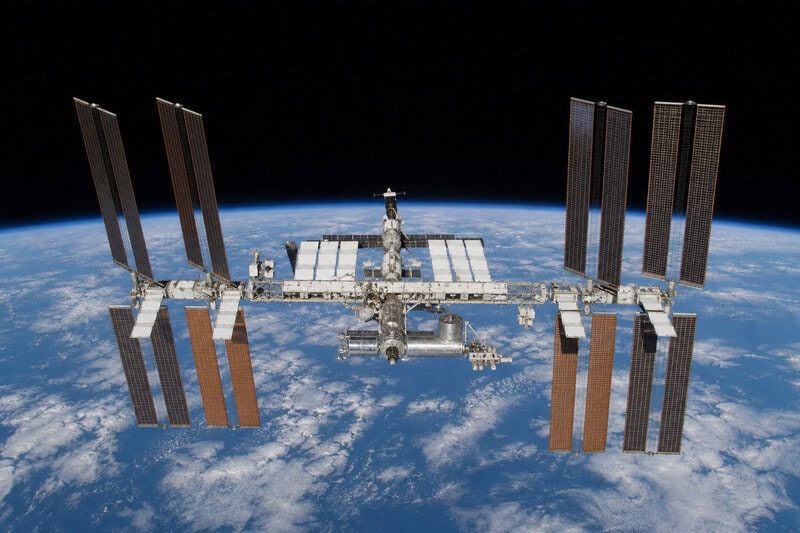
The International Space Station is roughly the size of an American football field, orbits Earth at approximately 17,500 miles per hour, and has been continuously inhabited since November 2000. Those headline facts are familiar. Less appreciated is what a quarter-century of operation in low Earth orbit actually does to hardware.
The station has completed approximately 175,000 orbits of Earth. Each orbit subjects its metal framework, seals, and joints to a full thermal cycle — temperatures swinging from roughly 250 degrees Fahrenheit in direct sunlight to negative 250 degrees Fahrenheit in shadow, sometimes within minutes. Engineers refer to the cumulative damage as thermal cycling stress: the repeated expansion and contraction of materials that gradually opens microcracks, degrades seals, and weakens structural interfaces in ways that are difficult to inspect and expensive to repair.
The consequences are no longer theoretical. NASA has documented persistent air leaks in the Russian-built Zvezda service module, one of the station’s core habitation and propulsion segments. Agency engineers have acknowledged that maintaining aging interfaces between the American and Russian sections of the station grows more technically complex and more costly with each passing year. The June 2024 debris shelter event was not an isolated scare: over its lifetime, the ISS has performed dozens of debris-avoidance maneuvers, and NASA routinely tracks thousands of orbital debris fragments that pose varying degrees of risk to the station and its crew.
Every maintenance dollar spent patching the aging outpost is a dollar not invested in what NASA is counting on to replace it. That repair-versus-replace dilemma, examined in detail by the U.S. Government Accountability Office, sits at the center of every budget conversation NASA has about the station’s future.
The Retirement Plan: What 2030 Actually Means
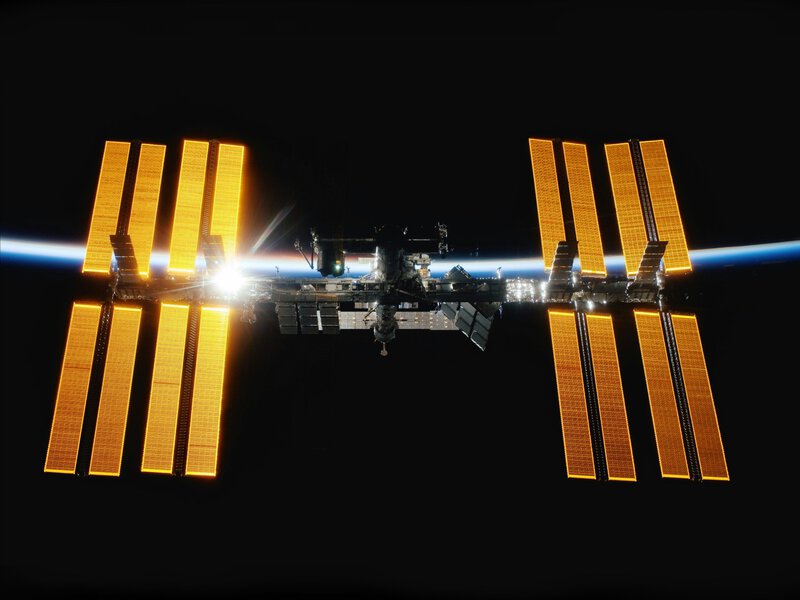
NASA plans to retire the International Space Station in 2030. That deadline is not arbitrary: it reflects both structural risk assessments and budget projections showing that maintenance costs would escalate sharply if operations were extended into the mid-2030s. But “retirement” does not mean a switch-off. It means a multi-year operational wind-down — gradual crew reduction, systematic retrieval or deactivation of experiments, and the deliberate shutdown of non-essential systems — before the station is committed to its final descent.
The 2030 target is NASA’s stated plan, and the agency has committed significant resources to executing it. Independent space policy analysts have noted, however, that budget pressures, the uncertain state of U.S.-Russia relations in space cooperation, and the readiness timelines of commercial successor stations could all push the actual retirement date earlier or later than currently projected. The plan is firm in intent; it is considerably less firm in its immunity to circumstance.
NASA examined several decommissioning options for the ISS, including disassembling the station in orbit and returning components to Earth, and boosting the entire structure to a higher orbit. Both were ultimately set aside. Disassembly in orbit is technically formidable and prohibitively expensive. A graveyard orbit would leave a 925,000-pound object in space indefinitely, contributing to the debris environment and foreclosing future use of that orbital corridor. A controlled destructive reentry was assessed as the safest, most responsible, and most cost-effective path.
Engineering a Controlled Fall: The Physics and Stakes of Deorbiting the Largest Object Ever Brought Down
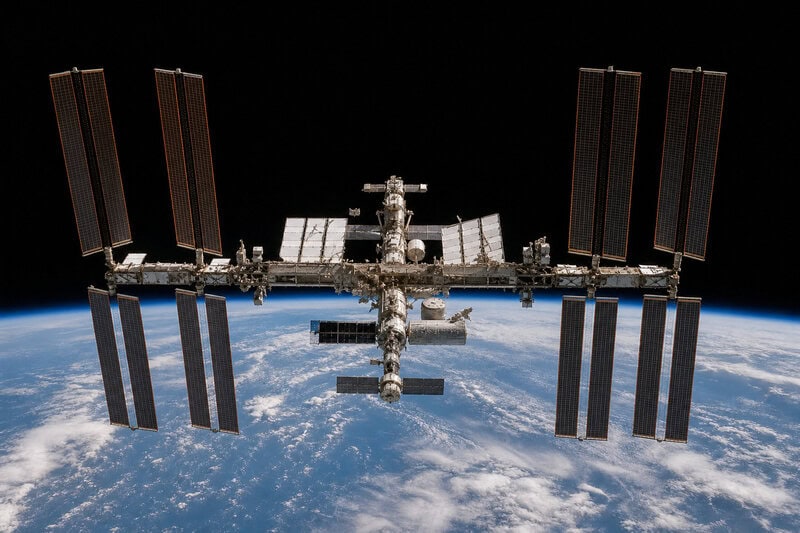
To understand why the ISS deorbit is being treated as one of the most consequential engineering events in spaceflight history, it helps to understand what deorbiting actually requires. An object in low Earth orbit is not floating — it is falling, perpetually, while moving forward fast enough that it keeps missing the planet. To bring the ISS down in a controlled way, a deorbit vehicle must fire its engines to reduce the station’s orbital velocity enough that gravity pulls it into a descending spiral. The trajectory must be calculated with exceptional precision: too steep an entry angle and structural heating becomes catastrophic; too shallow and the station skips back into orbit.
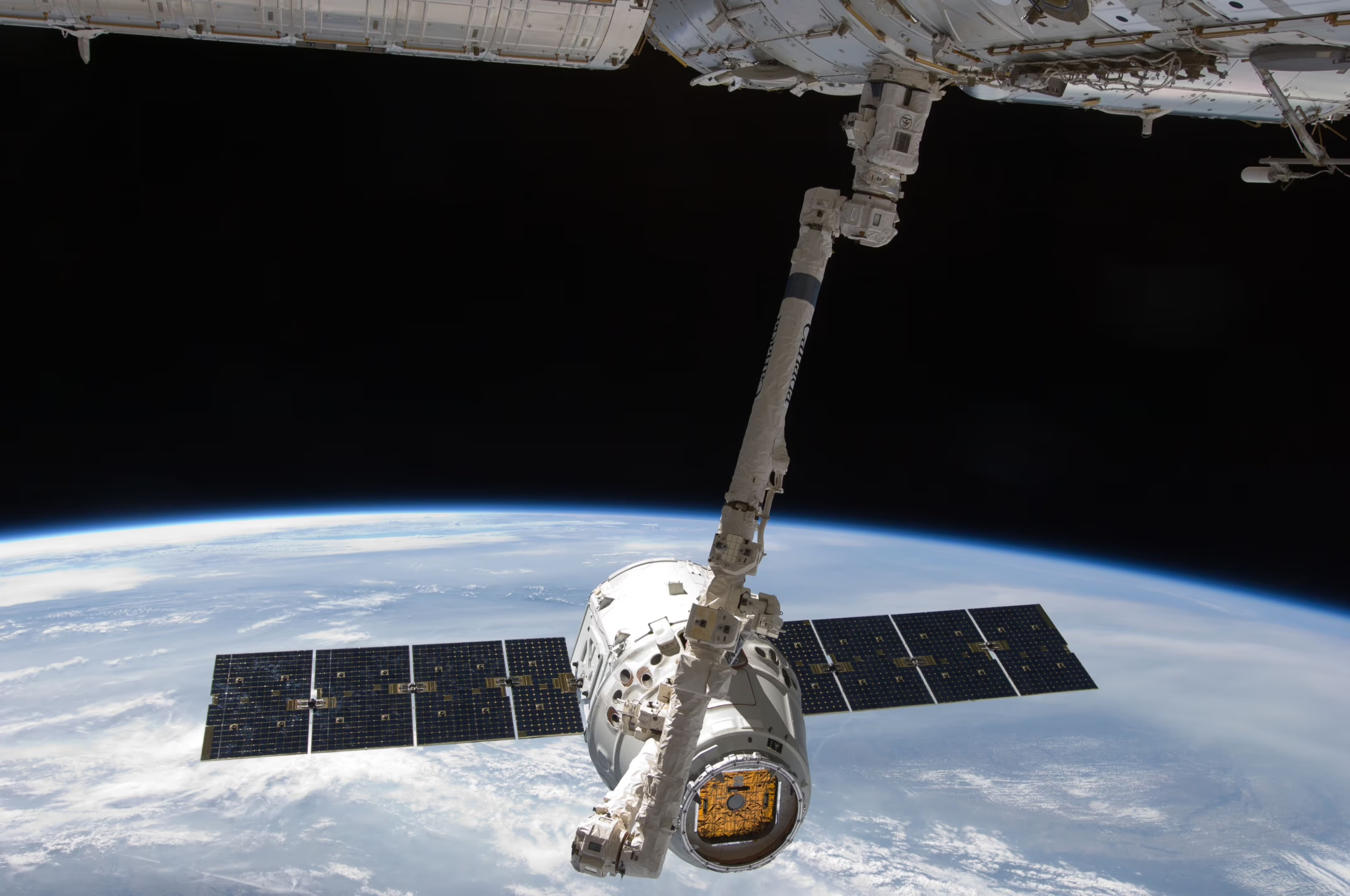
NASA has selected a purpose-configured SpaceX spacecraft to execute that final burn — a choice that underscores how thoroughly the agency’s end-of-ISS strategy depends on commercial partners, the same partners it is simultaneously counting on to build the ISS’s replacements. The deorbit vehicle will need to manage a structure nearly twice the mass of anything humanity has deliberately brought out of orbit before. The closest precedent is Russia’s Mir space station, which weighed approximately 286,000 pounds and was deorbited in 2001. That reentry scattered debris over a wider footprint than planned, a cautionary data point that engineers are studying carefully as they model the ISS descent.
Surviving debris — components made of materials too dense to fully ablate during atmospheric reentry — is intended to splash down in Point Nemo, the oceanic “pole of inaccessibility” in the South Pacific, located more than 1,600 miles from the nearest land in any direction. Point Nemo has served as the designated reentry zone for defunct satellites and resupply spacecraft for decades. Even so, at 925,000 pounds, the ISS represents a reentry event with no true historical parallel. There is no meaningful margin for navigational error, and there is no second attempt if the trajectory calculations prove wrong.
What Gets Lost, What Gets Saved, and the Race Before 2030
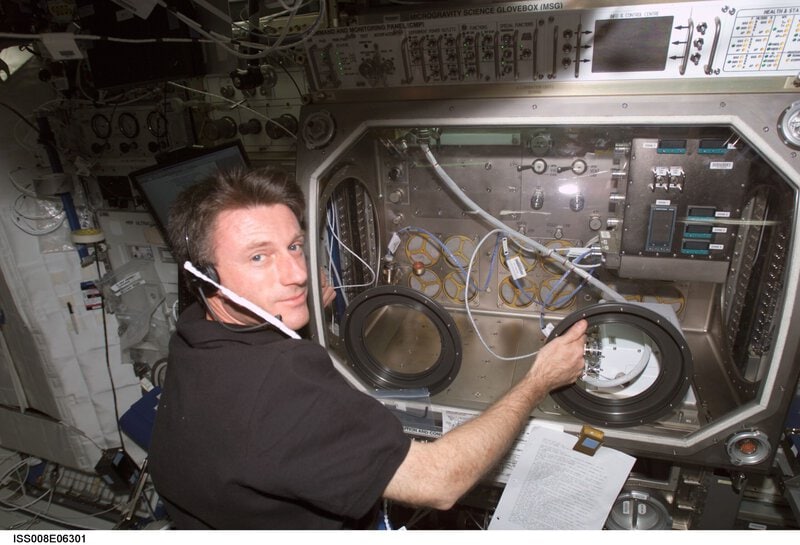
The ISS hosts approximately 3,000 active experiments at any given time, conducted by researchers from member nations across disciplines including microgravity biology, materials science, fluid physics, and Earth observation. By any measure, it is the most productive long-duration research laboratory humanity has ever operated in space. Its retirement will end something that does not yet have a replacement.
NASA and its independent advisors have openly acknowledged the risk of a research continuity gap — a period between ISS retirement and the operational readiness of commercial successor stations during which long-duration microgravity research simply cannot be conducted at comparable scale. Scientists working on multi-decade data sets, including studies of bone density loss, cardiovascular changes, and the vision impairment linked to elevated intracranial pressure documented in astronauts on long missions, are now racing to complete or transition their work before 2030. Whether commercial stations will be able to replicate the ISS’s controlled, continuously crewed research environment at comparable depth is a question that remains genuinely open.
Beyond research, the station’s retirement also raises questions about continuous human presence in low Earth orbit — a record the United States and its partners have sustained without interruption since November 2000. NASA has not guaranteed that commercial successors will be ready in time to prevent a break in that record, and some independent analysts consider a gap more likely than the agency’s public posture suggests.
Commercial Stations and the Gamble on Private Infrastructure
NASA’s replacement strategy is built around its Commercial Low Earth Orbit Destinations program, under which the agency contracts private companies to build and operate successor stations. Rather than owning and operating infrastructure itself, NASA would purchase crew time and research access from commercial operators — the same model it uses today for cargo and crew transportation to the ISS. The strategic logic is straightforward: shift the cost and operational burden of low Earth orbit infrastructure to the private sector, freeing NASA’s budget for deep-space exploration under the Artemis program and, eventually, missions targeting Mars.
Three ventures have emerged as leading contenders. Axiom Space is developing a commercial module designed to attach to the ISS before eventually detaching to operate as an independent station. Starlab, backed by Voyager Space and Airbus, is designed as a free-flying station from the outset. Blue Origin’s Orbital Reef project represents a third major competitor. Each faces significant technical and financial milestones before it can be considered a functional replacement for the ISS.
Critics — including some members of Congress and independent aerospace analysts — have questioned whether any of these commercial stations will be ready, financially viable, and scientifically capable in time to prevent a meaningful gap in continuous U.S. human presence in low Earth orbit. NASA has acknowledged the risk but argues it is manageable. That argument depends heavily on commercial development timelines holding, private financing remaining available, and technical challenges proving soluble on schedule. None of those conditions are guaranteed, and none are fully within NASA’s control.
There is also a structural question that commercial enthusiasm has not yet resolved: the ISS was built with government resources over many years, with cost overruns absorbed by national budgets. Commercial stations must attract private capital in a market where the customer base — primarily national space agencies and research institutions — is limited, and where the ISS itself, still operational, continues to set the price expectations and capability benchmarks against which successors will be judged.
Geopolitics, Partnerships, and the Architecture of What Comes Next
The ISS has served for 25 years as the primary institutional expression of international cooperation in human spaceflight, involving 15 partner nations including Russia, Japan, Canada, and the member states of the European Space Agency. Its retirement raises questions that extend well beyond engineering. Whether Russian, European, Japanese, and Canadian partners join commercial successor stations — and on what terms — will help define the geopolitical architecture of human space activity for the coming decades. The partnerships that sustained the ISS were hard-won over years of diplomatic negotiation and technical integration; they are not automatically transferable to a new model built around private commercial operators.
Russia’s position is particularly uncertain. The war in Ukraine has strained U.S.-Russia space cooperation significantly, and while both sides have continued ISS operations under existing agreements, the future of that relationship in a post-ISS environment is unclear. Russia has announced plans for its own successor station, though funding and timelines for that project remain uncertain. A fracture in human spaceflight cooperation between the United States and Russia would represent a significant departure from the model that has defined the ISS era.
Commercial successors, if they prove financially viable, also carry a genuinely transformative possibility. The government-owned ISS operated under constraints that made broad access difficult: research slots were limited, costs were enormous, and the station’s crew was drawn exclusively from the astronaut corps of partner agencies. Commercial stations, designed to sell access to a wider range of customers, could open low Earth orbit to private research institutions, national space agencies without their own launch capabilities, and eventually private individuals at a scale the ISS never achieved. Whether that democratization argument proves out in practice — or whether commercial stations serve primarily the same narrow set of well-resourced actors who already dominate spaceflight — is among the most consequential open questions in space policy today.
A Forcing Function for Everything That Comes Next
No human-made object of comparable size has ever been deliberately brought out of orbit. The ISS deorbit will be a singular engineering event, conducted once, with no second attempt available if the trajectory calculations prove wrong. The global space community will watch it as a test of technical competence and of humanity’s ability to responsibly manage the end of its largest infrastructure in space.
But the engineering challenge, dramatic as it is, may be the more tractable part of what lies ahead. The harder questions are institutional and political: whether commercial stations can be built, financed, and operated at the scale needed to replace what the ISS provided; whether the international partnerships that made the ISS possible can survive and adapt to a new model; whether the research continuity that scientists depend on can be maintained through the transition; and whether the enormous investment in a quarter-century of continuous human presence in low Earth orbit ultimately leads to something more permanent and more accessible, or simply to a quieter orbit.
The choices made in the years between now and 2030 — about funding, partnership structures, commercial readiness, and research priorities — will determine whether low Earth orbit becomes a permanent, commercially vibrant extension of human activity, or a domain that contracts back toward the occasional and the enormously expensive. The ISS’s retirement is not simply a closing chapter. It is the forcing function for everything that follows.