
The June 2026 European heatwave was between 100 and 200 times more likely to occur than it would have been in a world without fossil fuel emissions — a finding that reframes extreme heat not as bad luck, but as a measurable consequence of decades of industrial burning. According to a World Weather Attribution study by Keeping et al. (2026), titled Fossil Fuel Emissions have Rapidly Worsened European Heatwaves in Just a Few Decades, that worsening has not unfolded gradually over centuries — it has accelerated within a single human lifetime.
When a Probability Multiplier Becomes a Matter of Life and Death
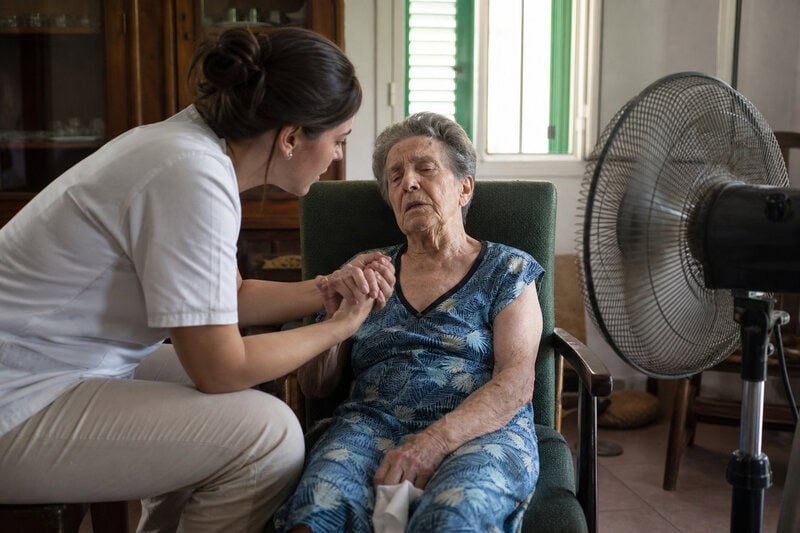
Abstract multipliers like “100 times more likely” are difficult to translate into human terms until a concrete comparison is offered. Heatwaves already kill more people in Europe than all other extreme weather events combined, making them the continent’s single most lethal meteorological hazard. A previous end-of-June European heatwave claimed an estimated 2,300 lives across just 12 cities — a figure that illustrates how swiftly and geographically concentrated heat mortality can be. When scientists determine that fossil fuel emissions have made such events dramatically more probable, the implication is direct: those emissions are a contributing factor to the deaths that follow.
That causal chain is precisely what climate attribution science is designed to establish. Attribution science compares the climate we actually inhabit — shaped by roughly 150 years of greenhouse-gas emissions — with a modeled counterfactual world in which those emissions never occurred, then measures the difference in an event’s probability or intensity. The Keeping et al. study makes that chain explicit, and its core finding is among the strongest ever published for a European heat event.
What Climate Attribution Science Is — and What It Is Not

Climate attribution is not guesswork. Researchers run thousands of simulations of both the real, emissions-warmed world and a hypothetical preindustrial world using peer-reviewed climate models. By comparing the statistical frequency of a given heat event across those two sets of simulations, they can estimate how much more — or less — likely that event is because of human influence. The result is expressed as a range, such as “100-200 times more likely,” rather than a single number, because different models produce somewhat different outputs. That range honestly reflects scientific uncertainty; it is not a sign of weakness in the methodology.
World Weather Attribution, the leading international scientific collaboration conducting rapid attribution analyses, often publishes peer-reviewed results within days or weeks of an extreme-weather event. Their work on the June 2026 heatwave follows an established and rigorous protocol, and the broad finding it produces — that human emissions make European heatwaves more frequent and more intense — reflects established scientific consensus.
It is equally important to state what attribution science does not claim. It cannot assert that a specific heatwave would have been impossible without fossil fuel emissions — only that it was far less statistically probable. Extreme heat occurred in Europe before industrialization. What has changed is the frequency and intensity at which dangerous thresholds are crossed, and the speed at which that change is now happening.
The Mechanism: How Burning Fossil Fuels Turns Up Europe’s Heat
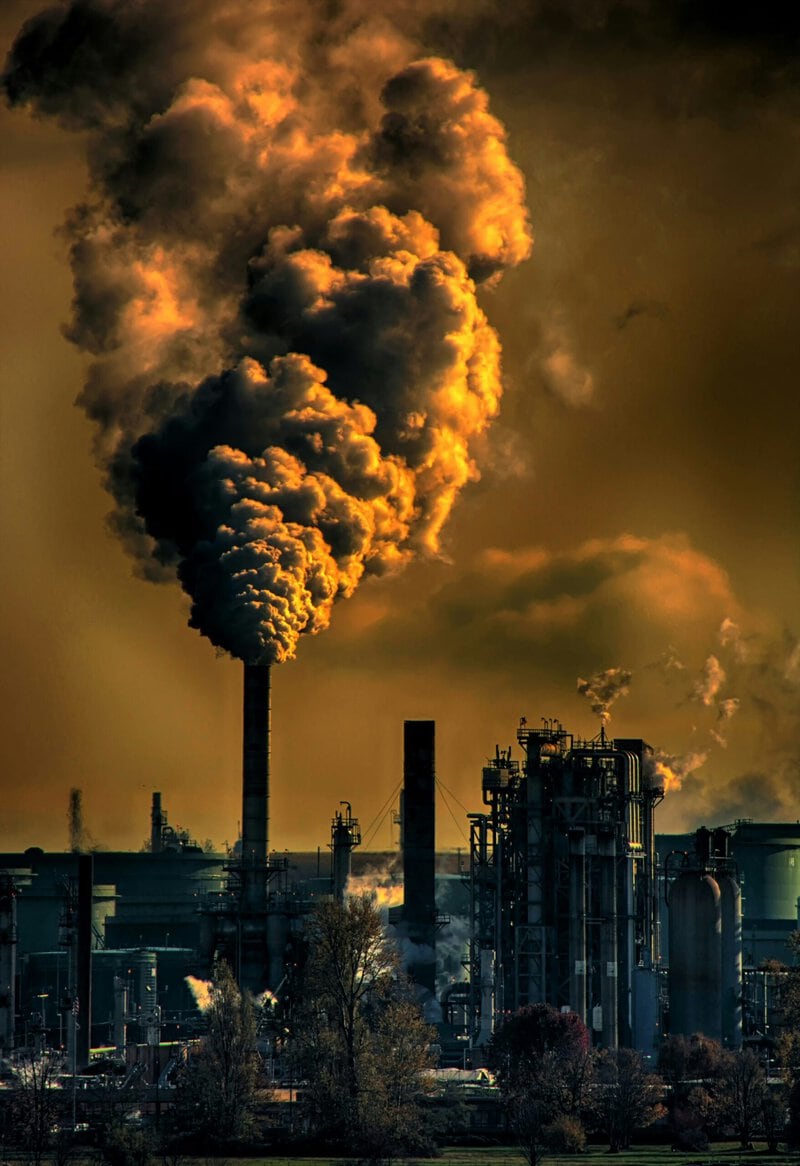
The underlying physics is well understood. Burning coal, oil, and natural gas releases carbon dioxide and methane into the atmosphere. These gases trap outgoing infrared radiation — heat that would otherwise escape into space — raising baseline temperatures globally. Every heatwave now begins from a higher thermal floor than it would have a century ago. Even a seemingly modest rise in average temperatures has an outsized effect on the statistical tail of the distribution: the rare, record-breaking events at the extreme end. This is why a one- or two-degree Celsius shift in the mean can translate into a 100-fold increase in the likelihood of a once-rare extreme.
Europe is particularly exposed to this dynamic. The continent is warming at roughly twice the global average rate, partly because land masses heat faster than oceans and partly because of disruptions to the jet stream — the high-altitude river of wind that normally steers cool, moist Atlantic air across the continent. Climate scientists increasingly link jet stream instability to Arctic warming, which is itself driven by greenhouse-gas emissions. When the jet stream weakens or meanders, hot air masses from North Africa and the Mediterranean can stall over central and northern Europe for days, producing the extended, intense heat episodes that cause the most deaths.
The Keeping et al. study documents that this attributable influence has intensified markedly within decades, not gradually over a century. The authors describe this pace as exceptionally rapid in climate terms — a finding with significant implications for near-term risk planning, since it suggests the system is responding faster than some earlier models projected.
Europe’s Deadliest Weather Threat: The Numbers Behind the Hazard
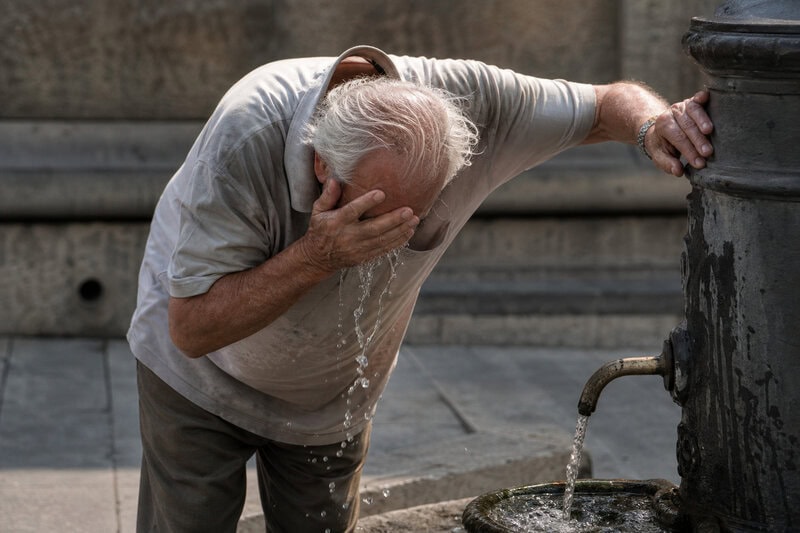
Heat is what researchers sometimes call a silent killer. Unlike floods or storms, it leaves no visible destruction — no collapsed buildings, no flooded streets — which can delay both public awareness and governmental response. Physiologically, extreme heat overwhelms the body’s thermoregulatory systems. When ambient temperatures remain high through the night, the body never fully recovers, and cumulative stress builds until organ systems begin to fail. The elderly, very young children, people with cardiovascular or respiratory conditions, and those without access to air conditioning or cool shelter face the greatest risk.
European cities compound that biological vulnerability with structural ones. Housing stock is largely oriented toward retaining warmth in winter rather than shedding heat in summer. Hospitals and care facilities frequently lack mechanical cooling. Urban heat islands — the effect by which dense built environments absorb and re-radiate heat — amplify already dangerous conditions. The estimated 2,300 deaths across just 12 cities in a single prior late-June heatwave illustrates the concentrated lethality that results when physiological limits meet an infrastructure calibrated for a cooler climate.
If the attributable influence of fossil fuel emissions continues to grow at the pace the Keeping et al. study documents, these infrastructure mismatches will become more consequential with each passing decade.
Inside the 2026 Study: What the Researchers Found and How to Read It

The Keeping et al. (2026) study determined that the June 2026 European heatwave was 100-200 times more likely in today’s fossil-fuel-warmed world than in a preindustrial climate. The emphasis in the study’s title on speed — “in just a few decades” — is deliberate. The authors are not simply reporting that emissions worsen heatwaves, a finding established by prior research. They are documenting that the rate of worsening has itself accelerated: a more alarming and more specific claim.
Readers should understand the 100-200x range as reflecting genuine scientific precision rather than imprecision. Different climate models, while agreeing on the direction and broad magnitude of the effect, produce somewhat different quantitative outputs. Presenting a range rather than a point estimate is standard practice and reflects intellectual honesty about the limits of current modeling resolution. The lower bound of the range — 100 times more likely — is itself an extraordinary figure by any historical standard of climate risk.
The study’s framing — attributing the worsening explicitly to fossil fuel emissions rather than to the more generic phrase “climate change” — is both scientifically and legally significant. It sharpens the causal chain in ways relevant to climate litigation and to specific emissions-reduction policy discussions, because it connects a named industrial activity to a quantified increase in hazard. Scientists maintain a careful distinction, however: attribution establishes statistical likelihood, not linear causation for any individual death or property loss. The evidence supports the former; the latter requires additional legal and ethical analysis beyond the scope of the science itself.
What This Means for Europe’s Future — and for the Science Itself
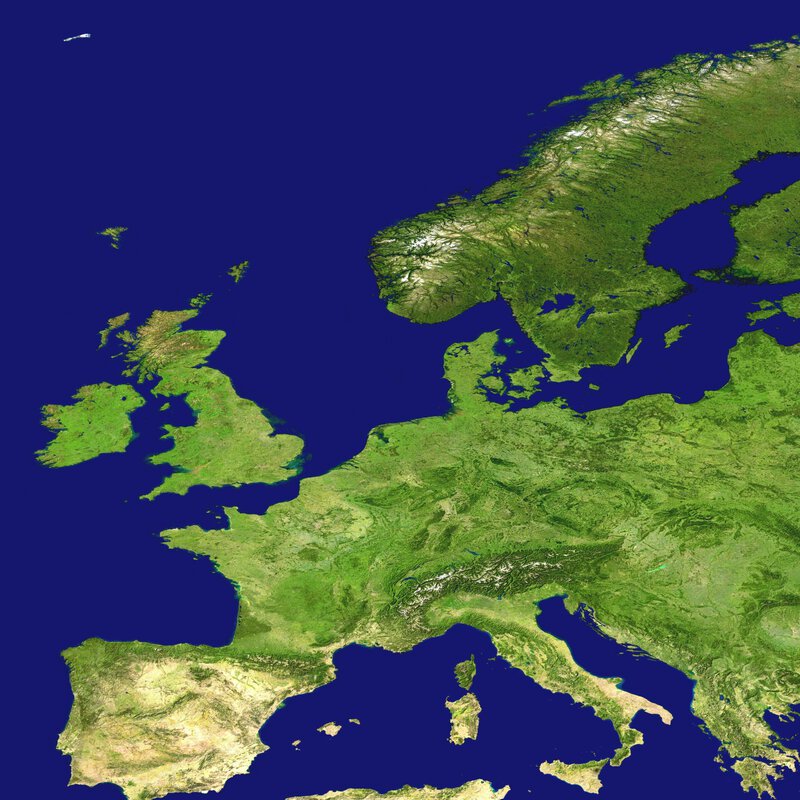
If the attributable influence of fossil fuel emissions on European heatwaves has grown this rapidly over the past few decades, continued burning projects further acceleration. Events that currently qualify as once-in-a-century extremes could become once-in-a-decade occurrences within the lifespans of people alive today. Europe’s existing public-health infrastructure, urban design, and emergency-response systems were calibrated for a climate that no longer exists.
Several important questions remain areas of active scientific investigation rather than settled consensus: the precise rate of future acceleration, the relative contribution of local land-use change and urban heat-island effects versus large-scale atmospheric circulation shifts, and the degree to which specific regional adaptation measures can offset rising mortality risk. Higher-resolution climate models and improving observational records will refine attribution estimates in coming years. Scientific discussion of the 2026 findings has already highlighted the need for faster integration of attribution results into national heat-action plans.
What is not under scientific debate is the direction of the finding. Fossil fuel emissions made the June 2026 European heatwave 100-200 times more likely — and the authors say that figure reflects a rapid and accelerating worsening of European heat extremes over just a few decades. Climate attribution is a young and improving science, and future studies will sharpen these estimates. But the core conclusion — that fossil fuels are substantially responsible for the transformation of European heatwaves from rare to routine — is, in the judgment of the scientific community, no longer an open question.