
In a single rock formation on Mars, NASA’s Curiosity rover has uncovered something planetary scientists have been searching for since the first rovers rolled across the Martian surface: 21 distinct carbon-containing molecules locked inside ancient mudstones at a site called Bright Angel — the most chemically diverse organic haul any Mars rover has ever returned. What those molecules mean for the question of life on Mars is complicated, carefully contested, and worth understanding in full.
A Record 21 Carbon-Containing Molecules Identified in a Single Martian Rock Formation
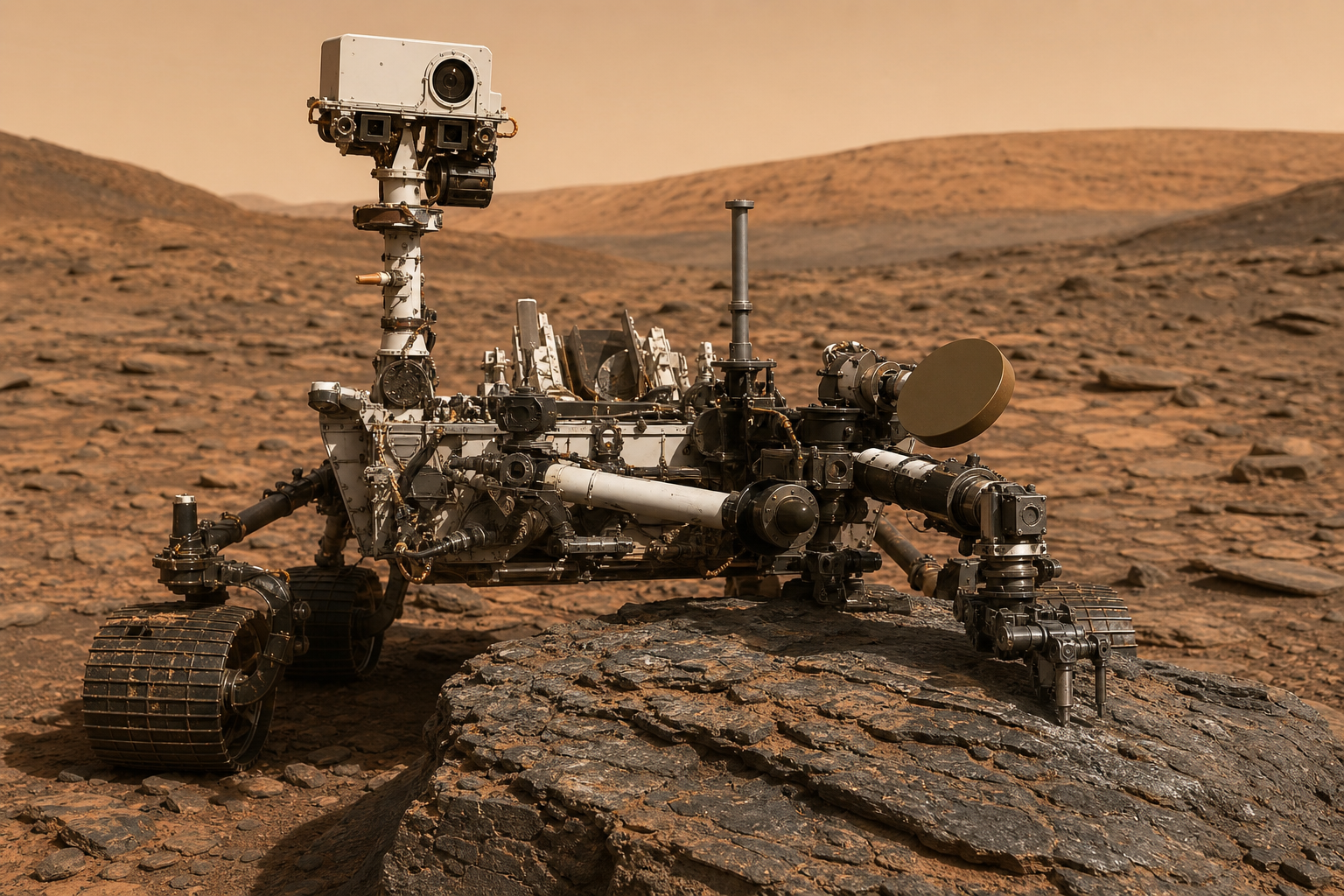
NASA’s Curiosity rover detected 21 distinct organic — that is, carbon-containing — molecules in mudstones from the Bright Angel outcrop, the most diverse collection of such compounds ever found by any Mars rover at a single site. The finding surpasses all previous single-site organic detections on Mars, establishing Bright Angel as a benchmark location in the ongoing search for habitability evidence.
Organic molecules are the chemical building blocks of life as we know it, a fact that makes their detection scientifically significant. Their presence alone, however, does not confirm biology; carbon chemistry arises through a wide range of geological and astronomical processes entirely unrelated to living organisms.
Seven of Those Molecules Had Never Before Been Detected on Mars
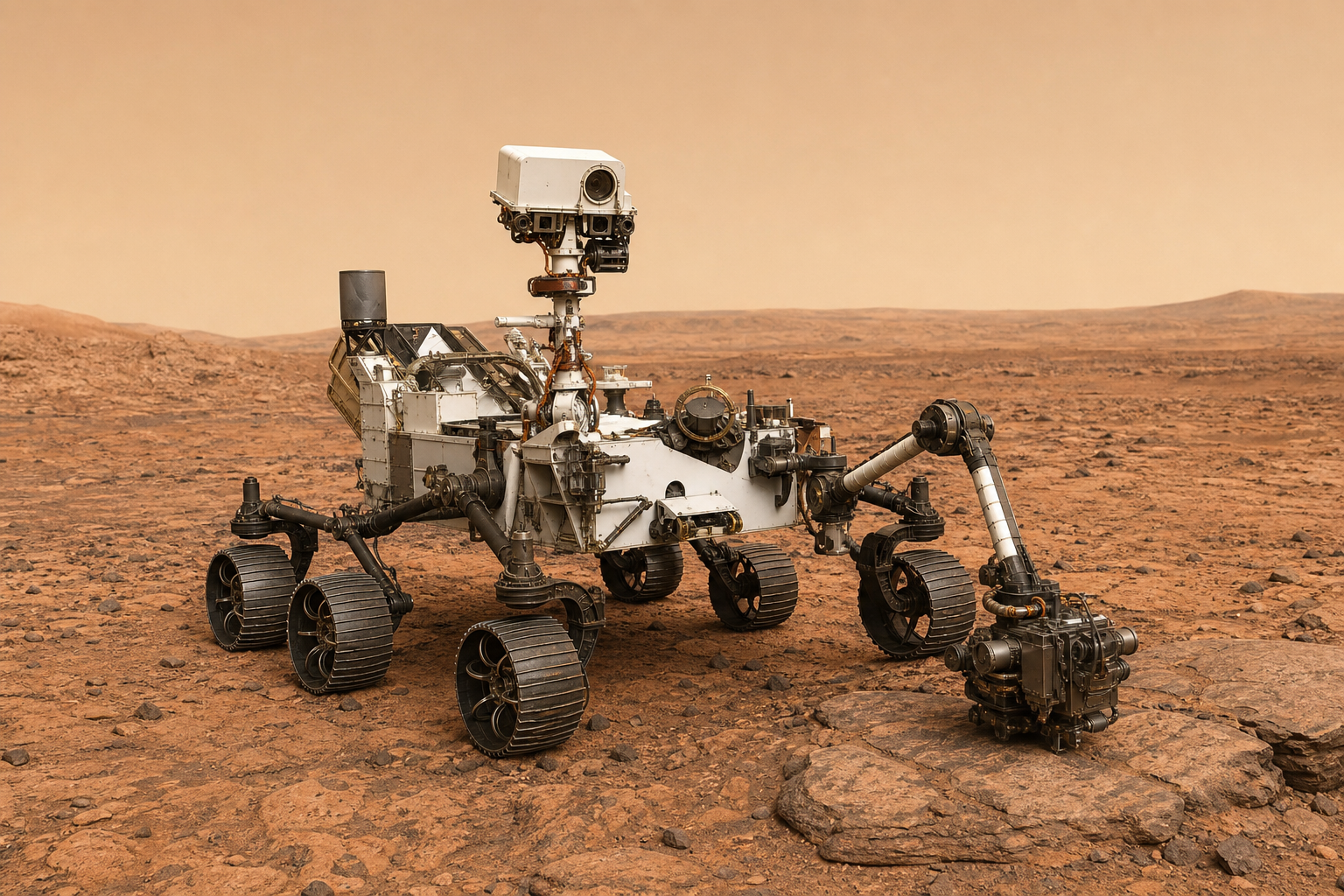
Of the 21 compounds identified at Bright Angel, seven were recorded on Mars for the very first time, expanding the known Martian organic inventory in a single mission campaign. Each newly detected molecule adds a concrete data point to scientists’ understanding of what carbon chemistry is possible — or at least preserved — on the Martian surface.
Seven first-ever detections in a single campaign represents a statistically notable expansion of the catalog scientists use to characterize Mars’ geochemistry, making this a meaningful step forward rather than an incremental one.
Curiosity’s SHERLOC Instrument Did the Chemical Heavy Lifting
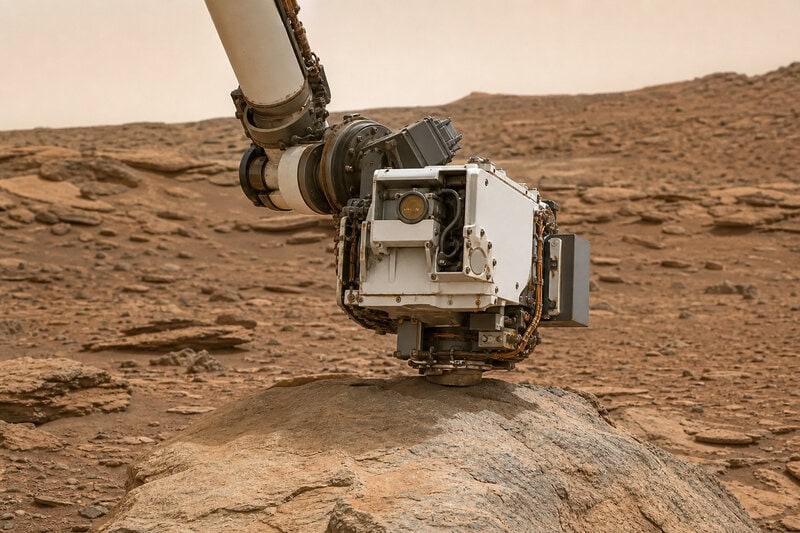
The detections were made using SHERLOC — Scanning Habitable Environments with Raman and Luminescence for Organics and Chemicals — a spectrometer mounted on Curiosity’s robotic arm. SHERLOC uses Raman spectroscopy and fluorescence imaging to identify molecular “fingerprints” without physically destroying the sample, mapping organic compounds directly in rock at fine spatial resolution.
The instrument was specifically designed to search for biosignatures — detectable chemical or physical signs that might indicate past or present life — making it the primary analytical tool for assessing habitability at sites like Bright Angel. Its non-destructive approach is particularly valuable when working with rare or irreplaceable geological material on another planet.
The Organic Molecules Were Locked Inside Mudstones, Not Surface Dust
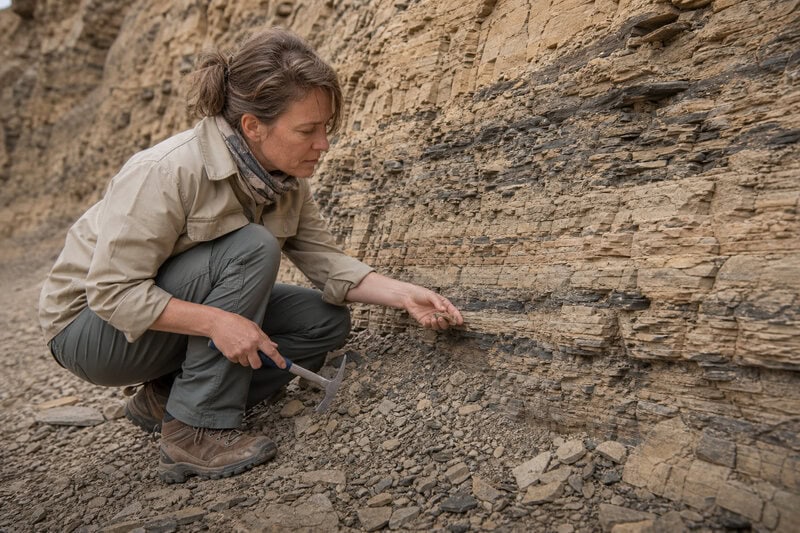
Curiosity found the compounds embedded in mudstones — fine-grained sedimentary rocks formed from ancient lake-bottom sediment — within the Bright Angel formation, not scattered across the exposed surface. Mudstones are considered ideal preservation environments because their dense, layered structure can shield organic molecules from the harsh ultraviolet radiation and oxidizing chemistry that routinely degrades organics on Mars’ open surface.
The rover sampled these rocks across multiple points along the Bright Angel outcrop rather than from a single opportunistic drill hole. That spatial coverage strengthens confidence that the organic richness is a genuine feature of the formation rather than a localized anomaly.
NASA Characterized the Chemical Combination as a Potential Biosignature
NASA explicitly described the specific combination of chemical compounds found at Bright Angel as a potential biosignature — a pattern of chemistry that could, in principle, indicate past biological activity. A biosignature is not proof of life; it is a detectable substance, structure, or pattern whose origin requires further investigation to distinguish biological from non-biological sources.
The agency’s deliberate use of the phrase “potential biosignature” reflects careful scientific framing. The finding is considered significant enough to warrant that designation, but NASA has been explicit that the label opens a line of inquiry rather than closing one. Overstating such a result would undermine the credibility of the broader Mars exploration program.
The Molecule Mix Could Have Fueled Ancient Microbial Metabolisms
Scientists noted that the combination of compounds detected at Bright Angel could have served as a rich energy source for microbial metabolisms, had life ever existed at that location. This assessment is grounded in the types and variety of carbon molecules present: in terrestrial environments, analogous chemical combinations are known to support chemolithotrophic microbes — organisms that derive energy from inorganic chemical reactions rather than from sunlight.
This interpretation is framing what the chemistry could theoretically have supported, not asserting that such microbes existed or that the molecules were produced by them. It remains an analogy to Earth-based microbiology, not a claim about Martian biology.
The Origin of the Molecules — Biological or Non-Biological — Remains Unresolved
Scientists acknowledge there is currently no way to determine whether the Bright Angel organic molecules were produced by living organisms or by purely geological and chemical processes such as volcanism, hydrothermal activity, or meteorite delivery. Abiotic — non-living — processes are well-documented sources of complex organic chemistry both on Earth and throughout space, meaning the presence of organics is a necessary but not sufficient condition for inferring life.
Resolving the question of origin would likely require sample-return missions that bring Martian rock to Earth-based laboratories capable of far more detailed isotopic and structural analysis than any rover instrument can perform on Mars. Until such samples are studied on Earth, the biological-versus-geological debate will remain genuinely open.
Bright Angel Confirms and Extends What Earlier Work Only Began to Suggest
The new research did not arrive in isolation. It confirmed and significantly extended the widespread presence of complex carbon molecules in and around the Bright Angel outcrop, building explicitly on earlier preliminary findings that had hinted at unusual organic richness at the site. This cumulative pattern — prior work suggesting organics, followed by a systematic survey yielding a record haul — strengthens scientific confidence that Bright Angel is geochemically unusual rather than a one-off detection artifact.
Scientific consensus now holds that complex organic chemistry is a genuine and reproducible feature of this Martian location. The question of its ultimate source — cosmic, geological, or biological — remains open, but the reality of the chemistry itself is no longer in doubt.
This Is Curiosity’s Achievement, Not Perseverance’s
It is Curiosity — not its younger sibling rover Perseverance, which operates in Jezero Crater — that made the Bright Angel organic detections. The distinction is worth emphasizing given frequent public confusion between the two active NASA Mars rovers. Curiosity has been operating on Mars since August 2012 and continues to conduct science more than a decade into its mission, demonstrating the long-term value of sustained surface exploration.
Bright Angel lies within Gale Crater, Curiosity’s landing and operating region, situated along the foothills of Mount Sharp — formally known as Aeolis Mons — a layered sedimentary mountain that has served as Curiosity’s primary scientific target throughout its extended mission. The organic richness found there adds a compelling new chapter to a site that has already rewritten much of what scientists know about ancient Mars.
What This Discovery Actually Means
The Bright Angel findings represent the most chemically detailed portrait of organic Mars yet assembled. They make a clear scientific case for continued and more capable exploration — including the sample-return missions that would finally allow researchers to interrogate these molecules with the full power of Earth-based laboratory analysis. What they do not do, and what responsible science does not claim, is confirm that life ever existed on Mars. The record is remarkable. The question it raises is more remarkable still.