
In a Norman-era cemetery outside Palermo, a Christian, a Muslim, and a person of North African descent lie within meters of each other — their bones silent for nearly a thousand years, but now yielding genetic data that no medieval chronicle ever recorded. Researchers who sequenced DNA from 111 individuals buried across 19 archaeological sites in Sicily, spanning the fifth through the 15th centuries CE, have produced one of the largest ancient genomic surveys ever conducted on a single Mediterranean island. The results are rewriting assumptions about who medieval Sicilians actually were.
One Island, a Thousand Years of Genetic Secrets
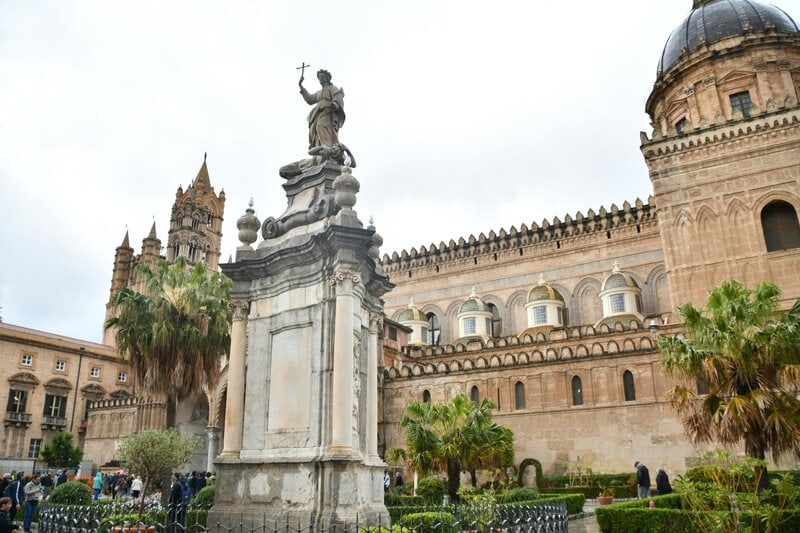
The headline finding, published in PLOS ONE under the title Genetic histories of individuals from multi-faith medieval Sicily, is both striking and historically significant: Sicily’s population was broadly diverse from the very start of the medieval period, and that diversity held firm across every major conquest and regime change the island endured. Byzantines, Arab-Berbers, Normans, Hohenstaufens, Angevins, and Aragonese rulers each governed the island in succession — yet the genetic composition of the people living and dying beneath them remained a persistent, multicultural mosaic.
This directly confronts a long-standing historical debate. Scholars have argued for generations over whether Sicily’s successive rulers replaced the populations they conquered or merely imposed new administrations over existing communities. Ancient DNA is now providing a biological answer, and that answer leans decisively toward continuity over replacement.
Why Sicily Is a Natural Laboratory for Medieval Mediterranean Genetics
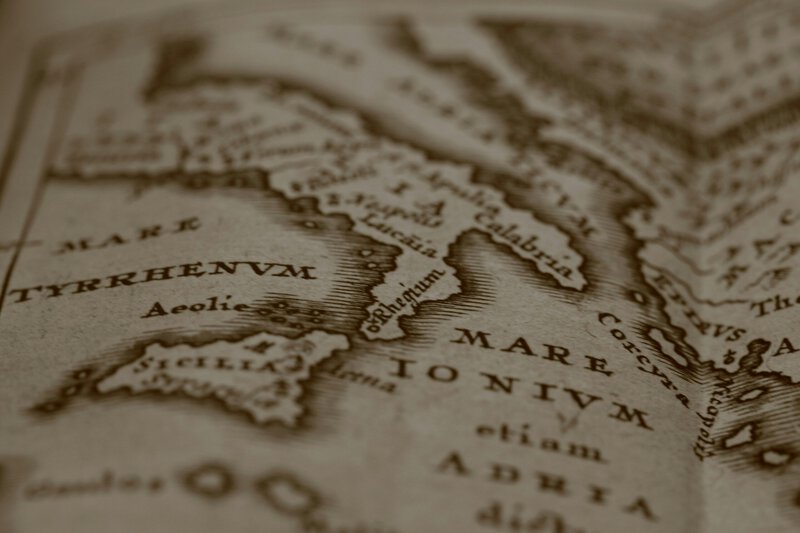
Sicily’s value as a research site is not accidental. Geographically, the island sits at the crossroads of the medieval Mediterranean — positioned between North Africa, the Italian peninsula, and the eastern Aegean — giving every major power of the era a strategic reason to control, settle, or exploit it. That position ensured a constant flow of people, ideas, and, as the new research demonstrates, genes.
Because archaeological sites across Sicily preserve burials from multiple faiths and eras in unusually close proximity, the island offers what geneticists call a natural experiment: a contained geographic unit where the principal variable is political regime rather than geography. Studying medieval Mediterranean genetics here allows researchers to test whether conquest produces demographic replacement or demographic absorption, using material evidence that written sources cannot match. As researchers affiliated with the University of York noted, the island’s layered history made it an ideal candidate for precisely this kind of inquiry.
How Ancient DNA Works: Reading Biology From Bone
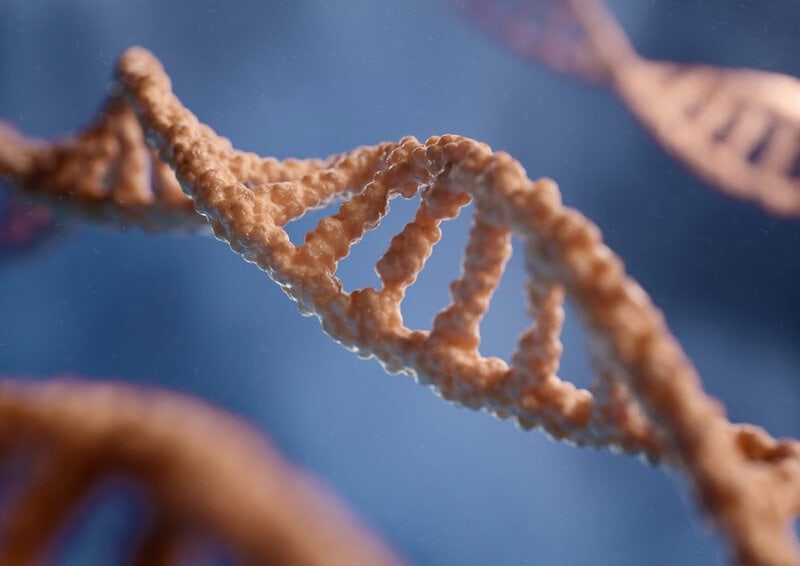
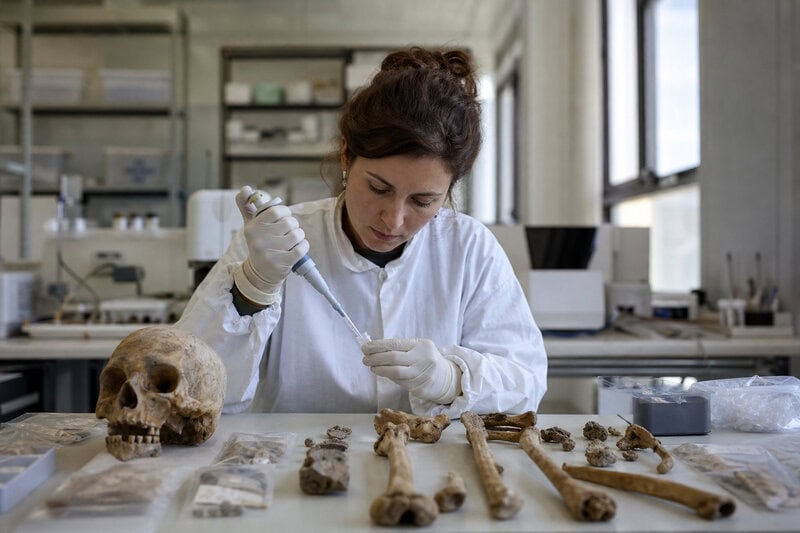
Ancient DNA — abbreviated in the field as aDNA — refers to genetic material recovered from archaeological remains such as teeth and bones. Because DNA degrades over time, scientists preferentially target the petrous bone, the exceptionally dense portion of the skull that houses the inner ear, which preserves genetic fragments far better than softer skeletal material. Researchers extract these fragments, sequence them, and then compare the sequences against reference panels drawn from both modern and ancient populations.
The primary analytical tool is admixture modeling — a statistical method that estimates what proportion of an individual’s genome traces to which ancestral source populations. It functions as a biological provenance estimate: not a precise family tree, but a probabilistic map of geographic ancestry. Because aDNA is inherently fragmentary and contamination from modern DNA is a constant methodological risk, the field applies strict authentication standards. The PLOS ONE study’s use of 111 individuals across 19 sites provides the statistical depth needed to distinguish individual outliers — a single traveler or immigrant — from genuine population-level patterns.
Crucially, aDNA captures a biological snapshot of who was actually buried in a place, not who rulers claimed lived there or whom scribes chose to document. It is a direct, if necessarily incomplete, record of demographic reality.
The Core Finding: Diversity That Outlasted Every Conqueror
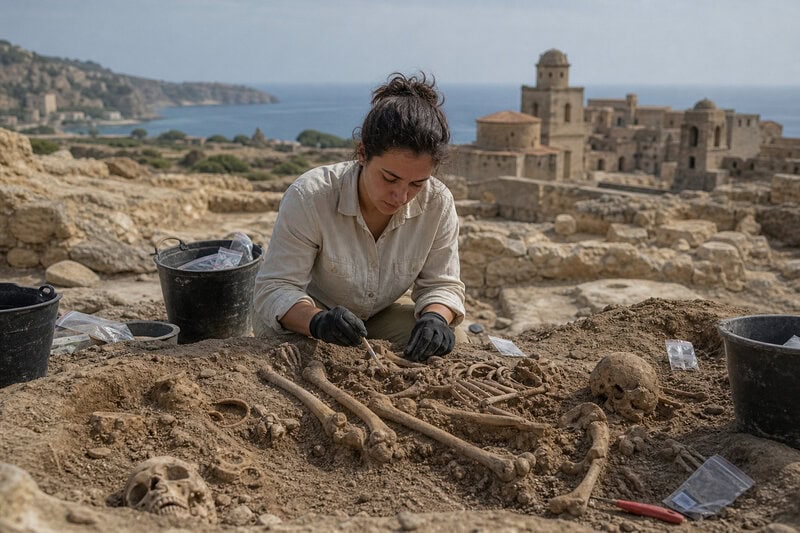
The study found that from an early stage, medieval Sicily exhibited broad genetic diversity, with most individuals aligning with a wider Mediterranean genetic profile rather than clustering tightly with any single source population. This means the island was already a mosaic before the Arab-Berber conquest of the ninth century — the diversity was not the product of any single migration wave but a cumulative feature of the island’s long history at the center of Mediterranean traffic.
That diversity then persisted through centuries of violent regime changes, directly challenging the hypothesis of large-scale population replacement. When one ruling group displaced another militarily, the genetic composition of the broader buried population did not dramatically shift in response. The study describes medieval Sicily as a genetic melting pot where Christians and Muslims lived alongside one another — a biological corroboration of the multicultural coexistence that medieval sources describe but historians have sometimes disputed in scale.
This finding aligns with an emerging consensus in ancient genomics that political conquest in the medieval Mediterranean tended to layer new elites over existing populations rather than erase them. Researchers are careful to note, however, that this pattern was not universal across the medieval world; Sicily’s experience reflects its specific geographic and economic position rather than a general rule.
Archaeology Magazine summarized the implication clearly: Sicily remained a genetic crossroads through the Byzantine, Arab, and Norman periods alike, with no single conquest leaving a sufficiently dominant genetic signature to homogenize the population.
What the Genetics Reveal About Specific Migration Waves
While the overall population remained diverse, the study identifies individuals whose ancestry profiles reflect connections to North Africa and the Near East — consistent with movement during the period of Arab-Berber control — buried alongside individuals whose ancestry aligns more closely with southern European or Byzantine populations. These individuals coexist in the archaeological record in ways that mirror the documentary evidence for multiconfessional communities.
The Norman conquest of the 11th century, often romanticized in popular history as a civilizational reset that imposed Western European order on an Arabized island, does not appear in the genetic record as a wholesale demographic replacement. Population continuity across that transition is one of the study’s most pointed implications, and it resonates with broader findings in ancient genomics across medieval Europe.
Some individuals in the dataset show ancestry patterns that do not fit neatly into any single regional reference population, suggesting that Sicily also functioned as a transit point for people moving through the Mediterranean rather than only as a destination. This nuance — the island as waystation as well as homeland — is one that written records rarely capture with precision.
Researchers are explicit in urging interpretive caution. Attributing specific ancestry profiles to specific historical episodes is methodologically risky because migration was continuous and overlapping rather than a clean sequence of discrete waves. The genetic signal reflects cumulative centuries of movement, not single dateable events.
What This Study Confirms, What Remains Contested, and the Limits of the Evidence
Several of the study’s contributions are well-supported by the wider field. Ancient genomic research across medieval Europe consistently shows that population continuity is far more common than replacement, and the Sicily findings reinforce that pattern with new, Mediterranean-specific evidence. The multicultural character of medieval Sicilian society — long argued from textual and archaeological sources — now has a genetic dimension.
Other questions remain at the frontier of what current methods can resolve. Distinguishing the precise ancestry contributions of Arab, Berber, and Levantine populations within a broader North African genetic signal is constrained by the resolution of existing reference panels and the size of available comparison datasets. This is an active area of methodological development across the ancient genomics field.
There are also structural limitations inherent to aDNA research that the authors acknowledge. The study captures individuals buried in ways that left chemically recoverable remains — a condition that systematically favors certain social groups over others. Poorer populations, enslaved people, and highly mobile communities such as long-distance traders may be underrepresented or absent entirely. The genetic picture is a sample, not a census, and should be read accordingly.
The paper was published in PLOS ONE, a peer-reviewed open-access journal, making the full methodology and underlying data publicly available for independent scrutiny — a transparency standard that strengthens the work’s credibility without placing it beyond revision. The findings were also reported by EurekAlert, the American Association for the Advancement of Science’s news platform, following the paper’s release.
Why It Matters: Sicilian Ancestry, Medieval Europe, and the Longer View
For anyone exploring Sicilian ancestry through commercial DNA testing, this research provides essential historical context. The genetic diversity visible in modern Sicilians has deep medieval roots — not merely Roman or Greek ones — and reflects genuine centuries of multiethnic coexistence rather than descent from a single founding population. Ancestry results that include North African, Near Eastern, or broadly Mediterranean components are not anomalies; they are the expected signature of where Sicily sat in the ancient and medieval world.
More broadly, the study contributes to a larger reframing of what the Middle Ages actually looked like at the genetic level. The period between the fall of the Western Roman Empire and the early modern era was not one of ethnic or genetic stasis, but a dynamically connected era of movement, exchange, and demographic mixing — a picture that ancient genomics is steadily filling in with biological detail that documentary history alone cannot supply.
Sicily’s story also has direct relevance to contemporary debates about identity, migration, and belonging in the Mediterranean basin. Ancient DNA provides a longer timeline that complicates simplistic narratives about who originally belonged where, revealing instead a history of layered arrivals and persistent coexistence. As Phys.org reported on the study’s release, Sicily remained a medieval melting pot despite major political upheaval — and the bones in its cemeteries are now making that case in the most direct biological terms possible.
As sequencing costs continue to fall and reference panels expand to include more ancient populations from across the Mediterranean and North Africa, future research will almost certainly refine — and in some areas revise — these findings. The PLOS ONE study is best understood as a foundational contribution: robust, carefully authenticated, and explicitly provisional in the way that good science always is. A discussion thread on r/Archaeology illustrates how widely the findings have already been picked up by researchers and enthusiasts engaged with the field.