
On June 30, 1908, a cosmic projectile roughly 50 meters wide exploded over Tunguska, Siberia, flattening an estimated 2,000 square kilometers of forest in what remains the largest asteroid impact in recorded human history. That single event — more powerful than any nuclear weapon ever detonated — is now the anchor date for Asteroid Day, an annual global reckoning with a question humanity has only recently acquired the tools to answer seriously: what are the actual odds a space rock hits Earth, and can we stop it?
What Asteroid Day Actually Is

Asteroid Day is a United Nations-sanctioned global awareness campaign, observed every June 30, that unites scientists, educators, and policymakers to assess how well humanity can detect, track, and if necessary deflect an incoming space rock. The UN formally endorsed it in 2016, transforming it from a grassroots initiative into an official international platform for planetary defense communication and preparedness planning. Its purpose is both scientific and civic: to raise public awareness about the asteroid impact hazard and to inform the public about the crisis communication actions that would follow a confirmed threat.
This year’s observance carries particular momentum. A proposal to create a new network for monitoring cosmic threats to off-world infrastructure — not just Earth — has just won the prestigious Schweickart Prize, awarded by the B612 Foundation for pioneering concepts in planetary defense. The win signals that the field is maturing beyond a single, Earth-centric framing and into something more complex: managing an expanding human presence in the solar neighborhood responsibly, with governance structures built before they are urgently needed.
The Real Numbers: How Probable Is an Impact?
The honest statistical picture is less alarming than Hollywood suggests, but more serious than most people assume. NASA’s Center for Near Earth Object Studies (CNEOS) currently tracks more than 35,000 near-Earth objects (NEOs) — space rocks whose orbits bring them within 1.3 astronomical units of the Sun. Each is assessed using the Torino Impact Hazard Scale, a 0-10 index where 0 represents effectively no risk and 10 means certain catastrophic impact. Today, every tracked object of significance sits at zero.
Objects large enough to threaten civilization — roughly one kilometer or wider — have been catalogued to approximately 95 percent completeness by NASA’s Planetary Defense Coordination Office, and none currently known poses a credible impact threat for at least the next century. The more pressing gap involves mid-size impactors in the 140-meter-to-one-kilometer range, capable of destroying a city or triggering regional tsunamis. NASA estimates only about 40 percent of those have been found, leaving thousands of potentially hazardous objects undetected.
The B612 Foundation, a nonprofit dedicated to planetary defense, estimates that a Tunguska-scale event — releasing roughly 10 to 15 megatons of energy — occurs on a timescale of once every few centuries. A civilization-threatening impactor strikes on timescales of hundreds of thousands of years. The risk is real on civilizational scales; it does not warrant panic on human ones. But it does warrant sustained investment, because the single variable that changes everything is warning time. With enough of it, the problem is solvable. Without it, even a known threat can become unavoidable.
DART’s Proof of Concept: Humanity’s First Planetary Defense Test
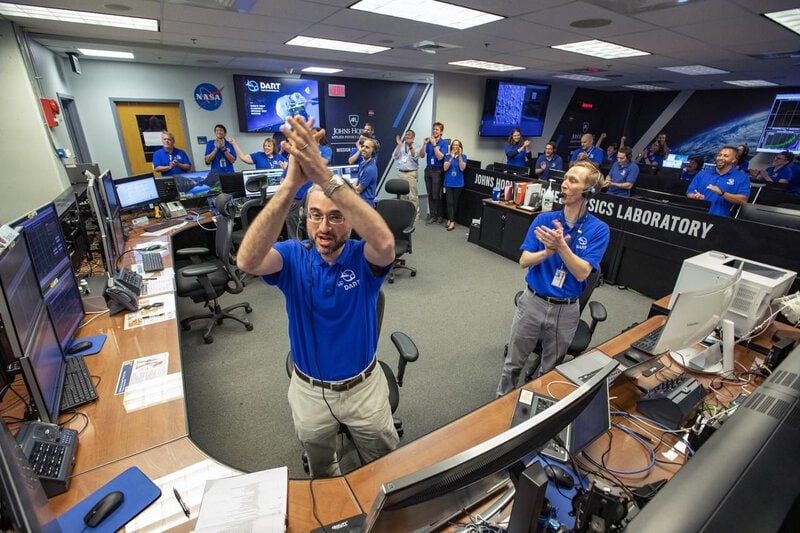
In September 2022, NASA’s Double Asteroid Redirection Test (DART) spacecraft deliberately slammed into Dimorphos — the moonlet of the binary asteroid Didymos — at roughly 6.1 kilometers per second. It was the first intentional human alteration of a celestial body’s orbit ever attempted. Results published in Nature in 2023 confirmed that DART shortened Dimorphos’s orbital period around Didymos by approximately 33 minutes, far exceeding the mission’s minimum success threshold of 73 seconds. Kinetic impactor technology — essentially ramming a spacecraft into a target at high speed — is now an experimentally validated deflection method, not merely a theoretical one.
The critical caveat is warning time. DART’s mission planners emphasize that kinetic impactors require at minimum five to ten years of advance notice to be effective. The spacecraft must intercept the asteroid far enough from Earth that even a modest orbital change compounds, over time and distance, into a clean miss. This reinforces the field’s foundational principle: early detection is not a supporting element of planetary defense — it is the irreplaceable first line.
The European Space Agency’s follow-up mission, Hera, launched in October 2024 and is currently en route to Didymos to conduct a detailed forensic survey of the DART impact site. Hera’s data will sharpen scientific models of how an asteroid’s internal composition — whether it is solid rock, a loosely bound rubble pile, or something in between — affects deflection efficiency. That knowledge is essential for designing future real-threat missions, which will not arrive with the luxury of a pre-selected, well-characterized target.
The Schweickart Prize: Defending Space Infrastructure, Not Just Earth
The Schweickart Prize winner this year addresses a scenario that grows more relevant as humanity expands into cislunar space — the region between Earth and the Moon. The winning proposal calls for the creation of a Panel on Asteroid Orbit Alteration, a new international governance body designed to oversee risks posed by unintended asteroid orbit changes. As asteroid mining operations and deflection tests proliferate, any single actor nudging a rock’s trajectory could inadvertently place a lunar station, orbital platform, or future off-world settlement in the path of a redirected object.
The proposed Panel would function analogously to the Intergovernmental Panel on Climate Change in climate science — aggregating expert risk assessments, coordinating observational data from a new dedicated monitoring network, and establishing agreed protocols before any nation or private actor attempts to alter an asteroid’s path. The prize-winning plan explicitly prioritises space infrastructure protection, a dimension of planetary defense that has received far less attention than the Earth-impact scenario and that no existing international body is equipped to manage.
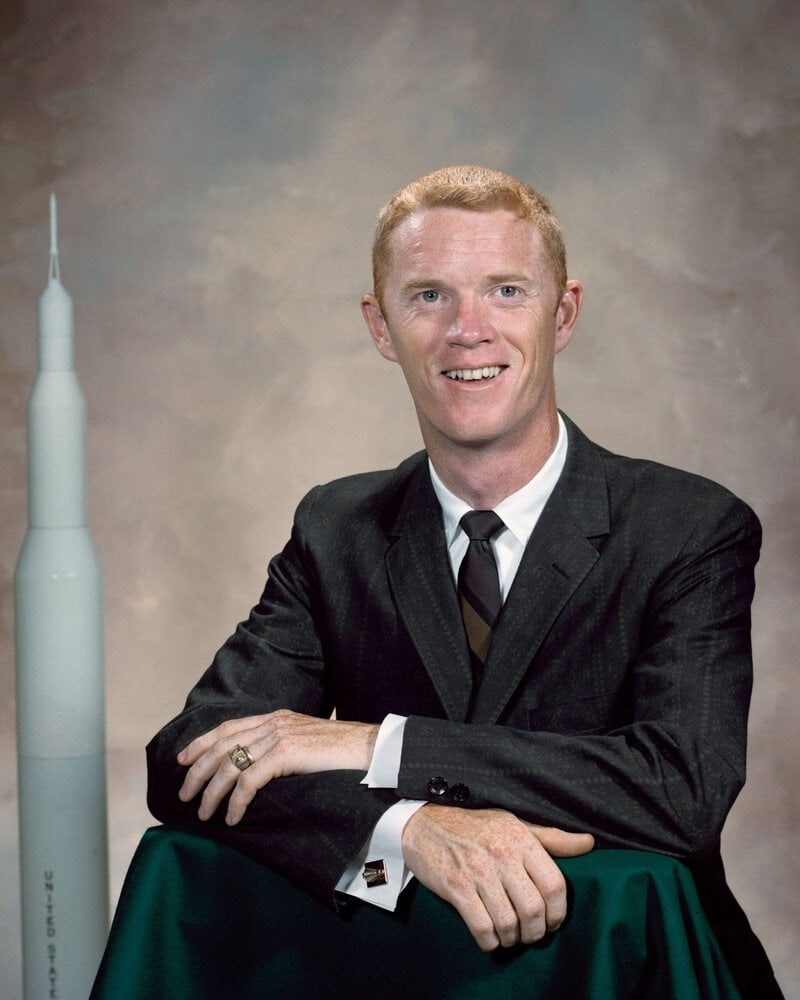
The prize is named after Apollo 9 astronaut Rusty Schweickart, a longtime planetary defense advocate who helped develop the gravity tractor deflection concept. Its expanded scope this year reflects the field’s maturation: planetary defense is no longer solely about protecting Earth but about managing humanity’s expanding gravitational neighbourhood with foresight and coordinated international oversight.
How Would We Actually Deflect an Asteroid? The Toolkit Explained
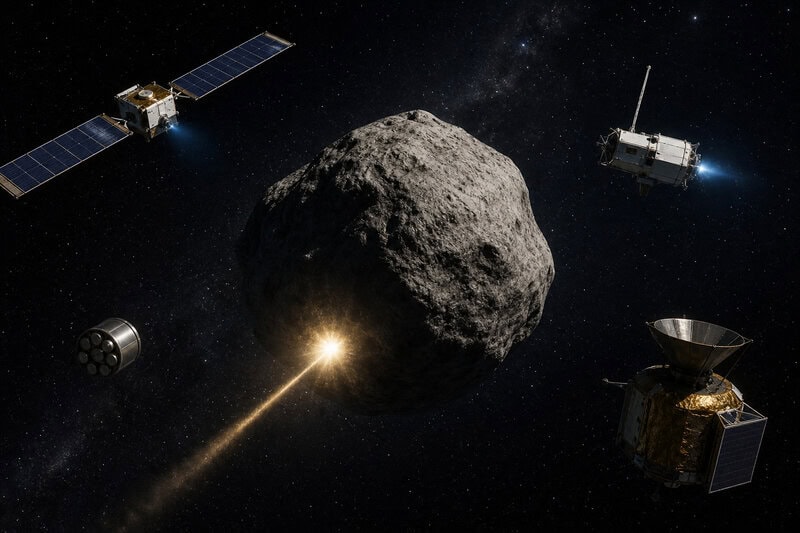
No single technique is sufficient for all scenarios. Asteroids differ enormously in size, composition, and orbital geometry, and warning times will not always be generous. The emerging consensus, reflected in NASA’s 2023 National Preparedness Strategy and Action Plan for Near-Earth Object Hazards, is that a layered approach is the most defensible framework. Here is what that toolkit currently contains:
- Kinetic impactors: The only method experimentally validated, thanks to DART. A spacecraft rams the target at high velocity, transferring momentum and shifting its orbit. Effectiveness depends heavily on the asteroid’s internal structure — a loose rubble pile absorbs impact energy differently than solid rock — and requires years to decades of warning time to allow the altered trajectory to diverge sufficiently from Earth.
- Gravity tractors: A spacecraft stations itself near an asteroid for an extended period, using the subtle mutual gravitational attraction between craft and rock to slowly pull the object off course. Conceptually elegant and non-destructive, this method demands the longest lead times of any approach — potentially decades — but leaves the asteroid structurally intact, which matters both for mission safety and for any future resource value the object may hold.
- Nuclear standoff detonation: Detonating a nuclear device near — not on — an asteroid to vaporise surface material, generating thrust through ablation. Theoretically the most powerful option for large bodies or short warning windows, this method remains politically contentious and is constrained by the Outer Space Treaty, which restricts deployment of nuclear weapons in space. It is discussed seriously in peer-reviewed planetary defense literature as a last-resort option, not a preferred first response.
The honest assessment from the planetary defense community is that the hard problems are increasingly institutional rather than technical. Scientists broadly understand how to move an asteroid. The harder questions are who decides when to attempt it, acting under whose authorization, and how to ensure one nation’s defensive action does not inadvertently redirect a threat toward another — precisely the governance gap the Schweickart Prize winner is designed to address.
The Detection Gap: Why Better Eyes in the Sky Still Matter
Current ground-based survey programs have performed well for large objects but carry a systematic blind spot: dark asteroids that absorb rather than reflect sunlight are difficult to detect optically, and objects approaching from the direction of the Sun are often invisible until late in their approach. The 2013 Chelyabinsk event illustrated this starkly. A 20-meter meteor entered Earth’s atmosphere over Russia completely undetected, injuring approximately 1,500 people through shockwave and shattered glass damage. Objects of that size currently fall below most survey detection thresholds.
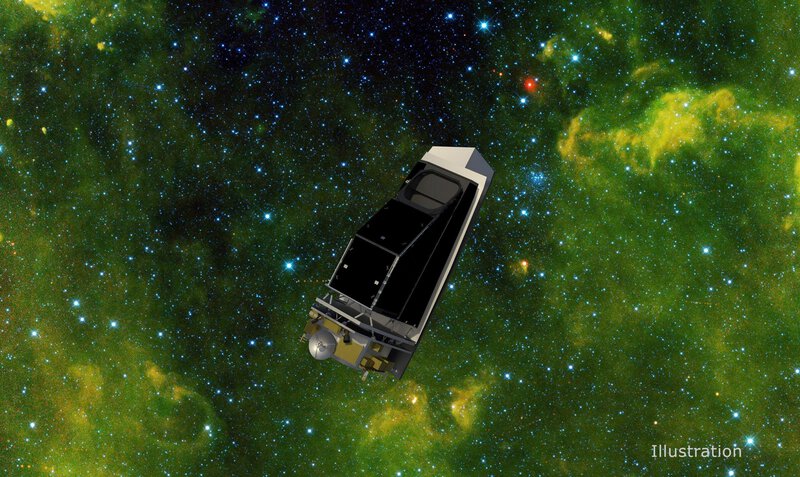
Two upcoming systems are designed to close the detection gap significantly. NASA’s NEO Surveyor spacecraft, scheduled for launch in 2027, will operate in the infrared from a gravitationally stable Sun-Earth Lagrange point, enabling it to detect thermally emitting dark asteroids that are invisible to optical surveys. Separately, the Vera C. Rubin Observatory in Chile, entering full survey operations in 2025, is projected to dramatically expand the catalogue of known near-Earth objects within its first decade, with particular impact on coverage of the dangerous 140-meter-to-one-kilometer size class that remains so poorly characterised today.
Together, these instruments represent the next essential step in what planetary defense scientists consistently identify as the prerequisite for everything else: you cannot deflect a threat you have not found.
What Asteroid Day Means for Policymakers — and Everyone Else
Asteroid Day’s UN endorsement transformed it into an annual platform for rehearsing crisis communication protocols — the institutional equivalent of a pandemic preparedness exercise. The underlying logic is straightforward: if a confirmed impact threat ever emerges, governments should not be improvising a public communication strategy under pressure. What to say, when to say it, and how to calibrate urgency without triggering unwarranted panic are questions best answered before they become urgent.
The field’s central message to policymakers is that planetary defense is unusually cost-effective as a risk-mitigation investment. NASA estimates that fully cataloguing hazardous near-Earth objects and developing operational deflection capabilities costs less annually than a single large civil infrastructure project, yet the potential harm avoided scales to the existential. The DART mission — the most consequential planetary defense experiment ever conducted — carried a total budget of approximately $330 million, broadly regarded as modest relative to its scientific and strategic returns. Sustaining that level of investment has required consistent Congressional appropriation built, in part, on public awareness generated by campaigns like Asteroid Day.
The Schweickart Prize winner’s focus on governance over gadgetry is perhaps the most important signal from this year’s observance. The asteroid impact hazard is, at this point in history, a technically solvable problem. Detection instruments exist or are in development. Deflection methods have been experimentally proven. Costs are manageable. What remains unresolved is the human coordination challenge: assembling the international will, the legal frameworks, and the institutional architecture to act decisively and collectively when the need arises. Asteroid Day exists, in part, to make sure that when that moment comes, humanity is not starting from zero.