
Most ovarian cancer cases are diagnosed only after the disease has already spread — a grim reality that helps explain why it remains one of the most lethal gynecologic cancers. A new wave of science emerging from Weill Cornell Medicine is targeting that problem from two directions at once: finding the cancer sooner, and hitting it harder when it does appear.
Two Weill Cornell Medicine Scientists Named First-Ever Recipients of a Major New Ovarian Cancer Grant
Dr. Juan R. Cubillos-Ruiz and Dr. David Lyden of Weill Cornell Medicine have been named the inaugural recipients of the Pershing Square Foundation’s 2025 Ovarian Cancer Challenge Grant — the first time the foundation has conferred this specific award. Rather than concentrating resources on a single scientific approach, the foundation deliberately selected two researchers pursuing distinct but complementary programs, signaling an intent to attack the disease on multiple fronts simultaneously.
What a ‘Challenge Grant’ Actually Means — and Why the Funding Structure Matters
The Pershing Square Foundation structured its ovarian cancer award as a challenge grant, a funding model that establishes defined scientific milestones rather than supporting open-ended exploration. Unlike conventional research awards, challenge grants hold investigators accountable to concrete, measurable outcomes within a set timeframe. The foundation’s choice of this higher-pressure format reflects a clear priority: not merely generating new knowledge, but moving laboratory discoveries toward potential clinical application as efficiently as possible.
Ovarian Tumors Actively Sabotage the Immune Cells Sent to Fight Them
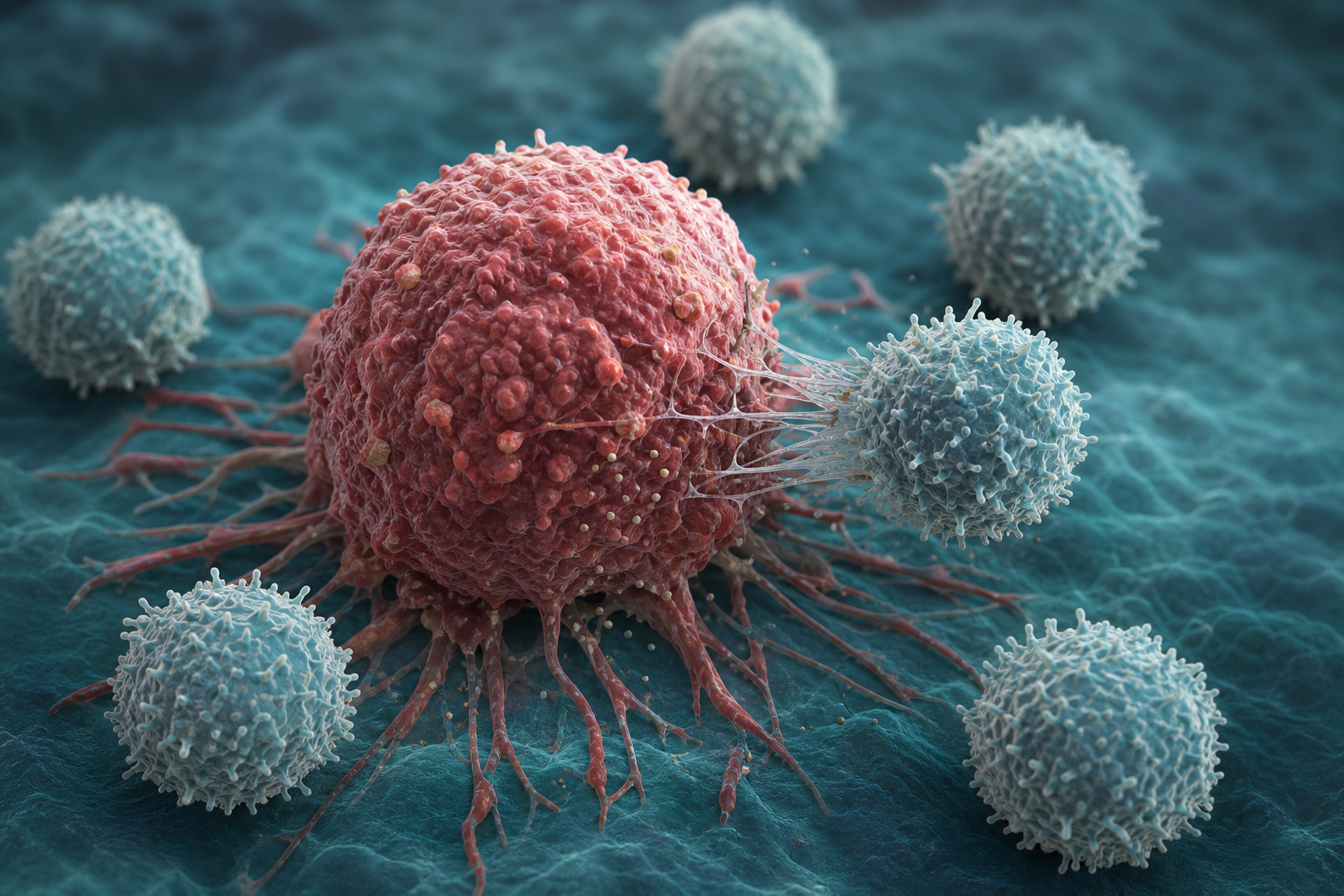
One of the foundational obstacles in ovarian cancer treatment is that tumors do not simply evade the immune system — they actively dismantle it. Weill Cornell Medicine researchers have identified a specific mechanism by which ovarian tumors cripple immune cells, impairing their ability to mount an effective anti-cancer response. This immune suppression is a central reason the disease is so difficult to treat: the tumor effectively disarms the body’s own defense system before it can act.
Mapping that mechanism transforms it into a potential therapeutic target. If scientists can block the sabotage signal a tumor sends, immune cells may regain the ability to recognize and destroy the cancer — a strategy central to the growing field of immuno-oncology and directly relevant to the work now being funded at Weill Cornell.
Dr. Cubillos-Ruiz Is Repurposing an Existing Medical Treatment to Fight Ovarian Cancer
Iron chelation therapy was originally developed to treat iron-overload disorders — conditions in which excess iron accumulates to dangerous levels — using compounds that bind to iron and allow it to be safely excreted. Research at Weill Cornell Medicine is repurposing this approach against ovarian cancer, targeting what has been described as “innate immune control of metastatic ovarian cancer” — meaning the strategy works by reactivating the immune system’s earliest and fastest-acting defenses rather than the slower adaptive immune responses that take weeks to mobilize.
Because iron chelation agents are already clinically familiar compounds with established safety profiles, this approach could potentially reach patients faster than a novel drug built from scratch. That practical advantage makes it one of the more closely watched areas in current ovarian cancer drug development.
The Iron Chelation Research Specifically Targets Metastatic Disease — the Deadliest Stage
This work is explicitly focused on metastatic ovarian cancer — the stage at which the disease has spread beyond the ovaries to other organs, including the peritoneum, liver, or lungs. Metastatic ovarian cancer accounts for the majority of deaths from the disease, in large part because most cases go undetected until this advanced stage, leaving physicians with a narrow range of effective options.
A therapy capable of controlling metastatic disease by reengaging the innate immune system would address the single most urgent unmet need in ovarian cancer care. The specificity of that focus — not ovarian cancer broadly, but its most lethal form — gives this research line particular clinical significance as it moves through early development.
Dr. Lyden Is Investigating Tumor-Released Particles That Could Detect Cancer Before Symptoms Appear

Dr. David Lyden’s Pershing Square-funded research investigates extracellular vesicles — nanoscale packets released by tumor cells into the bloodstream and other body fluids. These particles carry molecular cargo from the cells that produced them, potentially acting as a biological fingerprint that could be detected through a blood or fluid sample long before a patient develops noticeable symptoms.
Earlier detection is one of the most critical goals in ovarian cancer research. The five-year survival rate for early-stage ovarian cancer is substantially higher than for advanced-stage disease, yet the vast majority of diagnoses happen late. If extracellular vesicles can be reliably identified and analyzed as markers of early disease — an approach that falls within the broader field of liquid biopsy research — they could offer a meaningful new path to catching the disease when it is still most treatable.
Together, the Two Programs Address Both Ends of the Ovarian Cancer Problem
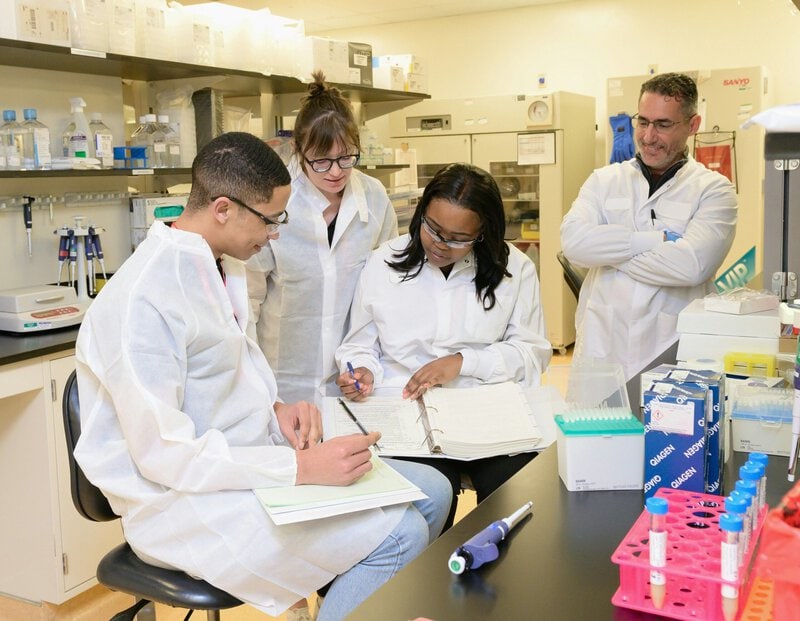
Taken together, the two Pershing Square-funded programs at Weill Cornell Medicine address ovarian cancer’s two compounding failures. Dr. Lyden’s extracellular vesicle research targets the detection gap — finding the disease sooner. Dr. Cubillos-Ruiz’s immune reactivation and iron-chelation work targets the treatment gap, particularly for patients with advanced or metastatic disease. The foundation’s decision to fund both scientists simultaneously reflects a strategic pairing, not a coincidental one.
There is broad scientific consensus that ovarian cancer’s persistently poor outcomes cannot be improved by closing only one of those gaps. Better treatment alone cannot compensate for late detection, and earlier detection offers little benefit without more effective therapies to follow. Funding complementary programs under the same grant framework is one mechanism by which research foundations are attempting to accelerate progress on both fronts at once.
Both Research Programs Are Built Around Identifying Precise Molecular Targets

Both Weill Cornell programs are oriented toward identifying molecular targets — specific biological mechanisms or structures that a drug could interact with to disrupt cancer’s ability to survive and spread. Identifying a validated molecular target is a foundational step in modern drug development: it transforms a general understanding of a disease into an actionable blueprint for designing a therapeutic intervention. Without a clearly defined target, drug discovery depends heavily on trial and error.
The immune-suppression mechanism mapped by Weill Cornell researchers and the iron-metabolism pathway explored in the chelation work each represent distinct candidate targets for the next generation of ovarian cancer therapies — ones designed to interfere with the specific biological machinery that makes the disease so dangerous, rather than broadly targeting all rapidly dividing cells as traditional chemotherapy does.
The research underway at Weill Cornell Medicine, supported by the Pershing Square Foundation’s newly established challenge grant, represents a methodical, multi-front effort to shift the odds for ovarian cancer patients — by identifying precisely where, at the molecular level, the disease can be stopped.